
A modern horizontal wood fence represents the premier boundary design for contemporary architecture, renovated urban cottages, and luxury transitional properties throughout the greater Charlotte metropolitan area. Characterized by clean, unbroken linear sightlines that stretch horizontally across property lines, this sophisticated architectural style visually expands outdoor living spaces, delivering an upscale, designer aesthetic that sets your property apart from conventional vertical fencing.
At Amour Fence, we do not build horizontal fences using off-the-shelf prefabricated kits or fragile modular slats. Horizontal fencing demands vastly superior structural engineering compared to traditional vertical panels. Because lumber naturally deflects under gravity and humidity cycles, installing horizontal runs requires rigid foundation calculations, strict post-spacing geometry, and meticulous timber selection. Stick-built on site by skilled artisans, our custom horizontal fences combine clean contemporary lines with heavy-duty structural durability tailored for the Carolina Piedmont.
Technical Specifications: Horizontal Fence Architecture & Structural Framing
| Architectural Parameter | Standard Specification | Luxury / Estate Upgrade |
|---|---|---|
| Standard Heights | 6 Feet (72 Inches) | 8 Feet (Subject to Charlotte UDO Variance / ARC Approval) |
| Visual Privacy Level | 100% Solid Full Privacy or 1/4" to 1/2" Contemporary Slat Gaps | 100% Seamless Tongue-and-Groove or Modern Shadow-Line Slat |
| Lumber Options | Hand-Selected Western Red Cedar or Pressure-Treated Pine | Clear Vertical Grain (CVG) Architectural Western Red Cedar |
| Plank Dimensions | 1x6 (True 5/8" x 5-1/2") or 1x4 (True 5/8" x 3-1/2") | Mixed-Width Horizontal Slat Pattern (Alternating 1x4 and 1x6) |
| Post Spacing | Strict 6-Foot On-Center Post Spacing (Zero Sag Rule) | 5-Foot On-Center Post Spacing for Heavy Clear Timber |
| Structural Posts | 4x4 Ground-Contact Pressure-Treated Pine Posts | 6x6 Heavy Timber Posts or Concealed Commercial Steel Posts |
| Mid-Span Stiffeners | Vertical 2x2 or 2x4 Timber Anti-Sag Cleats Every 3 Feet | Concealed Powder-Coated Steel Spline Channels |
| Footing Depth | 30 to 36 Inches Embedded in Cecil Red Clay | 36 to 42 Inches with Compacted Crushed Stone Drainage Bed |
| Fasteners | 304 Stainless Steel or Ceramic-Coated Star-Drive Screws | 316 Marine-Grade Stainless Steel Countersunk Screws |
| Warranty | 3-Year Limited Workmanship Warranty | 3-Year Limited Workmanship Warranty |
Architectural Profiles: Contemporary Clean Lines for Charlotte Living
Horizontal fencing has quickly emerged as the preferred architectural boundary in Charlotte’s most vibrant and design-forward neighborhoods, including South End, NoDa, Plaza Midwood, Dilworth, and luxury new construction throughout SouthPark and Weddington.
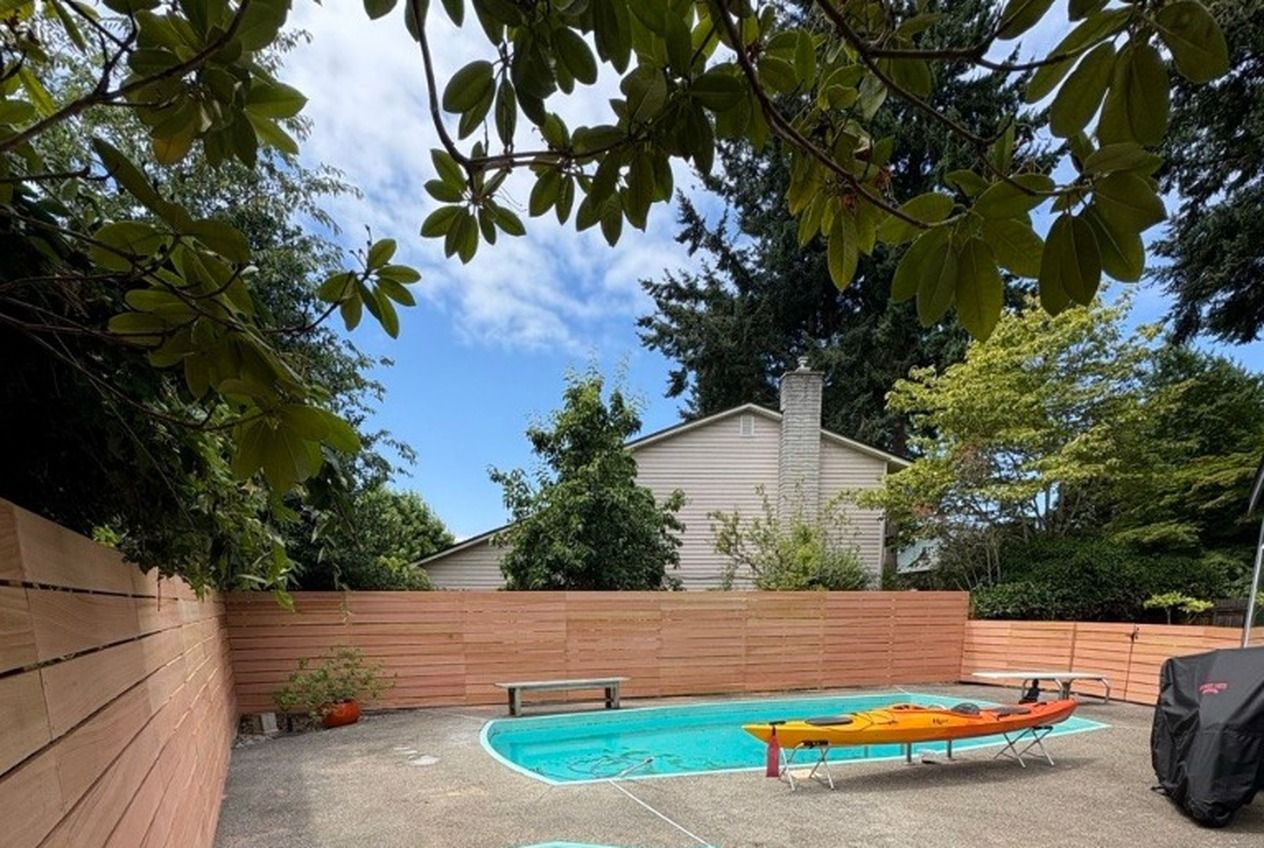
Why Horizontal Lines Transform Outdoor Spaces
Standard vertical pickets guide the human eye downward toward the grass or upward into the sky. Horizontal lines, by contrast, lead the eye laterally across the horizon. This optical dynamic produces several compelling design advantages:
- Expansive Spatial Perception: By stretching boundaries horizontally, smaller urban backyards in historic Charlotte neighborhoods feel significantly wider, deeper, and more spacious.
- Architectural Integration: The clean horizontal planks mirror modern architectural elements—such as linear brick siding, board-and-batten facades, wide patio pavers, and flat-roof pergolas—creating cohesive indoor-outdoor harmony.
- Custom Slat Gap Options: Homeowners can tailor their degree of seclusion. You may choose 100% solid horizontal privacy with edge-to-edge stacked planks, or opt for an open architectural slat gap (typically 1/4 inch to 1/2 inch spacing between boards) to maintain subtle filtered light and garden airflow while defining boundaries.
The Engineering Challenge: Preventing Gravity Sag in Carolina Heat
While horizontal fencing delivers unmatched visual elegance, it represents the most structurally demanding wood fence style to engineer correctly. Many novice contractors attempt to build horizontal fences using standard 8-foot post spacing. Under the physical laws of wood mechanics, this guarantees structural failure.
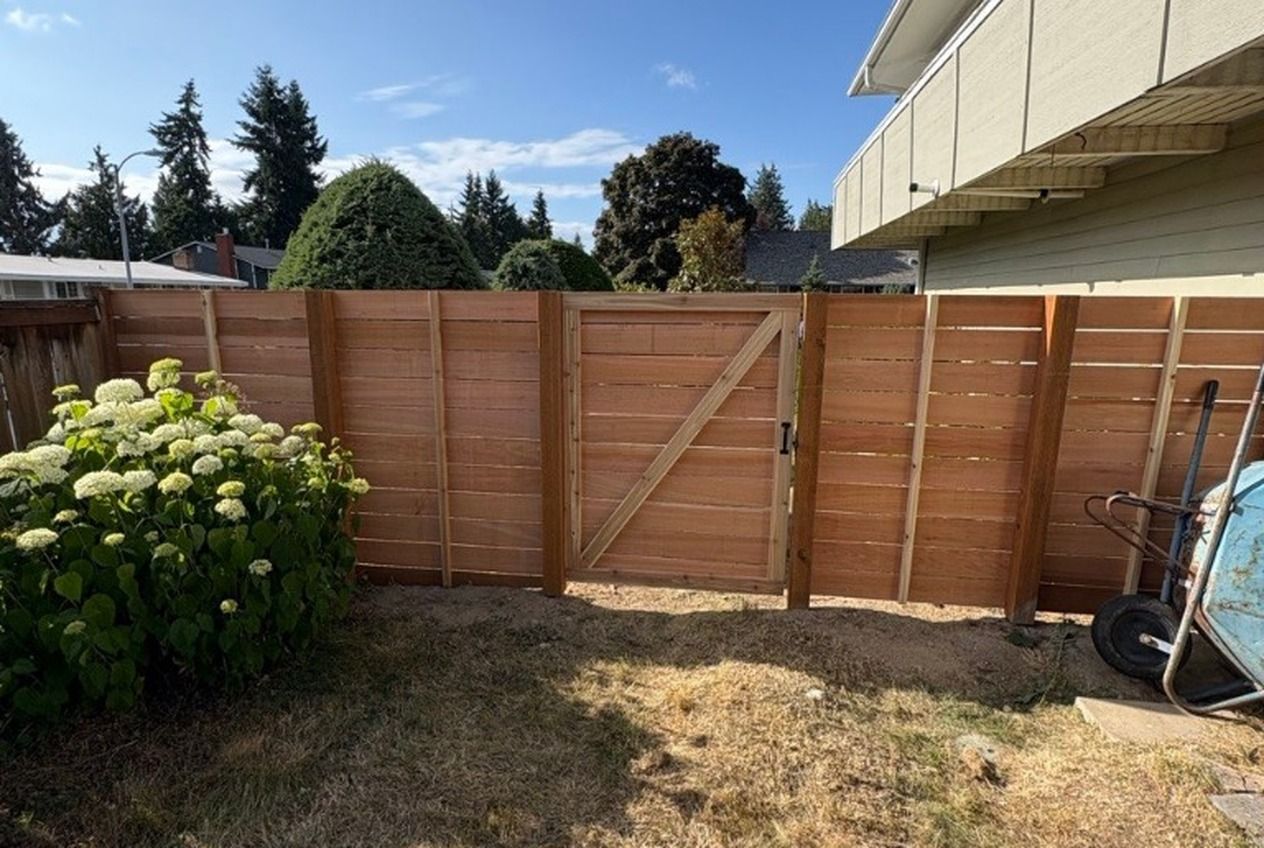
Why Standard 8-Foot Spans Fail
When lumber is installed vertically, gravity acts parallel to the grain in compression, where wood is naturally stiffest. In a horizontal installation, gravity acts perpendicular to the timber grain over an open horizontal span. When subjected to Charlotte’s 95°F summer heat, alternating rainfall, and seasonal moisture absorption, long 8-foot horizontal boards inevitably develop noticeable downward sagging, lateral cupping, and board twisting within 12 to 24 months.
Amour Fence’s Engineering Solutions for Flawless Horizontal Runs
To ensure your horizontal fence remains laser-straight for decades, we implement specialized carpentry standards:
- Mandatory 6-Foot Post Spacing: We shorten post intervals to a strict maximum of 6 feet on center (or 5 feet on estate builds). Shortening the structural bay by 25% reduces gravitational deflection by more than 50%, completely eliminating mid-span board dip.
- Integrated Mid-Span Vertical Stiffeners: On the interior yard side of every 6-foot bay, we fasten vertical 2x2 or 2x4 structural anti-sag cleats directly across the center of all horizontal planks. These stiffener cleats tie all horizontal boards together into a unified structural shear diaphragm, preventing individual boards from warping independently.
- High-Grade Western Red Cedar Specification: Because cedar possesses one of the lowest shrinkage-and-swelling coefficients of any commercial softwood, it resists the radial twisting and cupping that frequently plagues pressure-treated pine when laid flat.
- Stainless Steel Star-Drive Screws: We never use pneumatic nails on horizontal fencing. Nails can back out over time under lateral wood tension. We secure every board at each post and vertical cleat using premium 304 or 316 stainless steel star-drive exterior wood screws. Stainless steel fasteners prevent dark tannin streaks from staining Western Red Cedar.
Carolina Piedmont Engineering: Cecil Red Clay Foundations
A horizontal fence exerts continuous lateral tension across its posts. If post footings shift or settle unevenly, horizontal lines immediately accentuate the defect, producing unsightly wavy sightlines across the top rail.
Anchoring Posts in Charlotte’s Dense Cecil Red Clay
The subterranean foundation of your horizontal fence must withstand significant soil expansion and contraction. The native soil profile of Charlotte and surrounding Piedmont counties consists of high-density Cecil red clay. This subsoil behaves like a hydraulic sponge—expanding aggressively when saturated by winter storms and drying into hard, contracted ground during hot summer droughts.
Our foundation engineering protocol guarantees permanent post alignment:
- 30- to 36-Inch Excavation Depths: We bore post holes a minimum of 30 to 36 inches deep, anchoring posts well below topsoil moisture movement and seasonal frost lines.
- 3-Inch Crushed Gravel Drainage Footing: Before setting posts, we tamp crushed aggregate into the base of each hole. This prevents post bottoms from resting in standing water trapped within impervious clay layers, halting premature basal rot.
- Commercial 3,500 PSI Concrete Encasement: Posts are leveled with laser alignment systems and encased in high-strength concrete, with the surface hand-finished into a sloping collar to guide surface runoff away from the timber.
- Optional Heavy-Gauge Steel Posts: For ultra-contemporary designs, we offer commercial galvanized or powder-coated steel posts embedded deep in concrete footings, fully concealed within custom Western Red Cedar boxing for a pristine all-wood exterior look.
Choosing Your Lumber: Western Red Cedar vs. Pressure-Treated Pine
Achieving pristine horizontal sightlines depends heavily on timber stability. At Amour Fence, we offer two primary lumber selections:
| Western Red Cedar (Horizontal Slats) | Pressure-Treated Pine (Structural Framing) |
|---|---|
| • Minimal seasonal warping, cupping, and twisting | • High structural density and lateral load resistance |
| • Natural thujaplicin oils resist insects and decay | • Micronized copper preservative treatment (MCA) |
| • Lightweight timber load prevents runner sag | • Economical initial installation budget |
| • Warm honey-amber tones with fine natural grain | • Requires strict 5-foot maximum span limits |
| • #1 Recommended specification for horizontal slats | • Ideal for ground-contact subterranean posts |
Western Red Cedar: The Gold Standard for Horizontal Planks
Western Red Cedar is unreservedly the finest lumber for modern horizontal fencing. Harvested sustainably from Pacific Northwest forests, cedar boasts straight, uniform grain structure and exceptional dimensional stability. Its natural extractive oils (thujaplicins) provide built-in defense against termites, carpenter bees, and wood-destroying fungi without chemical pressure-injection. Most importantly, cedar pickets experience virtually zero twisting, bowing, or end-checking when installed horizontally across Carolina seasons.
Pressure-Treated Southern Yellow Pine: High Density on Short Spans
For projects where upfront budget is a priority, Pressure-Treated Pine provides an economical alternative. Southern pine is exceptionally dense and strong, but because it is chemically treated under high water pressure, horizontal pine boards undergo substantial moisture release during their first summer in the Carolina heat. When clients select treated pine for horizontal designs, Amour Fence strictly limits post spans to 5 feet on center and applies additional mid-span vertical stiffeners to mechanically restrain board movement.
The Craftsman Hybrid Strategy: To achieve optimal economics and longevity, we frequently install heavy-duty pressure-treated Southern pine posts embedded in concrete below grade, while framing all horizontal sightline planks, top caps, and gate faces in premium Western Red Cedar above grade.
Custom Modern Gate Engineering
Gate design is crucial for horizontal fencing. Because horizontal boards place all gravitational load outward across horizontal levers, poorly constructed horizontal gates will sag within months, dragging across lawns and jamming against strike latches.
Structural Sag-Free Gate Architecture
At Amour Fence, our horizontal gates are custom-built as rigid, engineered assemblies:
- Internal Welded Steel or Rigid Timber Subframe: We construct internal gate frames using either heavy-gauge powder-coated structural steel tubing or internal diagonal 2x4 compression timber framing. This rigid truss permanently prevents gravitational deflection.
- Continuous Horizontal Line Matching: We meticulously align gate planks so that horizontal reveal lines, wood grain patterns, and gap spacings flow seamlessly across the fence line without visual interruption when the gate is closed.
- Dedicated 6x6 Timber Gate Hinge Posts: We hang all horizontal gates on dedicated 6x6 ground-contact timber posts sunk 36 to 42 inches into concrete, ensuring dynamic swing weight never causes hinge deflection.
- Heavy-Duty Commercial Hardware: Outfitted with adjustable ball-bearing strap hinges, stainless steel drop rods, and key-lockable self-latching architectural hardware.
Charlotte UDO Zoning Ordinances & Subdivision ARC Protocols
Installing a horizontal fence in Charlotte, Mecklenburg County, or nearby municipalities requires full adherence to local development codes and community HOA covenants:
- Rear & Side Yard Height Limits: Under the City of Charlotte Unified Development Ordinance (UDO), residential boundary fences in established rear and side yards are permitted up to 6 feet in height without a municipal building permit or zoning variance.
- Front Yard Setback Restrictions: Fences constructed forward of the primary residential front building wall are restricted to 4 to 5 feet in height and must maintain open visibility. In front yards, contemporary homeowners often utilize low 42-inch horizontal slat fencing with 1/2-inch open spacing to complement modern landscape architecture.
- Historic District & HOA Approvals: While horizontal fences are celebrated in modern urban enclaves like South End and Midwood, some traditional suburban subdivisions maintain specific covenants regarding picket orientation. Amour Fence provides complete architectural elevations, material data sheets, and dimensioned CAD schematics to facilitate prompt Architectural Review Committee (ARC) approvals across communities in Ballantyne, Weddington, and Fort Mill, SC.
- North Carolina 811 Verification: Before beginning excavation, our project managers submit utility locate tickets to NC811, ensuring that underground gas, power, water, and telecom lines are clearly marked before drilling begins.
Transparent Pricing & Workmanship Warranty
At Amour Fence, we build long-term relationships through craftsman integrity, honest pricing, and meticulous quality control:
- Backed by Our 3-Year Limited Workmanship Warranty: Every custom horizontal fence is supported by our 3-Year Limited Workmanship Warranty, covering structural post plumbness, runner integrity, and gate functionality under standard residential use.
- Transparent Written Proposals: Every estimate clearly outlines total linear footage, exact post intervals, hardware models, and timber species. Explore realistic cost expectations anytime using our Interactive Fence Cost Calculator.
- Neodymium Magnetic Yard Sweeps: Following fence completion, our crew conducts an extensive cleanup, removing lumber scraps and running industrial-strength magnetic sweeps over your yard and driveway to remove dropped fasteners.
Frequently Asked Questions About Horizontal Wood Fencing
Do horizontal wood fences cost more than standard vertical privacy fences?
Yes. On average, a custom horizontal wood fence costs approximately 15% to 25% more than a standard vertical privacy fence. This cost difference stems from structural engineering requirements: horizontal fences require 25% more posts (due to mandatory 6-foot spacing instead of 8-foot intervals), additional internal vertical anti-sag stiffener cleats, higher-grade Western Red Cedar lumber, and exterior stainless steel screw fasteners rather than pneumatic framing nails.
Will the horizontal boards sag or warp over time in Charlotte’s humidity?
Not when built by Amour Fence. Common horizontal fence sagging occurs when inexperienced installers place posts 8 feet apart, omit center stiffeners, or use low-grade wet lumber. By strictly enforcing 6-foot post intervals, securing planks with interior vertical center cleats, and specifying dimensionally stable Western Red Cedar, our horizontal fences remain straight, level, and true through intense Carolina summer heat and winter freezes.
Can a horizontal fence be installed on uneven or sloping Charlotte ground?
Yes. When building across rolling terrain, we utilize two proven installation methods: stepping or contouring. In a stepped installation, horizontal fence bays remain perfectly level while stepping downward in uniform intervals to match the grade. In a contoured installation, bottom boards are precision-scribed to follow the land’s natural slope. During your initial consultation, we laser-survey your grade to recommend the ideal architectural layout.
How deep are horizontal fence posts set in Carolina red clay?
At Amour Fence, all horizontal fence posts are excavated 30 to 36 inches deep into Charlotte’s native Cecil red clay subsoil. Setting posts to this depth ensures the foundation sits well below surface moisture movement and seasonal frost lines, anchoring against the lateral tension inherent in horizontal construction. We bed each post on a 3-inch layer of crushed gravel for drainage, followed by a solid pour of high-strength commercial concrete troweled into a surface dome to shed stormwater.
How soon should I stain a new horizontal cedar fence?
Western Red Cedar should be stained approximately 30 to 60 days after installation, once surface moisture content measures below 15%. Applying a high-quality semi-transparent or translucent penetrating oil stain enhances natural cedar grain, provides ultraviolet sun protection, and guards against mildew. For detailed maintenance guidance, explore our Fence Staining & Treatment Services.
Ready to Elevate Your Property with a Modern Horizontal Fence?
Transform your outdoor living area with a clean, contemporary horizontal wood fence built by Charlotte’s premier artisans. Contact Sergei and the team at Amour Fence today for a prompt, complimentary on-site consultation and laser measurement.
- Call or Text: (980) 300-1047
- Direct Email: amourfence@gmail.com
- Explore Our Architectural Work: Browse all Custom Wood Fence Styles or estimate your budget with our Interactive Cost Calculator.