
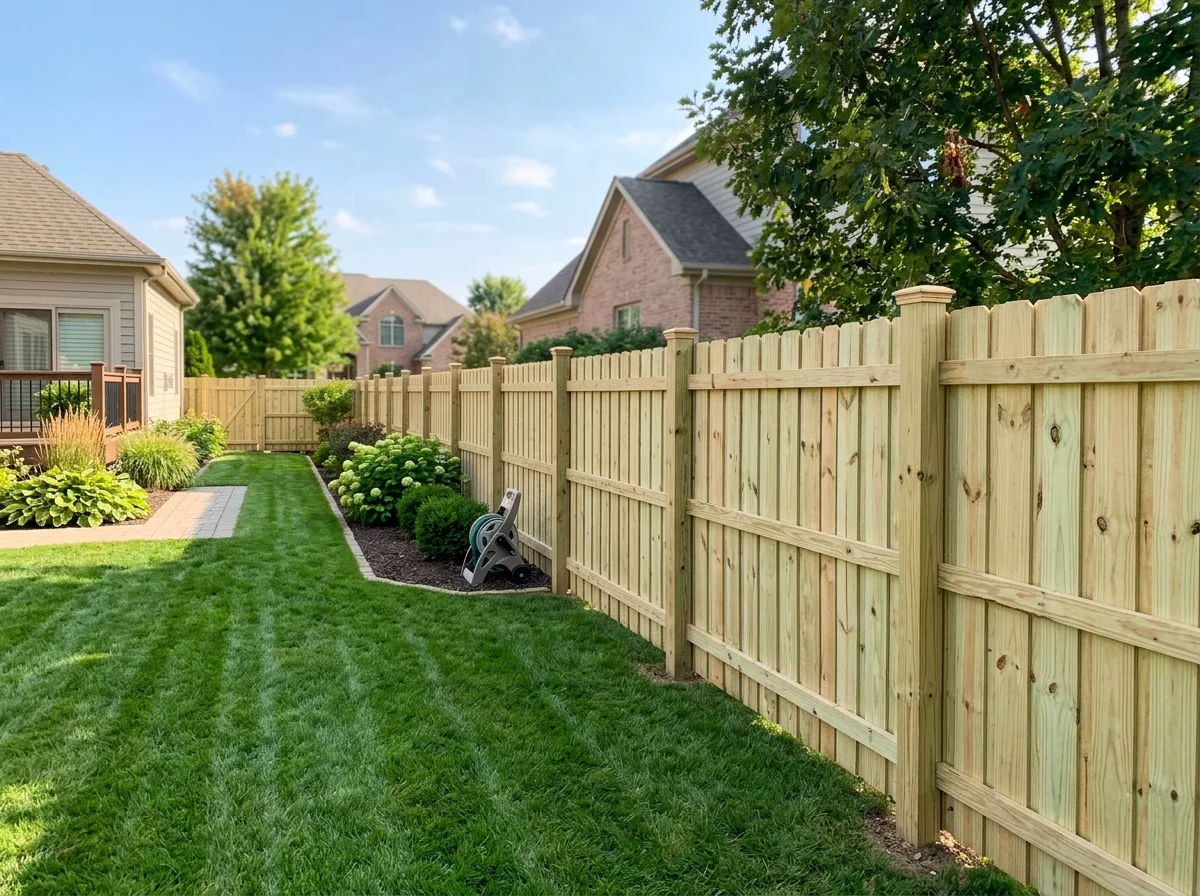
Choosing the right wood fence design for your Charlotte property requires balancing architectural curb appeal, personal privacy requirements, local zoning ordinances, and the distinct environmental demands of the Carolina Piedmont. A wooden fence is not a one-size-fits-all boundary; the way pickets and rails are oriented directly impacts structural lifespan, airflow, sightlines, and neighborhood harmony.
At Amour Fence, we specialize exclusively in natural timber craftsmanship—building custom fences from sustainably harvested Western Red Cedar and heavy-duty Pressure-Treated Pine. Below is a comprehensive guide to the types of wood fence designs engineered to thrive across Charlotte, Matthews, Waxhaw, Fort Mill, and surrounding communities.
The 5 Architectural Wood Fence Styles
Whether you are enclosing a historic bungalow in Dilworth, a rolling estate in Weddington, or a modern build in South End, each of these five styles serves distinct functional and visual priorities:
1. Solid Privacy Fence (Dog-Ear or Flat-Top)
The solid privacy fence remains the quintessential backyard boundary across Mecklenburg County. Pickets are mounted vertically edge-to-edge along three horizontal structural runners (2x4s), eliminating visible sightlines into your outdoor living space.
- Picket Configurations: Available in classic dog-ear (clipped corners allowing runoff) or contemporary flat-top with an optional decorative 2x6 top cap and 1x4 face trim.
- Privacy Level: 100% total sightline blockage upon initial installation.
- Best Use Case: Backyard pools, pet containment, hot tubs, and quiet outdoor entertaining areas.
- Lumber Recommendation: High-grade Western Red Cedar pickets prevent the severe cupping and twisting common with lower-grade woods in Carolina summer heat.
- Learn More: Full Solid Privacy Fence Specifications & Details →
2. Shadowbox Fence (“Good Neighbor” Storm-Rated Design)
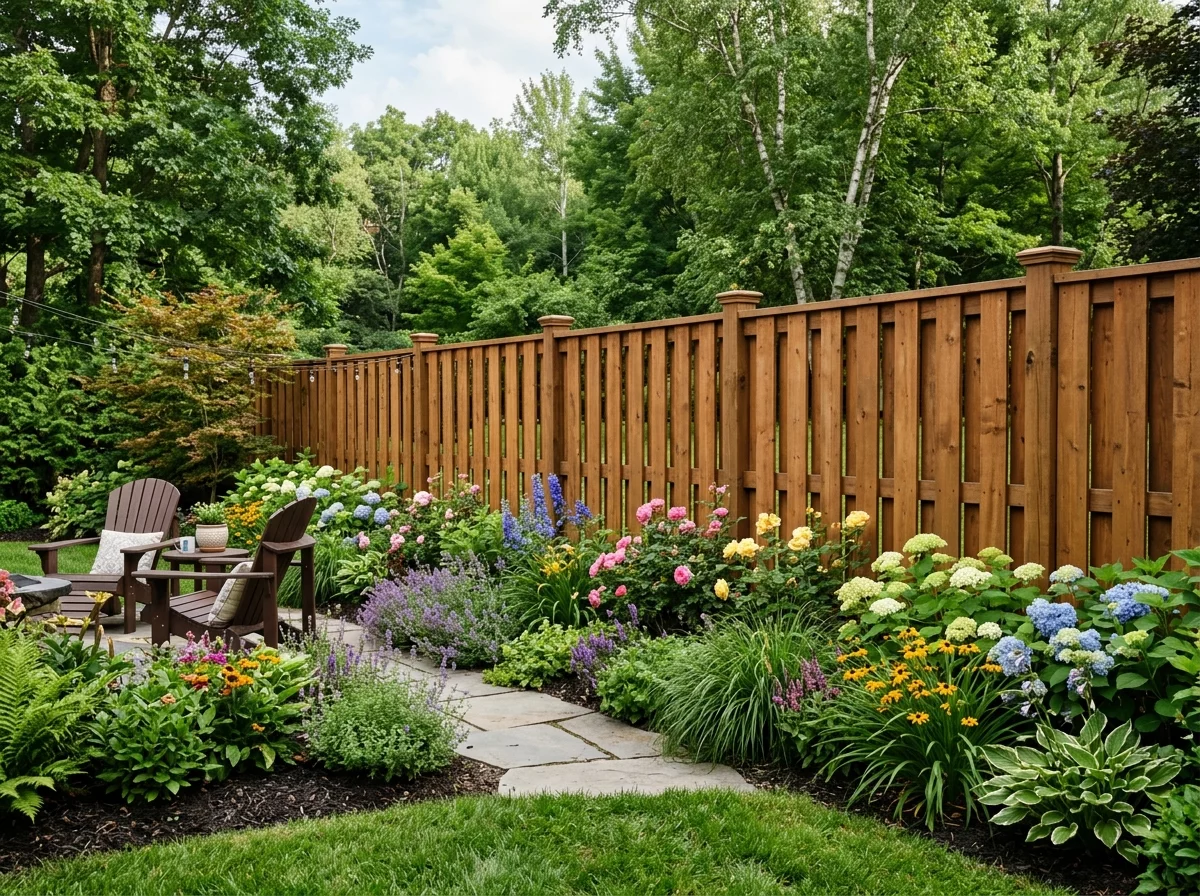
The shadowbox fence solves two of the most frequent challenges in suburban Charlotte: neighborhood aesthetics and summer wind shear. By alternating 1x6 pickets on either side of the structural rails with an approximate 2-to-3-inch overlap, both you and your adjoining neighbors see an identical, finished architectural face.
- Airflow Dynamics: Because the alternating pickets create a semi-permeable offset channel, sudden gust fronts from Carolina convective thunderstorms pass directly through the fence rather than creating a solid wind sail.
- Privacy Level: Approximately 85–90% privacy when viewed straight-on, with complete privacy at oblique angles.
- HOA Status: Highly favored by Homeowners Associations in communities like Ballantyne, Highland Creek, and Baxter Village because it eliminates the traditional “bad side” / “good side” dispute between neighbors.
- Learn More: Shadowbox Fence Engineering & Wind Performance →
3. Horizontal Modern Fence (Contemporary Architectural Line)
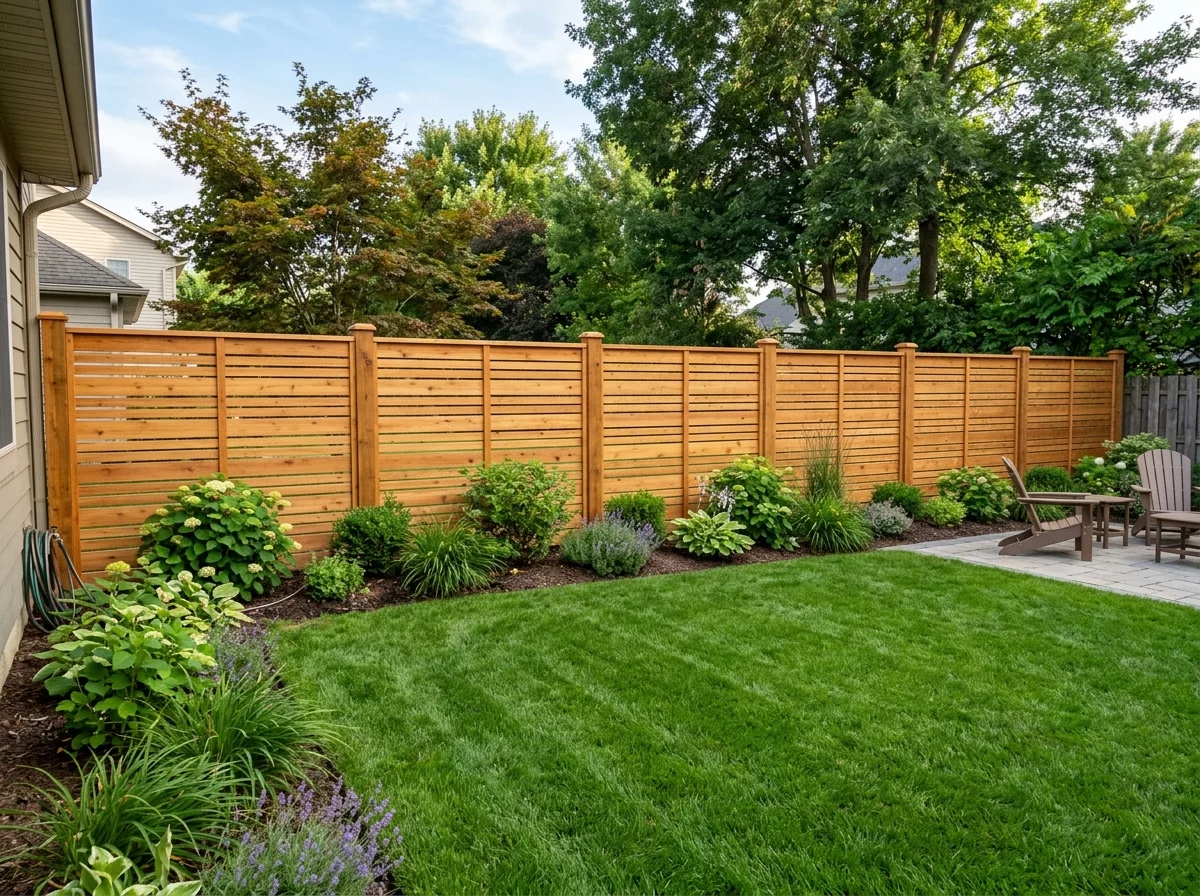
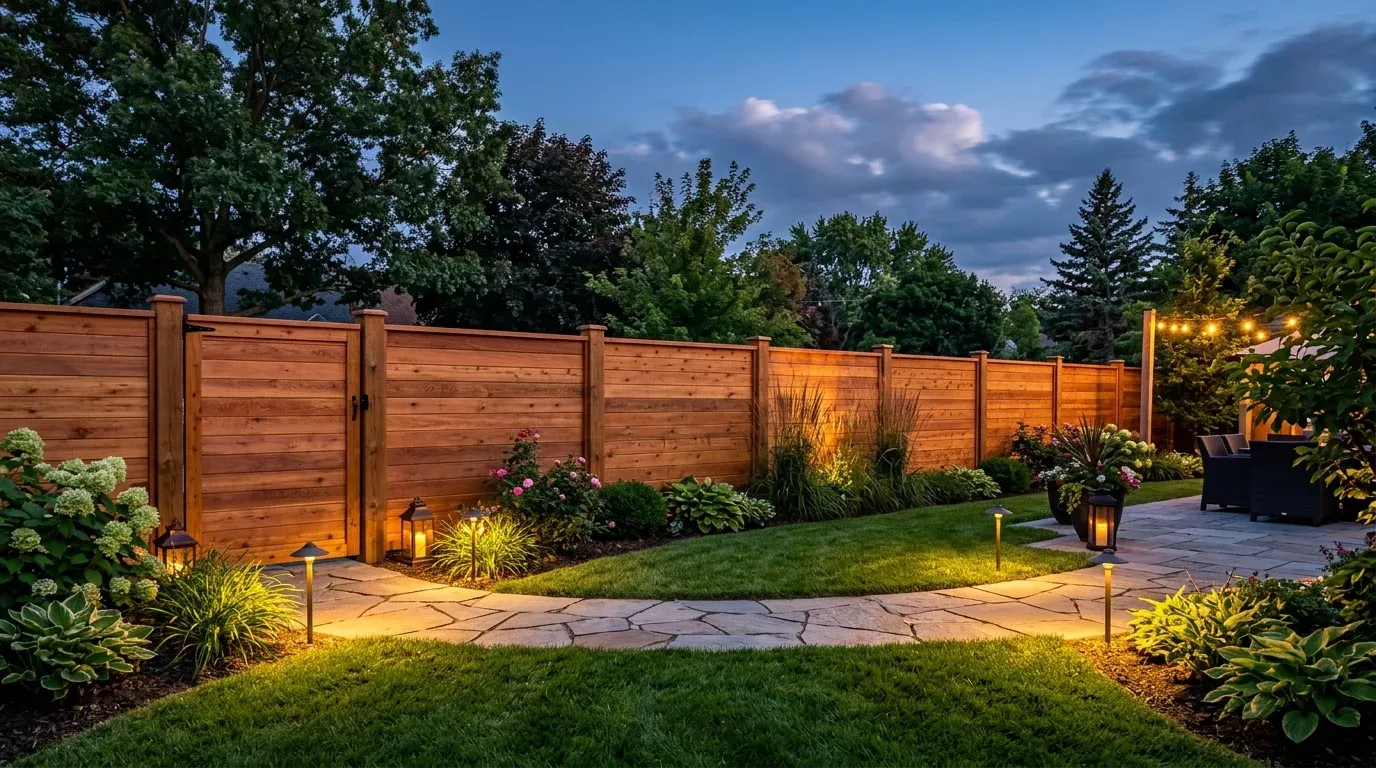
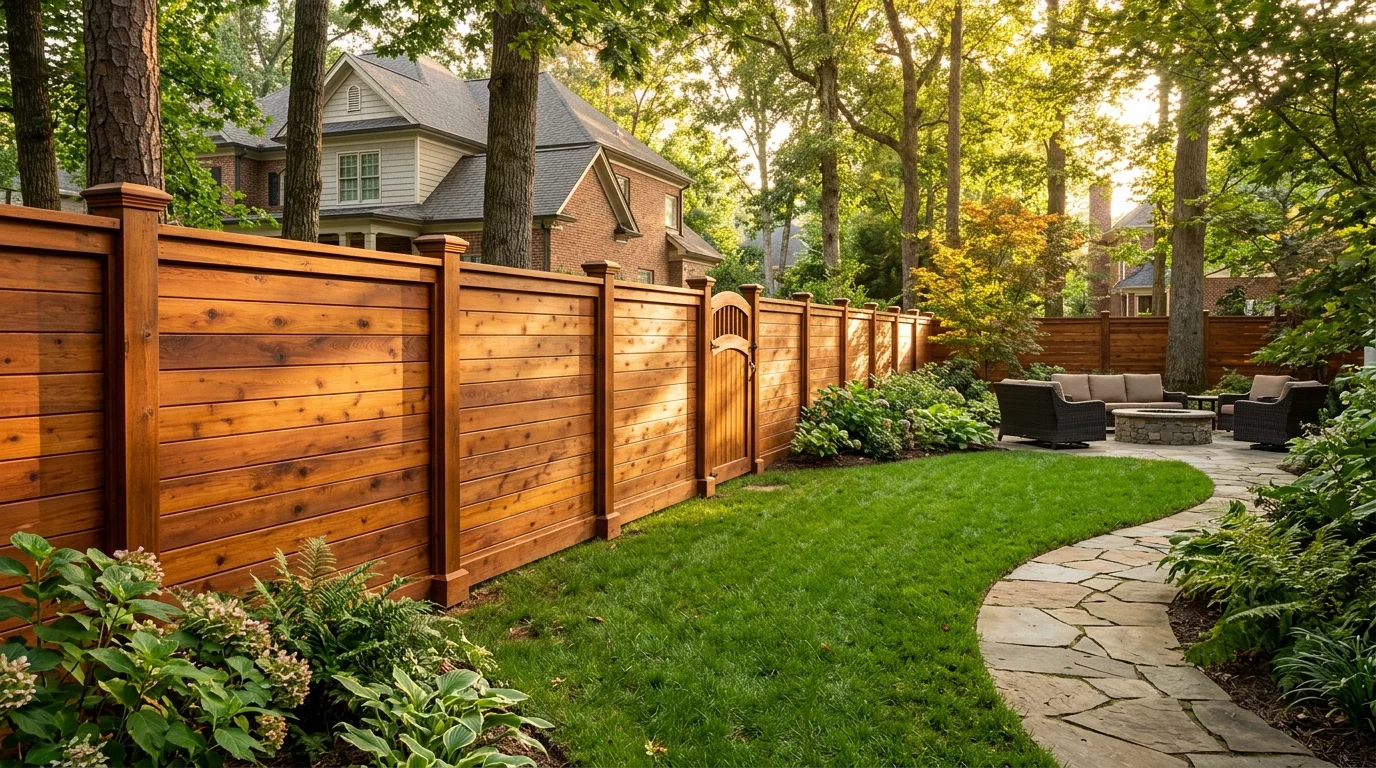
For homeowners seeking a clean, high-end European aesthetic, the horizontal wood fence turns traditional perimeter fencing into a prominent design statement. Clean lumber planks run horizontally across heavy-duty vertical posts, creating bold lines that visually lengthen property depth and complement modern farmhouse, mid-century, and transitional architecture.
- Engineering Demands: Horizontal fences require precise structural post spacing (typically 6-foot centers instead of 8-foot) to prevent long-term plank sag under Carolina humidity swings.
- Fasteners: Built with concealed or stainless steel ring-shank fasteners to avoid black oxide bleeding across the face of the boards.
- Best Use Case: Contemporary luxury residences in Myers Park, Plaza Midwood, South End, and upscale custom builds.
- Learn More: Horizontal Modern Wood Fence Gallery & Specs →
4. Traditional Picket Fence (Classic Open Boundary)
Evoking timeless Southern charm, the classic picket fence defines front yard boundaries, gardens, and pedestrian walkways without closing off property views. Pickets are evenly spaced with gaps typically matching the width of the board (approx. 2 to 2.5 inches).
- Styles: Traditional flat-top, pointed French gothic, or scalloped concave/convex arcs.
- Zoning Compliance: Standard 36-inch and 48-inch heights naturally conform to City of Charlotte front-yard setback regulations, which prohibit solid tall fencing forward of the primary building façade.
- Best Use Case: Front yard containment for small pets and children, historic district preservation, and decorative garden borders.
- Learn More: Classic Wood Picket Fence Options & Guidelines →
5. Board-on-Board Fence (Zero-Gap True Privacy)
While standard privacy fences place pickets edge-to-edge, the board-on-board style mounts a secondary layer of pickets that overlaps the base layer by 1 to 1.5 inches. This overlapping profile guarantees 100% zero-gap visual privacy permanently, even as the wood naturally seasons, contracts, and expands during seasonal humidity shifts.
- Acoustic Buffering: The staggered, double-layered lumber thickness provides noticeable sound absorption against roadway traffic and lawn equipment noise.
- Structural Weight: Because board-on-board fences incorporate 25–30% more lumber per linear foot, they require robust 4x4 or 6x6 posts embedded deeply into concrete footings.
- Best Use Case: Properties backing up to busy thoroughfares (such as NC-51, Providence Rd, or Rea Rd) and homeowners who demand impenetrable privacy year-round.
- Learn More: Board-on-Board Heavy-Duty Fencing Details →
Architectural Styles Comparison Matrix
| Fence Design Style | Visual Privacy | Wind Permeability | Charlotte HOA Approval | Relative Cost Tier | Primary Application |
|---|---|---|---|---|---|
| Solid Privacy | 100% | Low | Excellent | $$ | Private backyards, pools, family retreats |
| Shadowbox | 85–90% | High | Outstanding | $$ | Storm-exposed yards, shared neighbor lots |
| Horizontal Modern | 95–100% | Low–Moderate | Requires Review | $$$$ | Modern architecture, luxury patios |
| Classic Picket | 40–50% | Maximum | High | $ | Front yards, historic homes, pet borders |
| Board-on-Board | 100% (Permanent) | Low | Excellent | $$$ | Noise reduction, zero-gap perimeter privacy |
Charlotte Environmental & Engineering Factors
When choosing among different types of wood fence designs in Charlotte, three regional engineering factors must guide your design:
1. Charlotte UDO & Municipal Height Codes
Under the Charlotte Unified Development Ordinance (UDO) and Mecklenburg County building codes:
- Rear and Side Yards: Fences up to 6 feet in height are permitted by right. Heights reaching 8 feet generally require specific zoning verification, property boundary setbacks, or special administrative review.
- Front Yard Setbacks: Fences placed forward of the front building line are restricted to a maximum height of 4 feet and must maintain an open design (such as a picket fence) to ensure driver visibility along roadways and driveways.
- Tip: Always confirm whether your specific neighborhood has dedicated ARC (Architectural Review Committee) covenants that may mandate specific picket styles or cap designs.
2. Cecil Red Clay Soil Footings
The Piedmont region is characterized by heavy Cecil red clay. While dense red clay provides firm lateral resistance once compacted, it expands when saturated with water and shrinks severely during summer droughts.
- At Amour Fence, our post holes are drilled to a minimum depth of 24 to 36 inches—safely below the winter frost line and deep into the subsoil.
- Every hole receives crushed stone drainage at the base to prevent post bottoms from sitting in stagnant trapped water before concrete is placed.
3. Thunderstorm Wind Dynamics: Privacy vs. Shadowbox
A standard 6-foot solid privacy fence acts as a massive sail during high-wind summer microbursts. If your backyard sits on an open ridge, backs up to an open golf course fairway, or faces prevailing westerly winds, a Shadowbox style significantly reduces lateral pressure on post footings by allowing wind drafts to slip between staggered boards.
Lumber Options: Cedar vs. Pressure-Treated Pine
No matter which architectural style you select, lumber selection determines longevity and maintenance frequency:
- Western Red Cedar: The premium choice for pickets and visible architectural elements. Naturally rich in thujaplicins and polyphenols, cedar resists fungal decay and wood-boring insects without chemical injections. It exhibits 50% less dimensional shrinkage than pine, ensuring straight lines on horizontal and privacy builds.
- Pressure-Treated Southern Yellow Pine: The structural workhorse of Carolina fencing. Infused with micronized copper azole preservatives under intense hydraulic pressure, treated pine is the recommended material for direct-ground post contact and structural support runners.
Most Charlotte homeowners choose our hybrid build: pressure-treated pine posts and runners for buried strength, paired with premium Western Red Cedar pickets for lasting, rot-resistant beauty.
Frequently Asked Questions
Which wood fence design lasts the longest in Charlotte?
Board-on-board and solid privacy fences built with Western Red Cedar pickets on pressure-treated posts routinely last 20 to 25+ years in the Charlotte climate when properly sealed with a penetrating oil stain every 3 to 4 years. For wind-exposed properties, the shadowbox style often experiences less structural fatigue because wind passes through the framework.
Can I build a horizontal fence with pressure-treated pine?
While possible, we strongly recommend Western Red Cedar for horizontal fencing. Pine boards have higher moisture content and internal grain tension, making them prone to bowing and twisting when mounted horizontally over long spans. Cedar stays flat and straight.
Do I need a permit to install a new wood fence in Charlotte, NC?
In the City of Charlotte, standard residential fences 6 feet in height or lower built in rear and side yards typically do not require a formal building permit. However, compliance with Charlotte UDO setback rules, visual sight clearance triangles at street corners, and underground utility marking via NC811 is mandatory.
How much does it cost to build these fence styles?
Pricing varies based on linear footage, terrain slope, gate requirements, and wood species. You can run an instant preliminary estimate using our interactive Wood Fence Cost Calculator or schedule an on-site consultation with our master builder.
Plan Your Custom Fence Project With Amour Fence
Ready to transform your outdoor living space with a custom wood fence engineered for Carolina longevity? Explore our detailed style guides, calculate your project budget, or reach out to our craftsmen directly:
- Calculate Your Estimate: Interactive Wood Fence Cost Calculator →
- Explore Installation Services: Professional Charlotte Fence Installation →
- Direct Phone Consultation: Call our team at (980) 300-1047 (Mon–Sat, 7:00 AM – 7:00 PM)