
Quick Answer: What Woods Should You Strictly Avoid for Fencing?
The woods to strictly avoid for outdoor residential fencing in the Carolinas include untreated Whitewood / SPF (Spruce, Pine, Fir), Red Oak, untreated Douglas Fir, Poplar, and low-grade lumber containing high sapwood ratios. These species lack natural fungicidal tannins or pressure-injected chemical biocides. In Charlotte’s humid subtropical climate and moisture-retentive red clay soil, these timbers absorb rain like sponges, turning black with fungal mold and rotting structurally in just 2 to 4 years.
When budgeting for a new residential perimeter fence, cutting upfront material costs is tempting. Homeowners across Mecklenburg, Union, and York counties frequently encounter bargain pre-assembled 6-foot fence panels and discounted pickets sold under labels like “Whitewood,” “Fir Pickets,” or “Natural Hardwood.”
On a store rack, fresh softwood looks clean and economical. However, an outdoor fence enjoys no roof or protective overhangs. It stands exposed 24 hours a day to relentless weather cycles.
In Greater Charlotte, choosing the wrong species is an expensive mistake. Between 44+ inches of annual rainfall, summer humidity over 80%, and moisture-trapping red clay, inferior timbers decay with alarming speed.
In this engineering guide, the master craftsmen at Amour Fence reveal the 5 lumber species you should never install as a fence and explain why each fails.
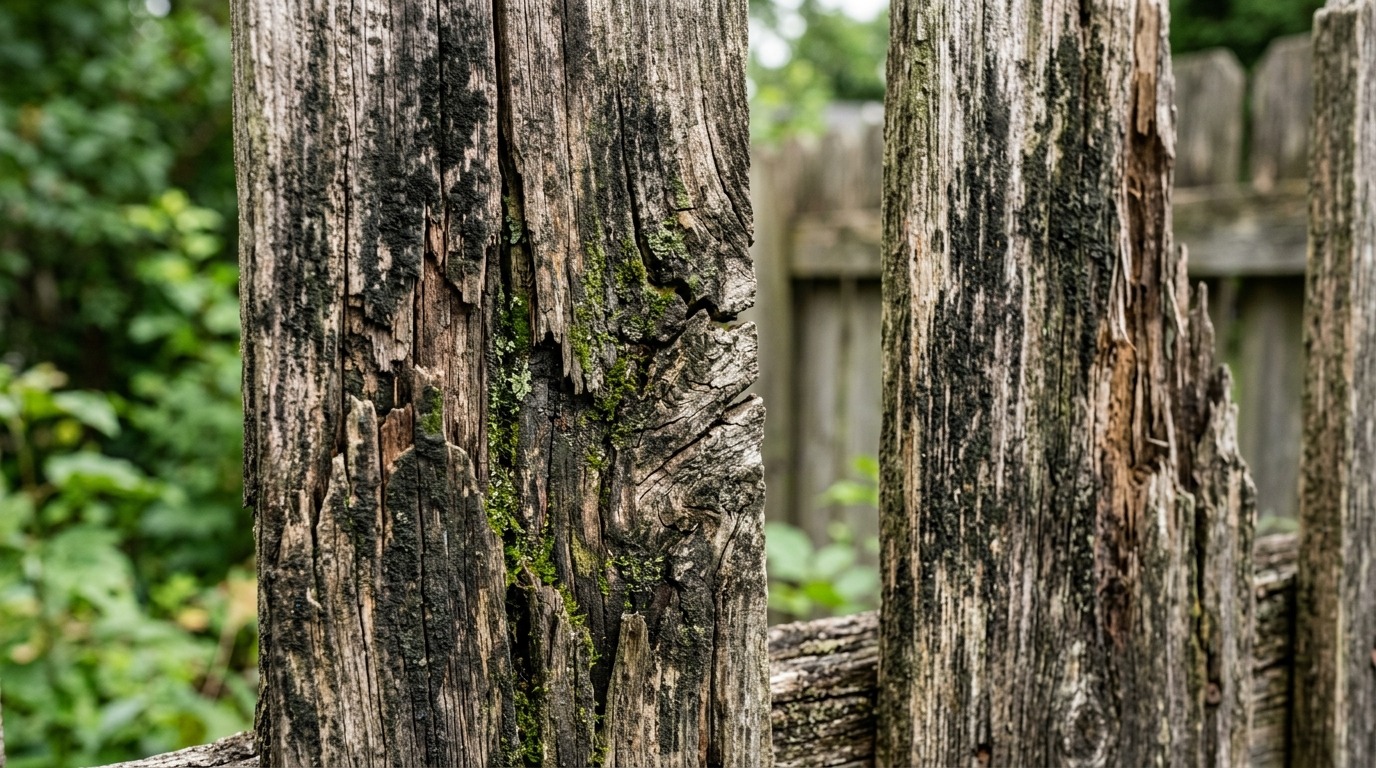
The Danger List: Fencing Timber Vulnerability Ratings
Before analyzing individual species, review this summary comparison of lumber performance under Carolina outdoor exposure:
| Lumber Species / Grade | Botanical Family | Primary Biological Vulnerability | Typical Lifespan in Charlotte | Recommendation |
|---|---|---|---|---|
| Whitewood / SPF (Spruce/Fir) | Softwood (Picea / Abies) | Zero natural extractives; rapid moisture sponge | 2 to 4 Years | ❌ Strictly Avoid |
| Red Oak (Quercus rubra) | Hardwood (Fagaceae) | Open vascular tyloses siphon moisture directly | 3 to 5 Years | ❌ Strictly Avoid |
| Untreated Douglas Fir | Softwood (Pseudotsuga) | Low rot resistance; severe surface checking | 4 to 6 Years | ❌ Avoid Untreated |
| Poplar / Sweetgum | Hardwood (Liriodendron) | Extreme grain twist; high fungal rot decay | 2 to 3 Years | ❌ Strictly Avoid |
| Lumber High in Sapwood | Any Tree Species | Pale outer rings lack protective tannins | 3 to 5 Years | ❌ Strictly Avoid |
| Western Red Cedar | Softwood (Thuja plicata) | None above ground; packed with thujaplicins | 20 to 25+ Years | 🏆 Gold Standard |
| UC4A Pressure-Treated Pine | Softwood (Pinus taeda) | High shrinkage; requires stain every 2–3 yrs | 20 to 25+ Years (Posts) | 🏆 Structural Standard |
To learn how high-performing timbers survive Carolina conditions, read our comprehensive Best Wood for a Fence Guide.
1. Whitewood & SPF: The Big-Box Retail Trap
The most common fencing blunder is purchasing pre-assembled fence panels made from Whitewood, also graded as SPF (Spruce-Pine-Fir).
Whitewood is a commercial grouping of fast-growing northern softwoods—predominantly white spruce, Engelmann spruce, and balsam fir. These timbers are engineered exclusively for interior structural framing (wall studs and floor joists), where lumber stays permanently sealed inside dry drywall.
When placed outdoors in North Carolina, whitewood fails rapidly due to three factors:
- Zero Chemical or Natural Defense: Whitewood contains no insecticidal oils or fungicidal tannins. Unlike Southern Yellow Pine, spruce cells have a closed tracheid structure that cannot absorb pressure-treatment chemicals. Biocides penetrate less than 1/16 of an inch.
- Moisture Siphoning: Spruce lumber absorbs rain rapidly. During humid Charlotte summers, moisture inside whitewood pickets quickly exceeds the 20% fiber saturation point needed for active fungal rot.
- Black Mold & Fastener Tear-Out: Within 6 to 12 months, whitewood pickets turn blotchy gray-black from surface mildew. Within 3 years, the wood around fasteners rots out, dropping pickets to the ground.
2. Red Oak: Debunking the “Hardwood” Fallacy
A widespread misconception among homeowners is that “hardwoods are always more durable than softwoods.” While Red Oak (Quercus rubra) is dense and exceptionally tough for indoor flooring, it is one of the worst choices for outdoor fencing.
VASCULAR ANATOMY: RED OAK VS. WHITE OAK
─────────────────────────────────────────────────────────────────────────────
RED OAK:    [ O ][ O ][ O ]  ──► Open Tyloses (Siphons water like straws)
WHITE OAK:  [ * ][ * ][ * ]  ──► Closed Tyloses (Water-tight, barrel grade)
─────────────────────────────────────────────────────────────────────────────
The issue lies in cellular anatomy:
- Open Vascular Vessels (Tyloses): Under a microscope, Red Oak heartwood features wide, open vascular tubes that transported water during the tree’s life. Unlike White Oak—whose pores are naturally plugged with balloon-like cell growths called tyloses—Red Oak’s vessels remain wide open.
- The Sponge Effect: When an untreated Red Oak picket or post touches damp ground or absorbs rain, its open vessels draw water deep into the wood through capillary action. Trapped moisture accelerates brown-rot fungal decay.
An untreated Red Oak fence post set in Charlotte’s moist red clay will rot through and snap at the groundline in under 4 years, long before a naturally rot-resistant softwood like Western Red Cedar shows the slightest decay.
3. Untreated Douglas Fir: Built for Joists, Not Fences
Douglas Fir (Pseudotsuga menziesii) is prized across construction for its stiffness and high beam-load strength. Builders rely on it for roof rafters and structural framing.
However, untreated Douglas Fir lacks outdoor durability. The Western Wood Products Association rates Douglas Fir as only “moderately durable to non-durable” against decay.
When installed as outdoor fencing pickets or rails in North Carolina:
- Severe Surface Checking: Douglas Fir reacts poorly to wet-and-dry cycling. Its surface develops deep cracks (checks) that allow rainwater to bypass exterior stains.
- Ground Rot: Used as fence posts, untreated Douglas Fir rots at the red clay groundline within 4 to 6 years.
Douglas Fir performs outdoors only when heavily pressure-treated with commercial preservatives, but raw, untreated dimensional Doug Fir pickets should never be used on residential perimeters.
4. Poplar and Sweetgum: The Warping Nightmares
Yellow Poplar and Sweetgum grow abundantly across North Carolina forests. Local sawmills often offer these native hardwoods at low prices, leading builders to experiment with them for fence pickets.
The outcome is almost always catastrophic:
- Severe Grain Distortion: Poplar and Sweetgum possess interlocked, cross-spiral grain structures. As moisture evaporates in 95°F Carolina heat, boards twist violently, snapping hardened steel screws.
- Rapid Sapwood Decay: Both species consist primarily of soft, perishable sapwood that breaks down into brittle cellulose within 24 to 36 months of outdoor exposure.
5. The Universal Hazard: Lumber High in Sapwood
Regardless of the species you select, one universal biological rule dictates fence longevity: Never install lumber cut from sapwood.
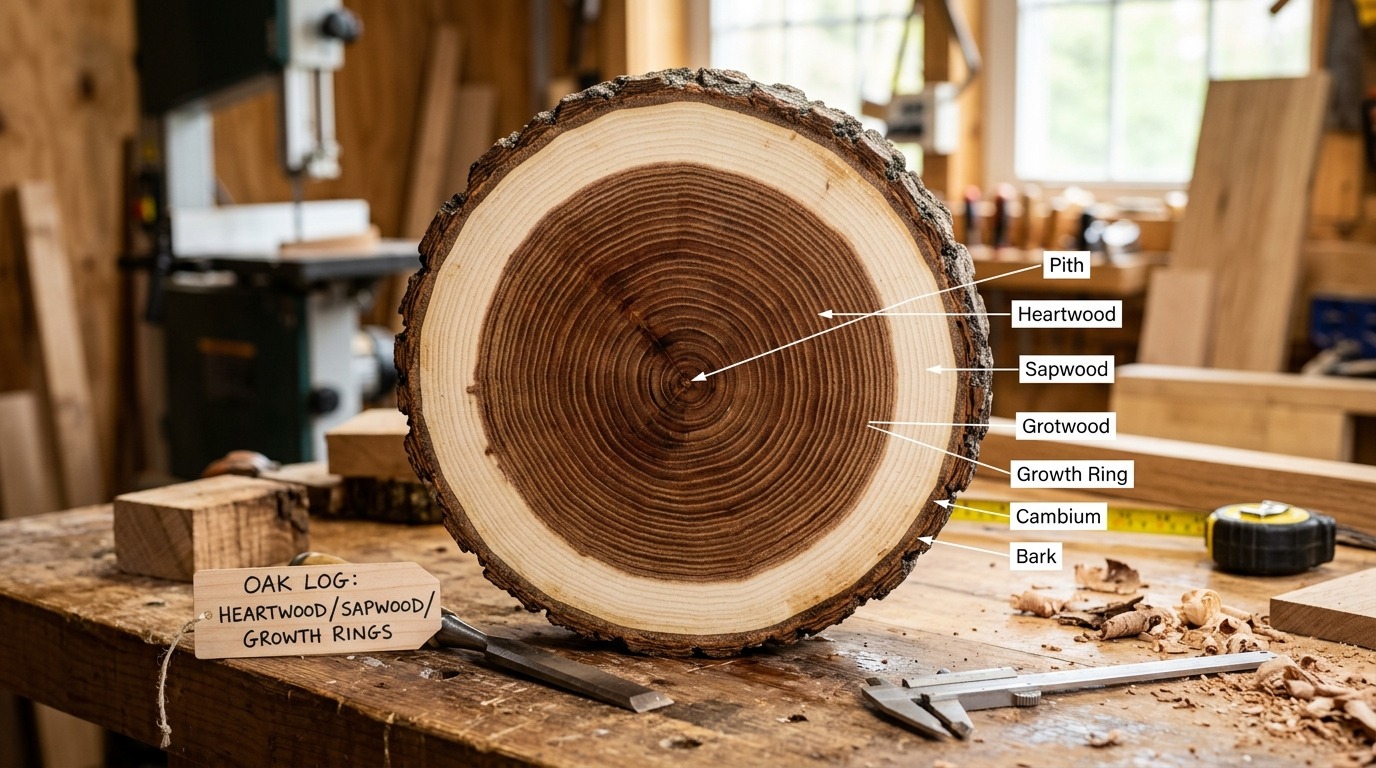
The Botanical Difference: Heartwood vs. Sapwood
Every tree trunk contains two distinct biological zones:
- Heartwood (The Inner Core): The dense interior core where the tree deposits secondary metabolites—including natural tannins, polyphenols, and aromatic terpenes. These organic extractives are naturally toxic to decay fungi and unpalatable to subterranean termites.
- Sapwood (The Outer Ring): The living outer layers that transport water and sugars. Sapwood contains zero protective extractives.
Because sapwood contains residual starches, insects and fungal spores attack it first. Even on rot-resistant species like Redwood or Cypress, sapwood will decay in 3 to 5 years.
At Amour Fence, we inspect every lumber delivery, rejecting boards with excessive sapwood and ensuring your fence is framed exclusively with heartwood-graded timber.
What You Should Build With Instead
Protecting your investment in Charlotte requires choosing timbers that either contain natural protective extractives or have been engineered to withstand ground contact:
THE HIGH-PERFORMANCE TIMBER STANDARD
┌───────────────────────────────────────┬────────────────────────────────────┐
│ Fence Component                       │ Recommended Material Standard      │
├───────────────────────────────────────┼────────────────────────────────────┤
│ Ground-Contact Posts (In Red Clay)    │ UC4A Pressure-Treated Pine (MCA)   │
│ Framework Horizontal Rails (Above)    │ UC3B Pine or Western Red Cedar     │
│ Exterior Pickets (Sunny/Humid Face)   │ 100% Heartwood Western Red Cedar   │
│ Fastener Metallurgy                   │ Grade 304/316 Stainless Steel      │
└───────────────────────────────────────┴────────────────────────────────────┘
By specifying a Hybrid Wood Fence System—anchoring UC4A Pressure-Treated Pine posts in gravel-drained concrete footings and building pickets with Western Red Cedar—homeowners achieve 20 to 25+ years of worry-free durability.
Build with Integrity: Consult Charlotte’s Wood Specialists
A custom wood fence is an enduring addition to your home’s security and curb appeal—provided it is built with the right raw materials. At Amour Fence, we reject inferior whitewoods, unrated posts, and sapwood off-cuts. Every post, rail, and picket is hand-selected and custom-built on site to thrive in the Carolina climate.
Build a fence designed to last a generation.
Ready to Build a Durable Timber Fence?
- Call Our Craftsmen Directly: (980) 300-1047
- Schedule an On-Site Consultation: Get a Free Estimate
- Our Charlotte Service Areas: Serving Charlotte, Matthews, Pineville, Waxhaw, Weddington, Fort Mill, and surrounding Mecklenburg and Union County neighborhoods.
Frequently Asked Questions
What is the worst wood to use for an outdoor fence?
Untreated whitewood (a commercial mix of spruce, lodgepole pine, and balsam fir, often labeled SPF) is the single worst choice for outdoor fencing. Whitewood lacks natural extractives or chemical biocides, causing it to absorb rainwater rapidly. In the humid Carolina Piedmont, whitewood pickets succumb to black mold, severe warping, and structural fungal rot within 2 to 4 years.
Can you use oak to build an outdoor fence in North Carolina?
Red Oak should never be used for outdoor fencing or ground-contact posts. While extremely hard and dense, Red Oak features large, open vascular pores (open tyloses) that act like drinking straws, siphoning rainwater directly into the core of the timber. Untreated Red Oak placed in Charlotte's moist red clay or humid air rots significantly faster than softwoods like Western Red Cedar. White Oak is naturally decay-resistant due to closed tyloses, but it is too costly and heavy for standard residential fencing.
Why do cheap big-box store fence panels rot so quickly?
Most budget pre-assembled fence panels sold at retail home centers are manufactured from low-grade whitewood (spruce) or second-growth sapwood rather than heartwood. These panels are typically held together with thin electro-galvanized staples that rust out rapidly, and the wood fibers possess zero biological defense against fungal decay or subterranean termites.
Is untreated Douglas Fir suitable for fencing?
Untreated Douglas Fir is an outstanding indoor structural framing timber, but it performs poorly as an exterior fence material in humid climates. When exposed to outdoor moisture cycles without chemical pressure-treatment, Douglas Fir pickets experience deep surface checking (cracking along the grain), cupping, and vulnerability to wood-boring insects.
Why does sapwood rot faster than heartwood?
Sapwood is the pale outer ring of a living tree responsible for moving water and nutrients. It contains virtually no natural antimicrobial resins or tannins. Heartwood, by contrast, is the dense inner core formed as the tree matures, packed with concentrated natural extractives that deter fungi and insects. Untreated sapwood of any timber species decays in humid weather within 3 to 5 years.