
Quick Answer: Modern pressure-treated pine is safe for dogs and backyard vegetable gardens under normal everyday exposure. Since 2003, residential lumber has replaced toxic arsenic (CCA) with copper-based preservatives like Micronized Copper Azole (MCA). While casual contact or licking will not poison pets, swallowing sharp wood splinters remains a physical puncture hazard. For homeowners with persistent wood-chewing dogs or dedicated organic produce gardens, chemical-free Western Red Cedar provides unmatched peace of mind.
When homeowners in the Charlotte area plan a new perimeter fence, two priorities routinely top the list: keeping family dogs secure in the yard and safeguarding backyard vegetable beds.
Because Charlotte’s humid summers demand durable materials resistant to fungal decay, pressure-treated pine is a frequent choice. Yet many homeowners wonder: is pressure treated wood safe for dogs, or does chemical runoff jeopardize tomatoes and herbs planted along the fence line?
To answer this, let’s separate outdated building myths from modern standards and compare pressure-treated pine with naturally organic Western Red Cedar.
The 2003 Turning Point: CCA Arsenic vs. Modern MCA
Much of the lingering anxiety surrounding pressure-treated lumber stems from legacy materials. Prior to December 31, 2003, residential lumber relied on Chromated Copper Arsenate (CCA), utilizing inorganic arsenic and chromium to deter insects and rot.
Due to valid health concerns regarding surface residue transfer onto children’s hands and pet paws, the EPA phased out CCA for residential use, including fences and decks.
Today, reputable fence builders in North Carolina utilize modern biocides:
- Micronized Copper Azole (MCA): Microscopic copper particles bonded with organic azole fungicides, penetrating deep into Southern Yellow Pine fibers under vacuum pressure.
- Alkaline Copper Quaternary (ACQ): Soluble copper balanced with quaternary ammonium compounds.
Neither MCA nor ACQ contains arsenic or chromium. The primary active ingredient is copper—a naturally occurring mineral hostile to fungi and termites, with low mammalian toxicity.
Is Pressure-Treated Wood Toxic to Dogs? (Chewing, Splinters, and Paws)
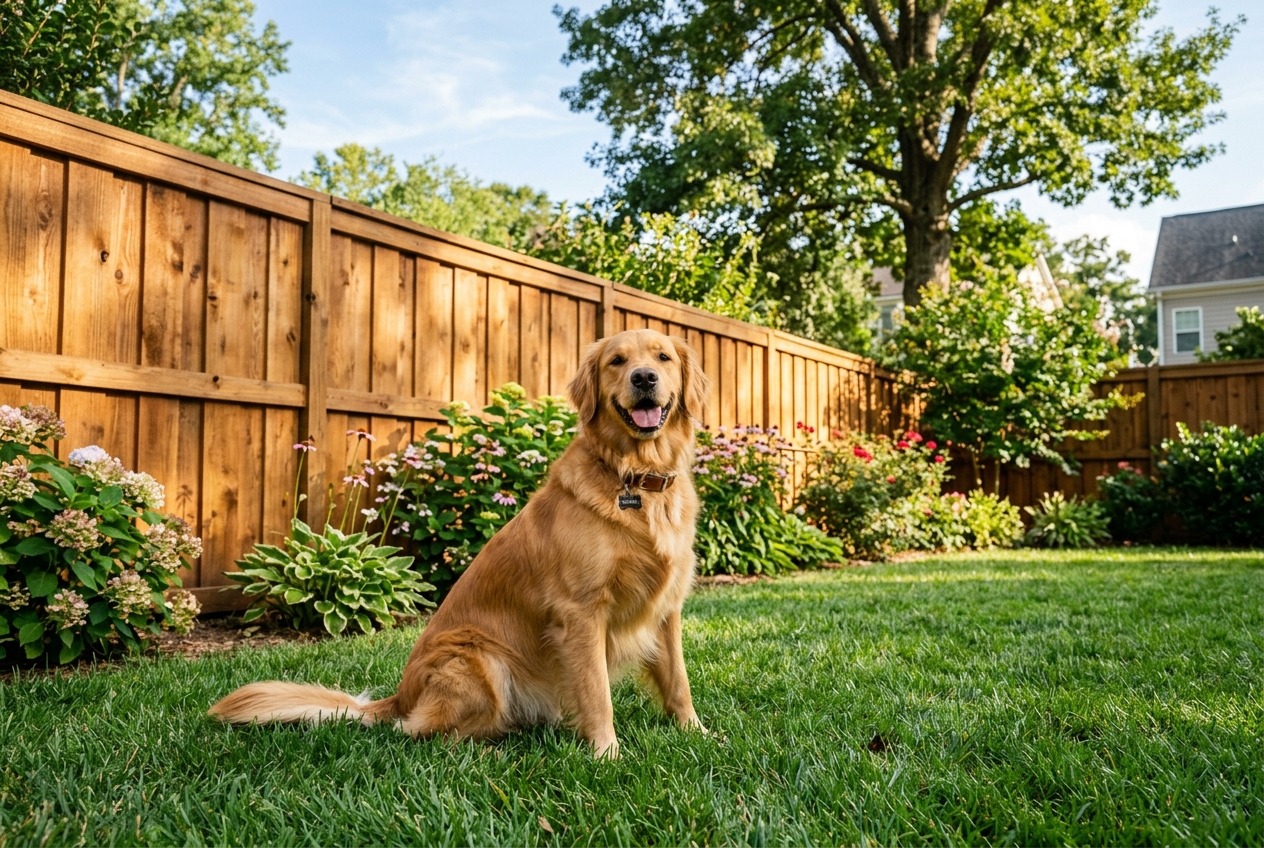
For dog owners in Matthews, Fort Mill, and Weddington, backyard fencing is an essential off-leash boundary. Pet interactions with treated fencing divide into three clear categories:
1. Casual Contact and Licking
Brushing against pickets or an occasional lick will not harm your pet. In modern MCA-treated lumber, copper compounds are locked into wood cells through high-pressure chemical bonding. They do not rub off as loose powder onto fur or paws.
2. The Chewing Hazard: Mechanical vs. Chemical
If your dog aggressively chews on fence pickets, the principal threat is mechanical injury rather than chemical poisoning. Southern Yellow Pine is a dense softwood that splinters into sharp shards when chewed. Ingesting these fragments can cause:
- Painful gum and mouth lacerations
- Esophageal irritation
- Intestinal obstruction or gastric wall punctures
While the small amount of copper ingested rarely triggers systemic poisoning, swallowed wood shards represent a genuine veterinary emergency.
3. Digging Near Fence Posts
Dogs that dig along perimeter boundaries encounter post footings set in Charlotte’s dense Cecil red clay. Because Amour Fence sets fence posts in structural concrete below the frost line, subterranean posts remain locked in place, minimizing claw contact.
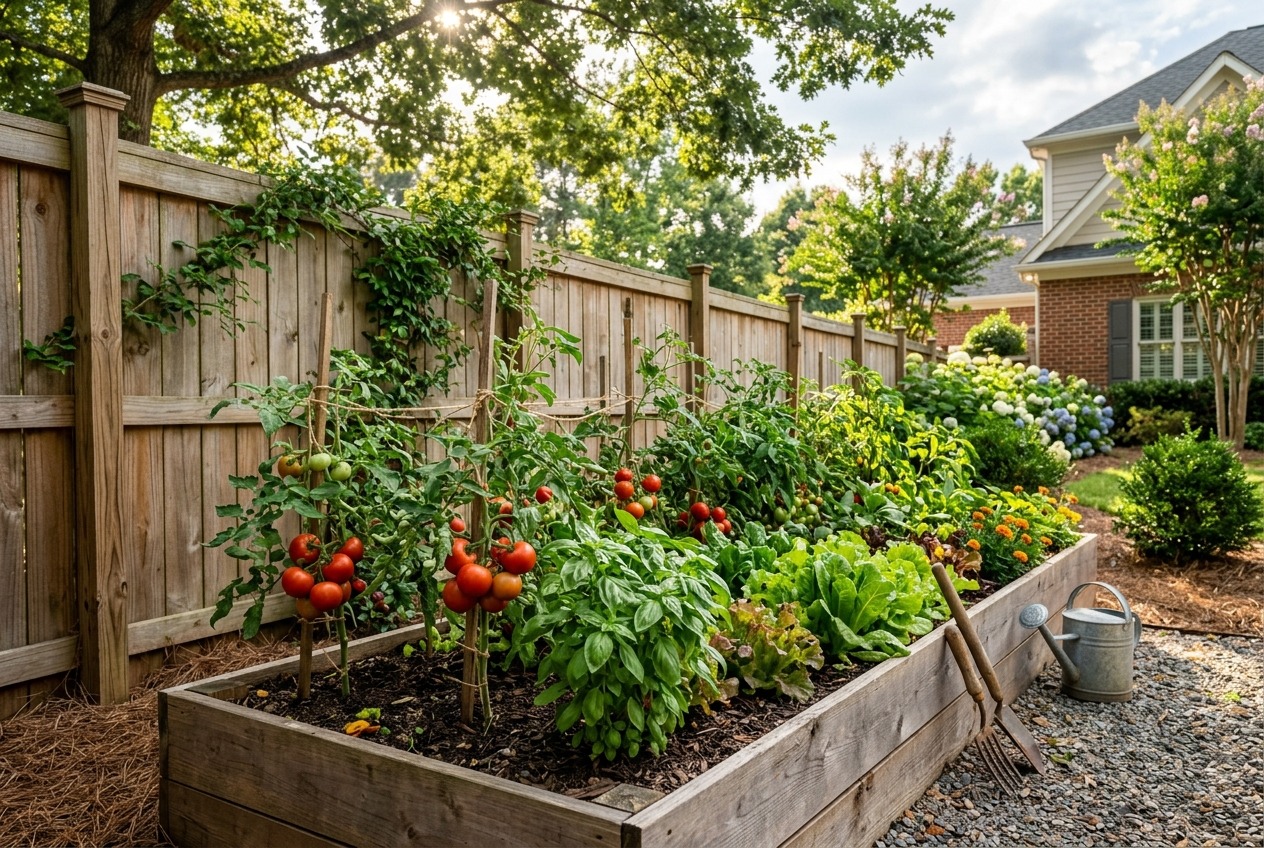
Can You Build Raised Beds Next to Treated Wood Fences?
A productive garden is a staple of North Carolina backyards. Homeowners frequently ask whether chemical leaching from adjacent fence pickets will contaminate edible crops.
University agricultural extension research confirms that modern treated wood is safe for vegetable gardens:
- Minimal Mobility: Micronized copper is virtually insoluble in normal soil. Rainwater runoff binds copper tightly to organic matter and clay within 1 to 2 inches of the wood surface.
- Natural Plant Barriers: Plant roots absorb only micro-nutritional traces of copper. If soil copper ever reached extreme concentrations, plants would exhibit root stunting (phytotoxicity) long before dangerous levels accumulated in vegetables.
- Root Clearance: Planting crops 6 to 12 inches away from the fence line eliminates any realistic interaction between roots and fence posts.
Cedar vs. Pressure-Treated Pine for Pet Owners
Comparing treated pine with Western Red Cedar highlights the key differences for homes with pets and gardens:
| Feature / Criteria | Micronized Copper Azole (MCA) Pine | Western Red Cedar |
|---|---|---|
| Chemical Preservatives | Micronized copper & tebuconazole | 100% Untreated & Organic |
| Pet Toxicity Risk | Very low (No arsenic; splinters pose physical hazard) | Zero chemical toxicity; completely pet-safe |
| Splinter Characteristics | Coarse, fibrous splinters | Softer straight grain; less abrasive |
| Soil Leaching in Gardens | Trace copper bound within 1–2 inches | Zero chemical leaching |
| Decay Resistance | Industrial pressure infusion | Natural thujaplicins & cedar oils |
| Subtropical Charlotte Durability | Exceptional ground contact performance | Outstanding above-ground stability |
| Best Application | Budget-conscious durability & structural posts | Pet lovers, organic gardens & upscale aesthetics |
For an in-depth comparison of durability, aesthetics, and cost, read our comprehensive guide on cedar vs pine fence.
Critical Backyard Safety: Never Burn Pressure-Treated Scraps
While pressure-treated pine is safe standing in your yard, remember one crucial rule: never burn cutoffs or old pickets in backyard fire pits or chimineas.
Combustion vaporizes copper compounds into irritating smoke that can cause acute respiratory distress in dogs and humans. Toxic residues also remain concentrated in the ashes. Always discard treated cutoffs through Charlotte-Mecklenburg solid waste collection or let Amour Fence handle cleanup.
Designing a Pet-Safe Fence in Charlotte
To ensure your pets stay secure and gardens thrive, follow these practical steps:
- Choose Western Red Cedar Pickets: If your dog is a chronic wood gnawer, cedar removes chemical concerns and repels pests naturally. Review our guide on how to maintain a cedar fence to preserve its beauty.
- Select Privacy or Board-on-Board Styles: Solid designs block visual triggers from passing animals or delivery vans, reducing pacing and fence fighting.
- Keep Bottom Gaps Under 2 Inches: Grading pickets close to the ground prevents small dogs from squeezing underneath.
- Maintain a Garden Drip Line: Keep a 12-inch mulch or gravel strip between your fence and vegetable beds to promote airflow and prevent moisture rot.
Frequently Asked Questions
Is pressure-treated wood toxic to dogs if they lick or chew on it?
Modern pressure-treated wood treated with Micronized Copper Azole (MCA) is far safer than older formulations and contains no arsenic. Licking the fence poses virtually zero poisoning risk. However, chewing and swallowing splinters can cause mechanical intestinal irritation or obstruction. For puppies and dogs that habitually gnaw wood, 100% untreated Western Red Cedar is the safest, chemical-free alternative.
Can I grow vegetables directly next to a pressure-treated pine fence?
Yes. Agricultural extension studies show that copper from modern MCA-treated lumber binds tightly to soil particles and does not migrate more than an inch or two into surrounding soil. Vegetable root uptake of copper is negligible. Homeowners seeking certified organic garden perimeters often prefer naturally rot-resistant Western Red Cedar or use a food-grade polyethylene barrier.
What is the difference between CCA and modern MCA wood preservatives?
Before December 31, 2003, residential lumber was treated with Chromated Copper Arsenate (CCA), which contained inorganic arsenic. Today, residential building codes mandate copper-based biocides like Micronized Copper Azole (MCA), eliminating arsenic entirely and bonding microscopic copper particles deeply inside the wood fiber.
Can you burn leftover pressure-treated fence pickets in a fire pit?
No. Never burn pressure-treated wood in outdoor fire pits, fireplaces, or chimineas. Combustion vaporizes copper compounds into irritating smoke and leaves concentrated ash that poses serious respiratory hazards. Always dispose of treated cutoffs through Charlotte-Mecklenburg solid waste programs.
Protect Your Pets and Yard with Charlotte’s Wood Fence Experts
At Amour Fence, we prioritize your family’s safety and outdoor lifestyle. Whether you choose the natural beauty of 100% Western Red Cedar or the proven durability of modern treated pine, our craftsmen build fences tailored to your yard and neighborhood standards.
Ready to build a safe, secure outdoor space? Schedule your free estimate today or call our Charlotte team directly at (980) 300-1047.
Frequently Asked Questions
Is pressure-treated wood toxic to dogs if they lick or chew on it?
Modern pressure-treated wood treated with Micronized Copper Azole (MCA) is far safer than older formulations and contains no arsenic. Licking the fence poses virtually zero poisoning risk. However, chewing and swallowing splinters can cause mechanical intestinal irritation or obstruction. For puppies and dogs that habitually gnaw wood, 100% untreated Western Red Cedar is the safest, chemical-free alternative.
Can I grow vegetables directly next to a pressure-treated pine fence?
Yes. Agricultural extension studies show that copper from modern MCA-treated lumber binds tightly to soil particles and does not migrate more than an inch or two into surrounding soil. Vegetable root uptake of copper is negligible. Homeowners seeking certified organic garden perimeters often prefer naturally rot-resistant Western Red Cedar or use a food-grade polyethylene barrier.
What is the difference between CCA and modern MCA wood preservatives?
Before December 31, 2003, residential lumber was treated with Chromated Copper Arsenate (CCA), which contained inorganic arsenic. Today, residential building codes mandate copper-based biocides like Micronized Copper Azole (MCA), eliminating arsenic entirely and bonding microscopic copper particles deeply inside the wood fiber.
Can you burn leftover pressure-treated fence pickets in a fire pit?
No. Never burn pressure-treated wood in outdoor fire pits, fireplaces, or chimineas. Combustion vaporizes copper compounds into irritating smoke and leaves concentrated ash that poses serious respiratory hazards. Always dispose of treated cutoffs through Charlotte-Mecklenburg solid waste programs.