
Quick Summary: Removing an Old Wood Fence
To remove an old wood fence safely, call 811 to mark utilities, strip gates, slice rails into 6-to-8-foot sections with a reciprocating saw, and lift concrete-anchored posts vertically using a farm jack and chain. Expect 16–24 hours of labor for a 150-foot DIY tear-down—or hire pros for a single-day clear-out.
Tearing down a weathered backyard barrier looks simple until you hit your first concrete-anchored post buried in compacted clay. Learning how to remove an old wood fence safely requires the right demolition sequence, mechanical leverage for footings, and a solid disposal plan for heavy lumber and rusted nails.
When to Tear Down vs. Repair an Old Wood Fence
Before cutting rails, confirm the fence is beyond saving. Homeowners deciding when to replace vs repair a wooden fence should check for three signs of irreversible failure:
- Groundline Post Rot: If over 25% of your posts feel spongy or snap at soil level, the structural backbone has failed.
- Severe Post Leaning (>15°): Shallow footings or rotted bases in saturated soil cause entire runs to list.
- 30%+ Section Decay: When rails detach from posts and over a third of pickets are split, warped, or termite-damaged, patching wastes time.
For isolated wind damage or a sagging gate, targeted wood fence repair and board replacement can add years of service without full demolition.
Essential Tools & Safety Gear for Fence Tear Down
Having the right DIY fence removal tools prevents snapped pry bars and back strain:
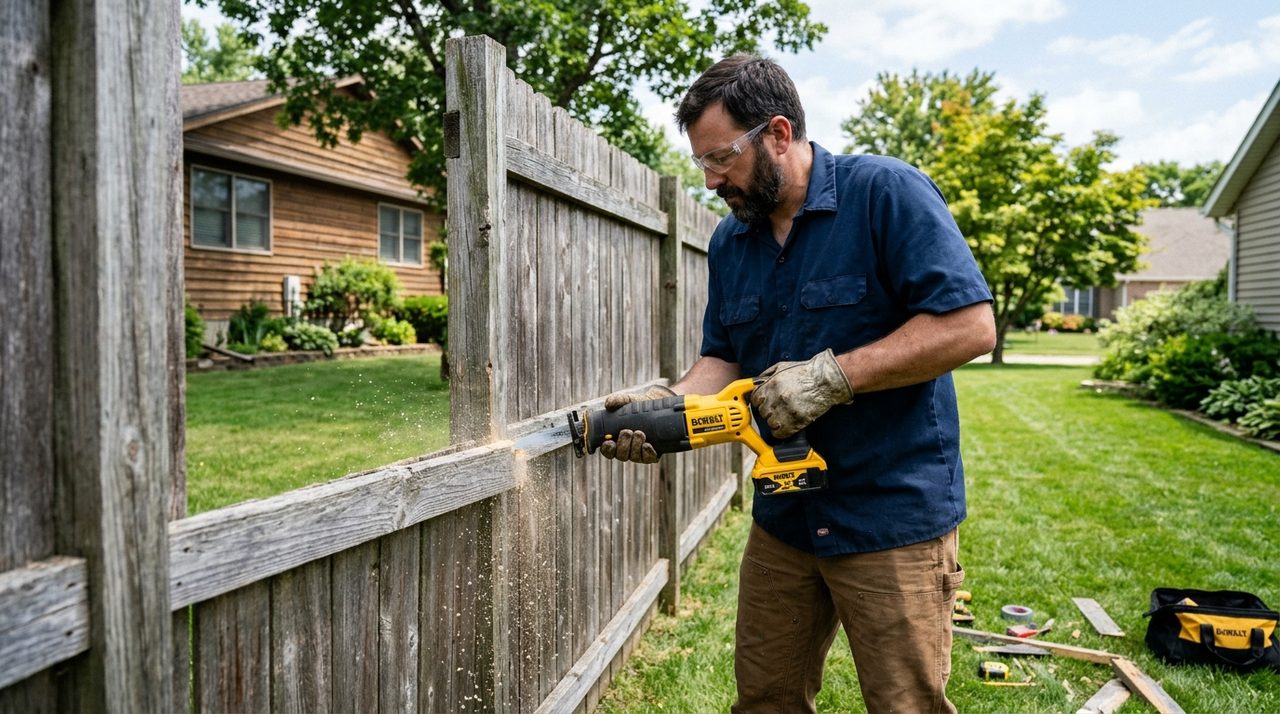
- Reciprocating Saw (Sawzall) with 9-inch bi-metal wood-and-nail demolition blades
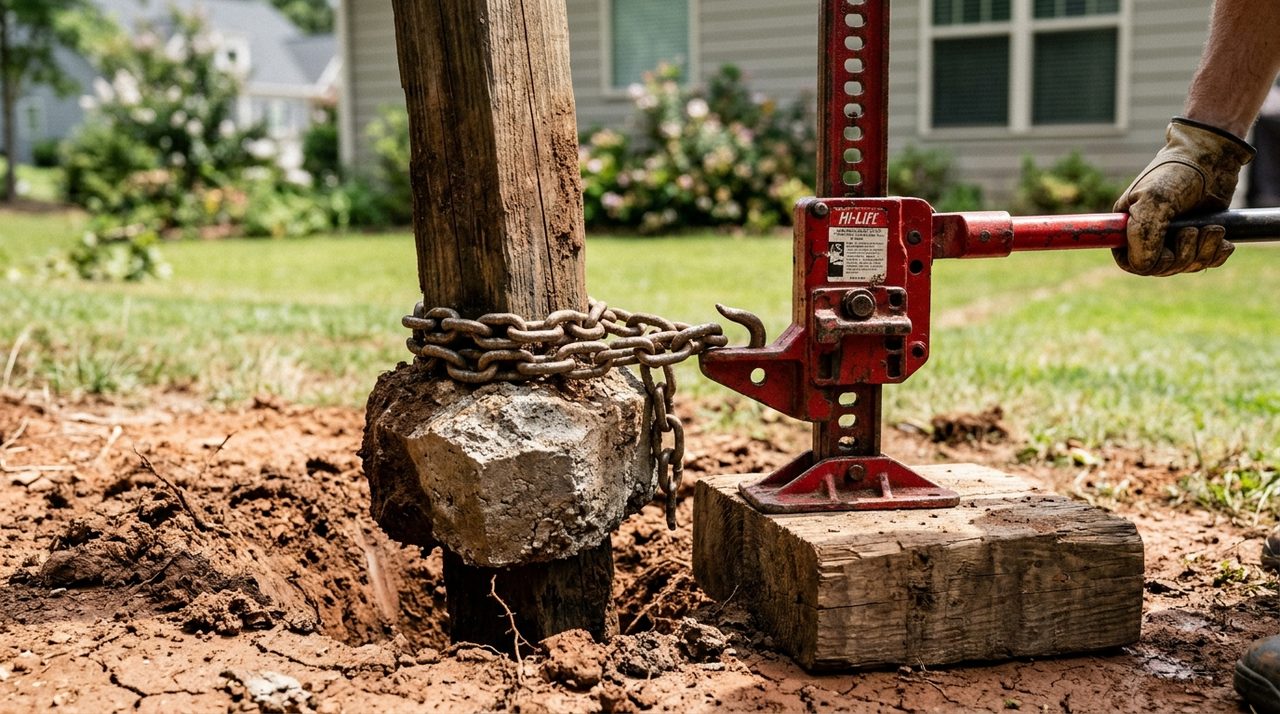
- 48-Inch Farm Jack (High-Lift Jack) and 5/16-inch Grade 70 tow chain with grab hook
- Flat Pry Bar, Framing Hammer, Post-Hole Digger, and San Angelo Digging Bar
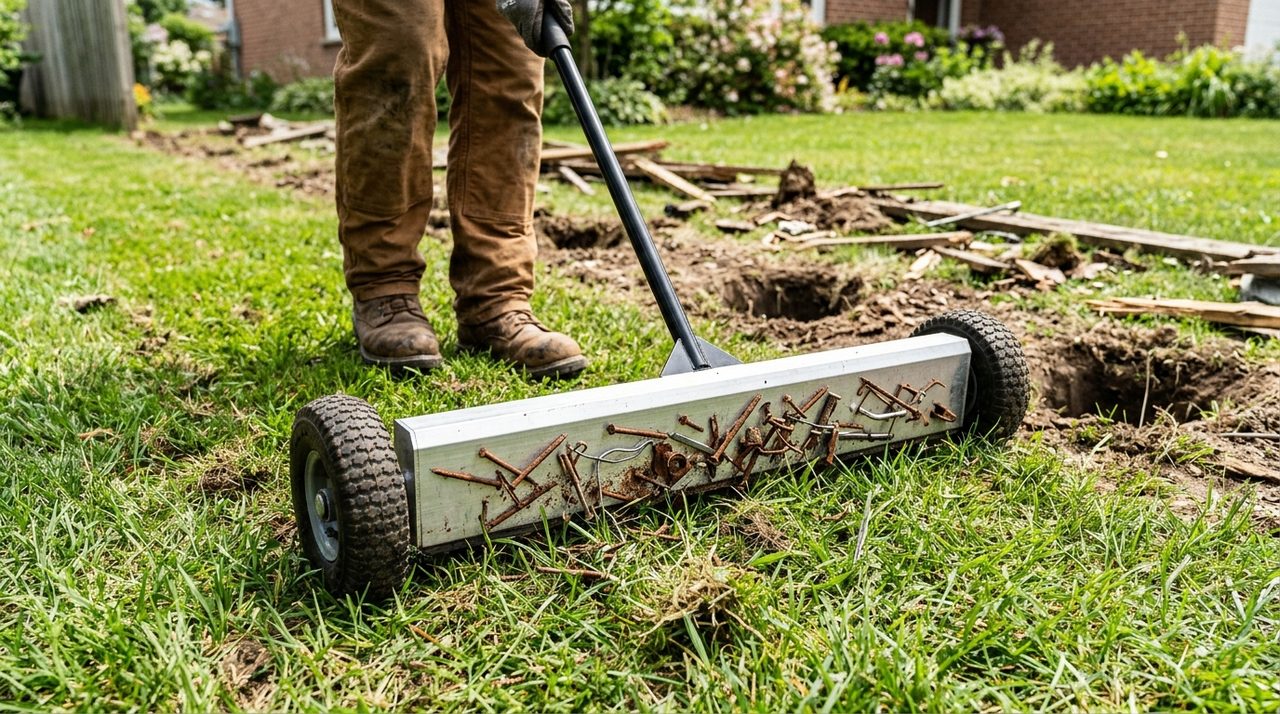
- Wheelbarrow and Neodymium Magnetic Rolling Nail Sweeper
- PPE: Leather work gloves, ANSI safety glasses, ear protection, and steel-toed boots
Pre-Tear Down Checklist: NC811, Property Pins & Neighbor Rules
Complete these three checks before touching a single picket:
- Call 811 Before You Dig: Contact NC811 (or your local 811 service) at least three business days prior. Pulling 30-inch concrete plugs can sever shallow fiber-optic cables, irrigation lines, landscape wiring, and gas lines.
- Protect Property Survey Pins: Flag metal corner rebar stakes so you do not yank them out during post extraction and lose your exact boundary line.
- Confirm Boundary & Neighbor Notice: Verify the fence sits on your lot. If it straddles a shared line, coordinate the tear-down schedule with your neighbor in advance.
Step-by-Step Fence Removal Process
Step 1: Removing Fence Gates and Hardware
Unscrew or grind off rusted hinge straps, drop rods, and latches, then lift the gate leaves clear. Removing gates first opens wide access for wheelbarrows and staging lumber while eliminating heavy swinging panels.
Step 2: Disassembling or Cutting Fence Pickets & Rails
How you tear down a fence depends on whether you are salvaging boards:
- Fast Demolition: Use a reciprocating saw with a bi-metal blade to slice through the top, middle, and bottom rails flush against each post. Each 6-to-8-foot panel drops intact for easy two-person carrying.
- Salvaging Lumber: Back out deck screws with an impact driver or tap a flat pry bar behind each picket at the rail line to pop nails without splitting sound cedar.
Step 3: Extracting Concrete-Anchored Fence Posts
Post extraction is 70% of the physical work—especially in Charlotte’s dense Piedmont Cecil red clay, which seals around concrete like a suction cup when wet and bakes like brick in summer.
Farm Jack & Chain Method:
- Dig a 3-to-4-inch collar around the concrete top so the chain seats on concrete, not just wood.
- Wrap a Grade 70 tow chain tightly around the concrete neck and lock it with the grab hook.
- Rest a 48-inch farm jack on a thick 2×10 wood block or paver beside the post so it cannot sink into soft soil.
- Hook the chain to the jack nose with minimal slack, stand beside—never over—the handle, and pump steadily until the suction breaks and the footing pops free.
Tricky Post Scenarios:
- No Farm Jack? Dig 8–10 inches around the footing, flood the ring with water to break clay suction, and pry upward with a San Angelo bar or bolted 4×4 lever over a fulcrum block.
- Broken Post Flush with Concrete? Drive a 1/2-inch × 6-inch lag screw with a heavy washer into the remaining wood core, attach your chain, and lift. If the plug still won’t budge, fracture it with a rotary hammer or sledgehammer.
- Never Cut Posts Flush When Rebuilding: Abandoned 80-pound concrete slugs block augers for new post holes along the same line.
Step 4: Magnetic Yard Sweep & Debris Clearance
Backfill post holes with clean topsoil and tamp firmly. Then walk the entire perimeter in overlapping passes with a neodymium magnetic rolling nail sweeper to catch hidden ring-shank nails and staples—protecting dog paws, bare feet, and mower tires.
What to Do with the Old Wood: Disposal & Recycling Options
Plan how to dispose of old fence wood before piling debris on your driveway:
- Municipal Bulk Pickup Limits: Most curbside programs reject full fence lines or require nail-free, 4-foot bundled boards.
- Never Burn Pressure-Treated Wood: Untreated cedar can sometimes be chipped, but pressure-treated pine (MCA or older CCA) releases toxic smoke when burned and must go to a licensed Class C&D landfill.
- Roll-Off Dumpster: A 150-to-200-foot fence plus concrete footings typically fills a 10-to-15-cubic-yard dumpster.
DIY Effort vs. Professional Fence Tear Down
Comparing fence removal cost DIY vs pro comes down to equipment, landfill logistics, and weekend labor:
| Project Factor | DIY Fence Removal | Professional Fence Removal Crew |
|---|---|---|
| Time for 150 Linear Feet | 16–24 hours (2 weekends) | 4–6 hours (single day) |
| Concrete Extraction | Manual digging, farm jack & chain | Hydraulic post pullers / skid steer |
| Dumpster & Haul-Away | Rent tools + 10–15 yd dumpster | Included in turnkey scope |
| Nail & Site Cleanup | Self-managed raking & sweep | Full magnetic sweep & hole backfill |
| Safety & Utility Risk | Back strain & jack kickback risk | Insured crew with NC811 clearance |
| Pricing Structure | Tool rentals + landfill tipping fees | Custom quote (no hidden haul fees) |
For deep concrete footings, steep grades, or heavy vines, hiring professional fence removal and tear down services in Charlotte clears your yard in a single afternoon.
Preparing the Cleared Line for Your New Fence
Once holes are backfilled and roots are cleared along the string line, plan your next build:
- Compare Western Red Cedar and Pressure-Treated Pine lumber options.
- Review our fence replacement cost breakdown for realistic project budgeting.
- Explore turnkey new fence installation services engineered for Charlotte clay and HOA rules.
Ready to skip the heavy lifting? Contact our team, call (980) 300-1047, or request a free on-site estimate.
Frequently Asked Questions About Fence Removal
Can I just cut old fence posts off at ground level instead of digging out the concrete?
No. Abandoned 80-pound concrete footings block augers and prevent digging new 24-to-36-inch holes along the same line. Only cut posts flush if you are permanently relocating the fence.
How do you pull a fence post with concrete out of heavy clay soil?
Wrap a Grade 70 tow chain around the exposed concrete neck and lift vertically with a 48-inch farm jack braced on a wood block. This breaks Piedmont red clay suction without excessive digging.
Can old pressure-treated fence wood be burned in a fire pit?
No. Burning pressure-treated lumber releases toxic fumes and hazardous ash from MCA or CCA preservatives. Dispose of treated boards at a licensed Class C&D landfill.
How long does it take for a homeowner to tear down a 150-foot wooden fence?
Two people typically need 16 to 24 labor hours (two full weekends) to dismantle 150 linear feet, pull 20–25 concrete footings, and haul debris. A professional crew finishes in 4 to 6 hours.
What is the most cost-effective way to dispose of an old wood fence?
For DIY projects, a 10-to-15-cubic-yard roll-off dumpster or direct C&D landfill drop-off is standard since curbside pickup rarely takes full fences. Full-service removal bundles tear-down and haul-away into one turnkey quote.
Frequently Asked Questions
Can I just cut old fence posts off at ground level instead of digging out the concrete?
No, cutting posts flush with the ground is strongly discouraged if you plan to build a new fence along the same property line. Abandoned 80-pound concrete footings block augers and prevent digging new 24-to-36-inch post holes. Only cut posts flush if you are permanently relocating the fence line.
How do you pull a fence post with concrete out of heavy clay soil?
In dense Piedmont red clay, digging solely by hand is exhausting because wet clay creates a strong vacuum seal around the concrete plug. The most effective DIY method is wrapping a heavy-duty tow chain around the base and lifting the entire footing vertically using a 48-inch farm jack (high-lift jack) braced on a sturdy wood block.
Can old pressure-treated fence wood be burned in a fire pit?
Never burn old pressure-treated lumber in a backyard fire pit or burn pile. Modern Micronized Copper Azole (MCA) and older Chromated Copper Arsenate (CCA) preservatives release toxic fumes and hazardous ash when burned. Treated fence boards must go to a licensed construction and demolition (C&D) landfill.
How long does it take for a homeowner to tear down a 150-foot wooden fence?
Two homeowners working together typically spend 16 to 24 labor hours—roughly two full weekends—to dismantle 150 linear feet of wood fencing, extract 20 to 25 concrete footings, sweep for nails, and load debris. A professional crew with hydraulic equipment completes the same tear-down in 4 to 6 hours.
What is the most cost-effective way to dispose of an old wood fence?
Municipal bulk trash pickup rarely accepts full fence lines due to volume limits and protruding nails. For a DIY tear-down, renting a 10-to-15-cubic-yard roll-off dumpster or hauling sorted loads to a C&D landfill is standard. Hiring a full-service removal crew bundles tear-down, footing extraction, and haul-away into one turnkey scope.