
Quick Answer: The 3 Golden Rules of Cedar Fence Maintenance
To keep a Western Red Cedar fence performing for 20 to 25+ years in Charlotte: (1) Never pressure-wash soft cedar fibers—use gentle oxygenated bleach and a low-pressure garden hose; (2) Apply penetrating oil stain every 3 to 5 years to protect against intense Carolina UV and humidity; and (3) Keep a 2-inch ground clearance to stop pickets from wicking moisture and red clay stains.
Western Red Cedar is Mecklenburg County’s premier fencing lumber, celebrated for its natural rot resistance, tight grain, and aromatic cedar oils. While cedar requires far less chemical treatment than pressure-treated pine, the Carolina Piedmont’s climate still demands a consistent care routine.
This contractor-tested guide provides a straightforward roadmap to protect your investment across Charlotte, Matthews, Ballantyne, and Lake Norman.
The Charlotte Climate Challenge: Humidity, Pollen, and Algae
Outdoor wood in the Piedmont region faces specific environmental pressures:
- Sustained Humidity (80%+): Traps moisture against wood pores, encouraging mildew growth in shaded backyards.
- Heavy Spring Pine Pollen: Every April, loblolly pine pollen coats fences in a sticky organic film that feeds surface mold if left unwashed.
- Shaded Green Algae: North-facing sections under dense tree canopies develop green micro-algae blooms.
- Cecil Red Clay Splatter: Rain runoff splashes iron-rich red clay onto bottom pickets, requiring adequate ground clearance.
The “Splash Test”: How to Tell When Your Cedar Needs Sealing
Professional fence builders use the Splash Test to determine whether wood pores are sealed or vulnerable to moisture.
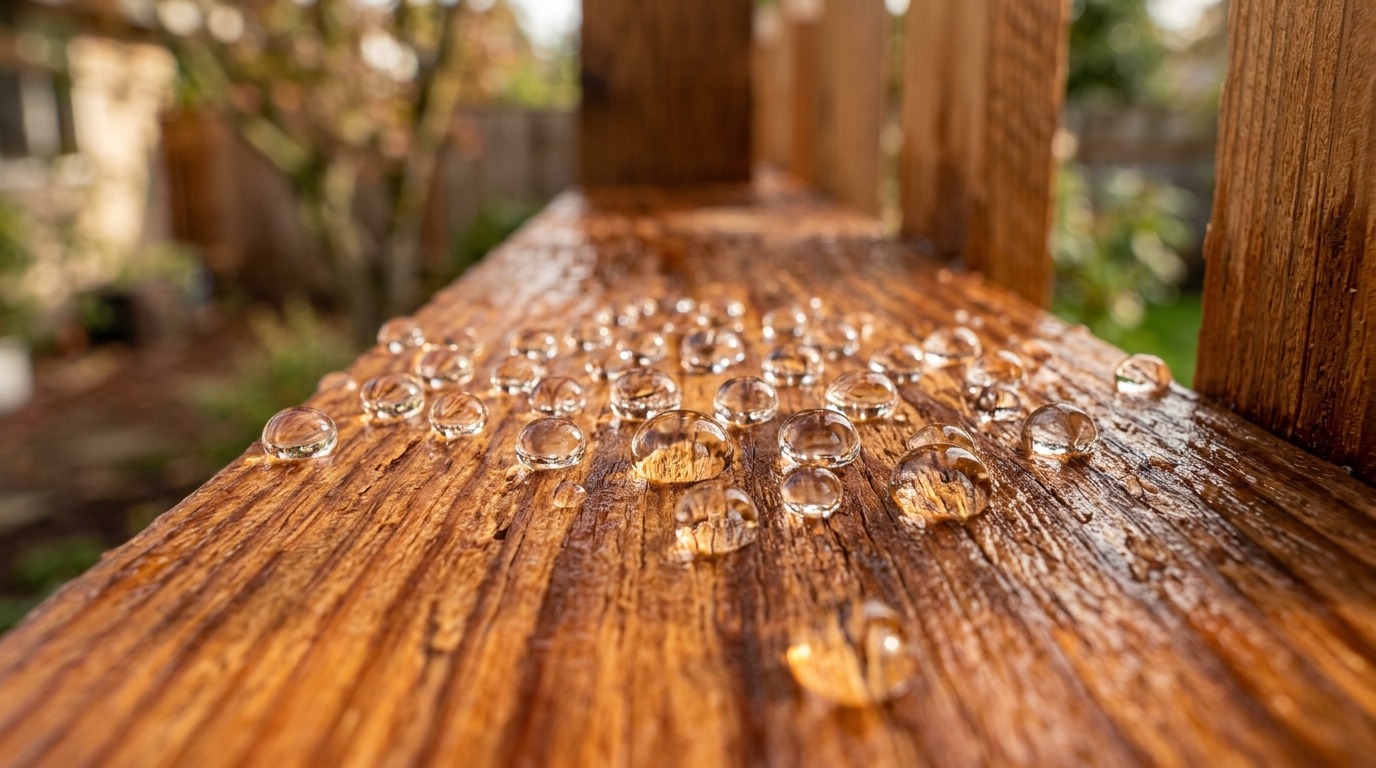
Performing the Splash Test:
- Wait for 48 hours of dry, rain-free weather.
- Splash several tablespoons of clean water onto vertical pickets and horizontal rails.
- Evaluate the reaction:
- Tight Beading (Protected): Water droplets bead up tightly. Your protective seal remains fully intact.
- Slow Spreading (Early Warning): Water flattens and slowly soaks in over several minutes. Plan to stain within 3 to 6 months.
- Rapid Soaking (Ready for Staining): Water absorbs immediately and turns the wood dark. The protective oils have depleted; clean and re-stain promptly.
Check southern and western exposures first, as direct Carolina sunlight degrades finishes faster than shaded runs.
Step-by-Step: How to Clean a Cedar Fence Safely
Before applying any finish, cedar must be clean of dirt, pollen, and mildew.
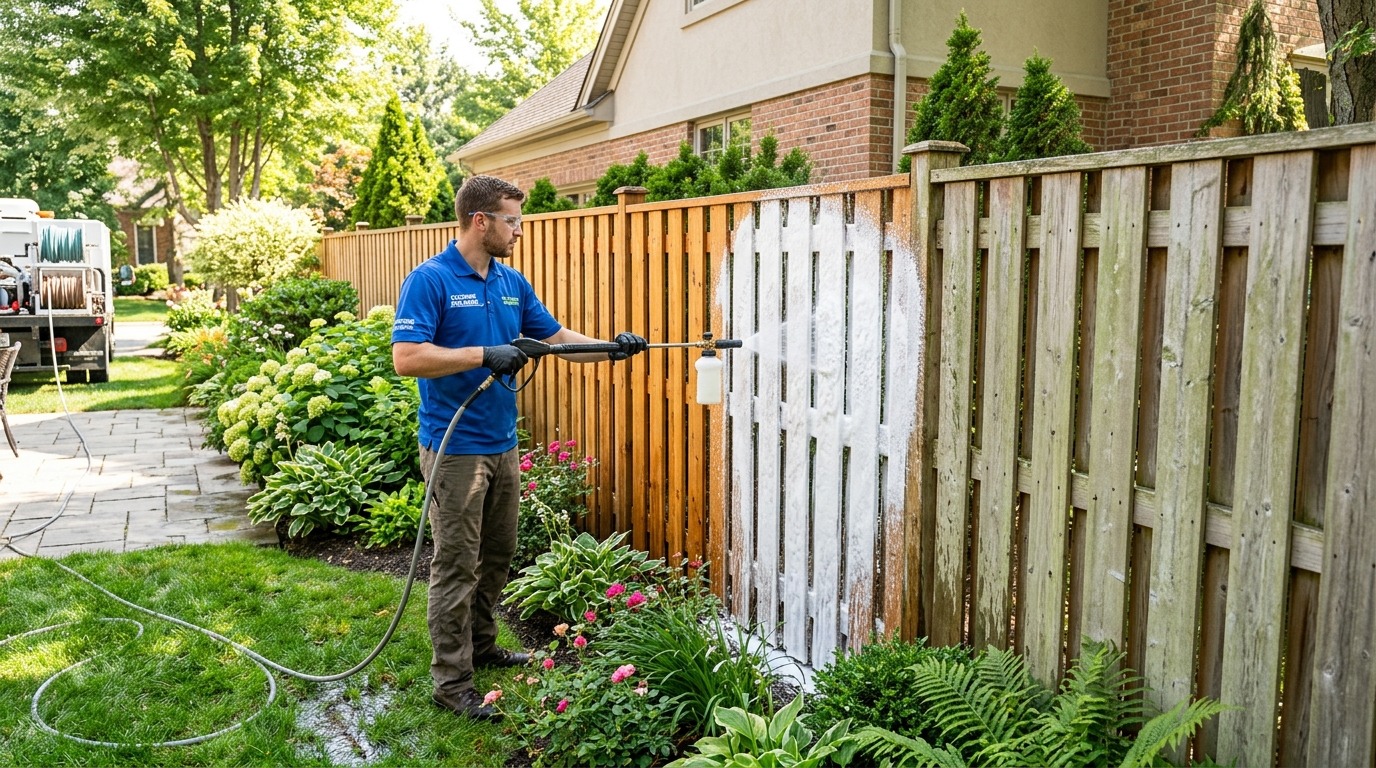
Why You Must Avoid High-Pressure Washers
Western Red Cedar is a lightweight, low-density softwood. Standard pressure washers (2,500+ PSI) tear earlywood fibers away from latewood grain, causing permanent wood fuzzing and splintered gouges. Repairing pressure-washer damage requires extensive, labor-intensive sanding.
The Gentle Soft-Wash Protocol
- Pre-Wet Landscaping: Wet nearby plants and lawn with fresh water to shield them from cleaner runoff.
- Mix Oxygenated Bleach: Dissolve 6 to 8 ounces of powdered sodium percarbonate per gallon of warm water in a pump sprayer. Unlike chlorine bleach, oxygenated bleach cleans deeply without stripping cedar’s natural color or killing vegetation.
- Apply Bottom to Top: Spray evenly across panels from bottom to top to avoid streak marks.
- Dwell Time: Let the solution foam for 10 to 15 minutes. Do not allow it to dry completely.
- Light Agitation: Use a soft-bristle brush along the wood grain on heavy stains or algae spots.
- Garden Hose Rinse: Rinse thoroughly using a standard garden hose nozzle on a flat spray setting.
Allow the fence to dry completely for 24 to 48 hours before applying stain.
Staining and Sealing: Penetrating Oils vs. Film Finishes
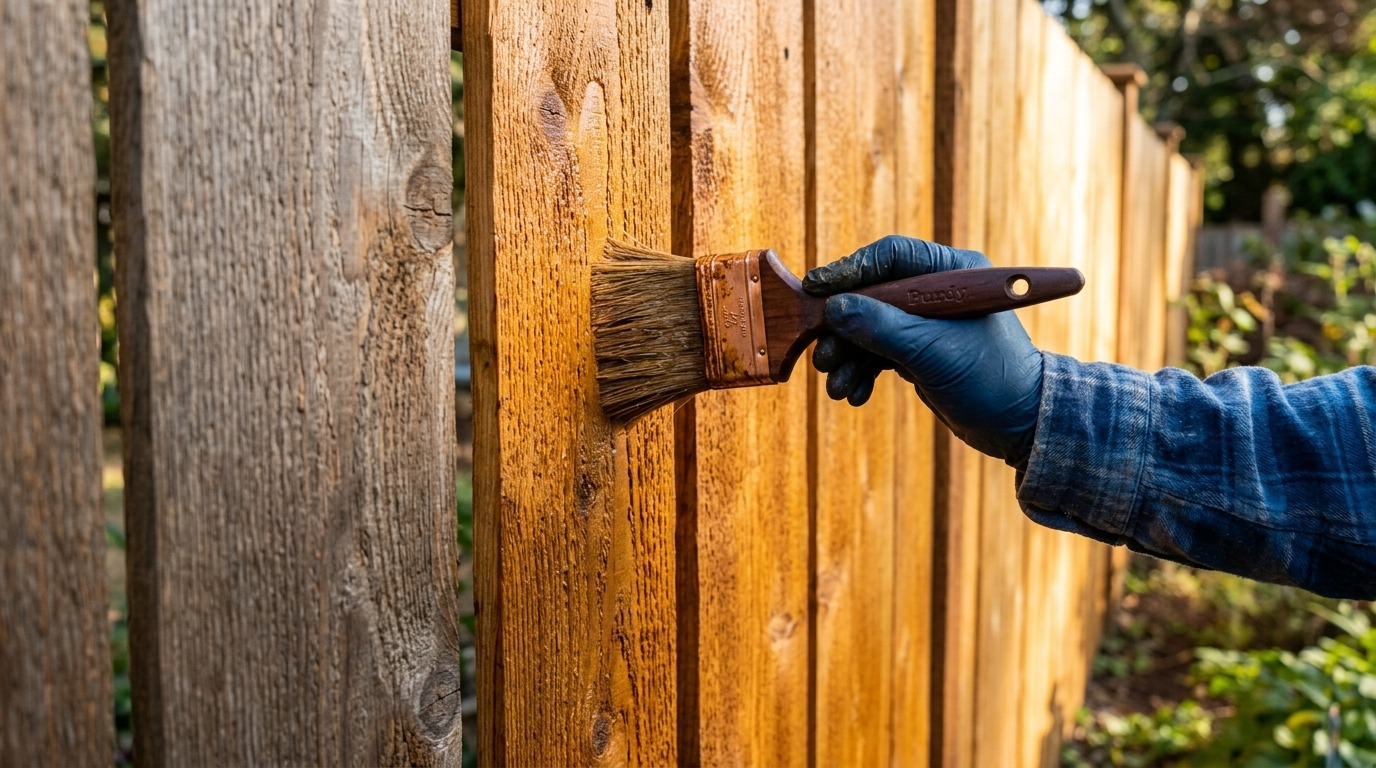
Applying the right finish seals the wood against UV greying and driving Carolina thunderstorms.
| Finish Type | Performance on Cedar | Charlotte Lifespan | Maintenance Effort | Recommendation |
|---|---|---|---|---|
| Penetrating Oil Stain (Semi-Transparent) | Soaks deep into wood grain; replenishes natural oils with zero peeling. | 3 to 5 Years | Very Low (Re-coat over clean wood) | Recommended Standard |
| Clear Water Repellent | Repels water but lacks UV pigments; graying starts in 12–18 months. | 1 to 2 Years | Moderate (Annual re-application) | Only if weathered silver look is desired |
| Film-Forming Acrylic / Solid Stain | Creates a plastic-like film over wood surface that traps moisture. | 2 to 4 Years | High (Blisters, cracks, requires stripping) | Avoid on Cedar |
The Value of Semi-Transparent Penetrating Oils
High-solids penetrating oil stains enter open wood pores without creating a brittle surface skin. Under Carolina sun and humidity, they will never crack or flake. When re-staining in 3 to 5 years, no scraping or stripping is required—simply clean the pickets and apply a fresh coat.
Semi-transparent stains contain finely ground iron oxide pigments that filter out UV radiation, preserving cedar’s rich golden-red hues.
How Often Should You Stain a Cedar Fence?
- New Cedar Fences: If constructed from green lumber, let boards acclimate for 4 to 8 weeks until internal moisture drops below 15%. Kiln-dried cedar can be stained shortly after installation.
- Routine Staining: Reapply penetrating oil every 3 to 5 years. Southern and western fence lines exposed to full sun will need attention closer to 3 years.
- Annual Maintenance: Rinse fence lines each spring to remove seasonal pine pollen and dust.
For a turnkey maintenance solution, Amour Fence offers complete fence staining and restoration services.
Tackling Algae and Mildew in Shaded Yards
Dense tree cover and automatic sprinklers encourage mildew formation on shaded panels:
- Trim Overgrowth: Maintain a 6- to 12-inch buffer between shrubs, vines, and pickets to allow continuous airflow.
- Redirect Sprinklers: Prevent lawn irrigation heads from spraying fence panels. Constant soaking leaches protective oils prematurely.
- Spot Treatments: Clean localized algae spots using a 1:4 mix of white vinegar and water or mild oxygen bleach, followed by a garden hose rinse.
Seasonal Cedar Fence Maintenance Schedule
Follow this seasonal checklist to maintain fence integrity year-round:
| Season | Priority Checklist Items | Tools Needed |
|---|---|---|
| Spring (Mar–May) | • Hose down April pine pollen and dust. • Lubricate gate hinges and latch hardware. • Trim back encroaching vines and tree branches. | Garden hose, adjustable nozzle, hedge shears, silicone lube. |
| Summer (Jun–Aug) | • Run the Splash Test on sun-exposed runs. • Check sprinkler trajectory. • Clear mulch buildup away from picket bases. | Cup of water, garden trowel. |
| Fall (Sep–Nov) | • Prime Staining Window: Apply penetrating oil during mild 60°F–80°F days. • Rake damp leaves away from bottom rails. | Penetrating oil stain, stain brush/roller, garden rake. |
| Winter (Dec–Feb) | • Inspect perimeter for storm or falling limb damage. • Verify gate swing clearance over soil. | Visual walkaround, screwdriver, level. |
To understand how cedar’s maintenance demands compare against treated lumber, explore our guide to Cedar vs. Pressure-Treated Pine.
Professional Care and Craftsmanship
Whether building a new privacy enclosure or preserving an established cedar perimeter, Amour Fence delivers precision carpentry and tailored Piedmont care.
- Schedule an Estimate: Submit an online Free Estimate Request
- Call Directly: (980) 300-1047
- Our Services: Explore custom Fence Installation and professional Fence Staining.
Frequently Asked Questions
How often should you stain a cedar fence in Charlotte, NC?
In Charlotte's humid climate, Western Red Cedar fences should be treated with high-grade penetrating oil stain every 3 to 5 years. Sun-exposed southern lines require refreshing closer to 3 years, while shaded northern runs often last 5 years.
Can you use a pressure washer to clean a cedar fence?
No. Western Red Cedar is a soft timber, and high-pressure power washers shred wood fibers, causing permanent fuzzing and splintering. Clean cedar using gentle soft-washing with oxygenated bleach and a garden hose rinse.
What is the water splash test for a wood fence?
The splash test checks if your fence requires resealing. Flick water onto dry cedar pickets. If droplets bead up, your protective seal is intact. If water absorbs within seconds and darkens the wood, the pores are open and the fence needs staining.
How do you remove green algae and mildew from a cedar fence?
Spray an oxygenated bleach solution (sodium percarbonate dissolved in warm water) across affected pickets. Let it dwell for 10 to 15 minutes to break down fungal spores, gently brush stubborn spots, and rinse clean with a garden hose.
How can I prevent my cedar fence from turning silver-gray?
Cedar turns gray from solar ultraviolet oxidation. To preserve its warm amber tone, apply a semi-transparent penetrating oil stain with UV-inhibiting pigments. Clear sealers lack pigments and allow graying within 12 to 18 months.