
Quick Answer: What Does a New Fence Cost in Charlotte, NC?
For Charlotte homeowners, the typical turnkey fence cost in Charlotte, NC for an average suburban backyard (150 to 200 linear feet of 6-foot wood fencing) ranges between $3,500 and $7,500. Baseline pressure-treated pine installations sit on the economical end, while architectural grade Western Red Cedar, board-on-board privacy, and modern horizontal styling represent higher-tier craftsmanship. Rather than flat per-foot rates, true project pricing is shaped by lumber species, property slope, gate hardware, and Piedmont red clay excavation.
When budgeting for a perimeter upgrade, Charlotte homeowners are often misled by generic online calculators and flat per-foot quotes. Calculating the true wood fence installation cost in Charlotte, NC requires evaluating local variables that online widgets ignore.
The rolling topography of Myers Park, dense root networks in Dilworth, rocky subsoil in Huntersville, and strict architectural covenants in Ballantyne or Weddington all impact your final investment. A flat sandy yard installs very differently than a sloped Charlotte property anchored in dense Piedmont red clay.
At Amour Fence, we emphasize upfront clarity. Whether you are replacing a failing barrier or enclosing a new backyard retreat, this guide details realistic project tiers for different types of fences and cost, the seven core engineering drivers behind contractor bids, and how to evaluate your 15-year total cost of ownership.
Charlotte Fence Installation Cost Overview (Ballpark Ranges)
For a typical Charlotte property enclosing a rear yard of 150 to 200 linear feet with one standard 4-foot pedestrian gate, homeowners can expect the following turnkey investment ranges:
| Wood Fence Style & Specification | Typical 150–200 LF Project Range | Primary Material | Privacy Level | Charlotte HOA Compatibility |
|---|---|---|---|---|
| Standard Picket (4ft Spaced) | $2,800 – $4,400 | Treated Pine / Cedar | 20%–40% Open | Universally Accepted |
| Solid Board Privacy (6ft Vertical) | $3,400 – $5,400 | Pressure-Treated Pine | 90%–95% Baseline | Standard (Smooth Side Out) |
| Shadowbox “Good Neighbor” (6ft) | $4,200 – $6,800 | Treated Pine / Cedar | 80%–85% Semi-Private | 🏆 Highly Recommended |
| Board-on-Board (6ft Overlapping) | $4,800 – $7,600 | Western Red Cedar / Pine | 100% Zero-Gap | Preferred for Master HOAs |
| Western Red Cedar Privacy (6ft) | $5,600 – $8,800 | Architectural Clear Cedar | 95%–100% Complete | Top Architectural Standard |
| Modern Horizontal Cedar (6ft Custom) | $6,800 – $10,500+ | Clear Heart Cedar | 95%–100% Modern | Requires ARC Approval |
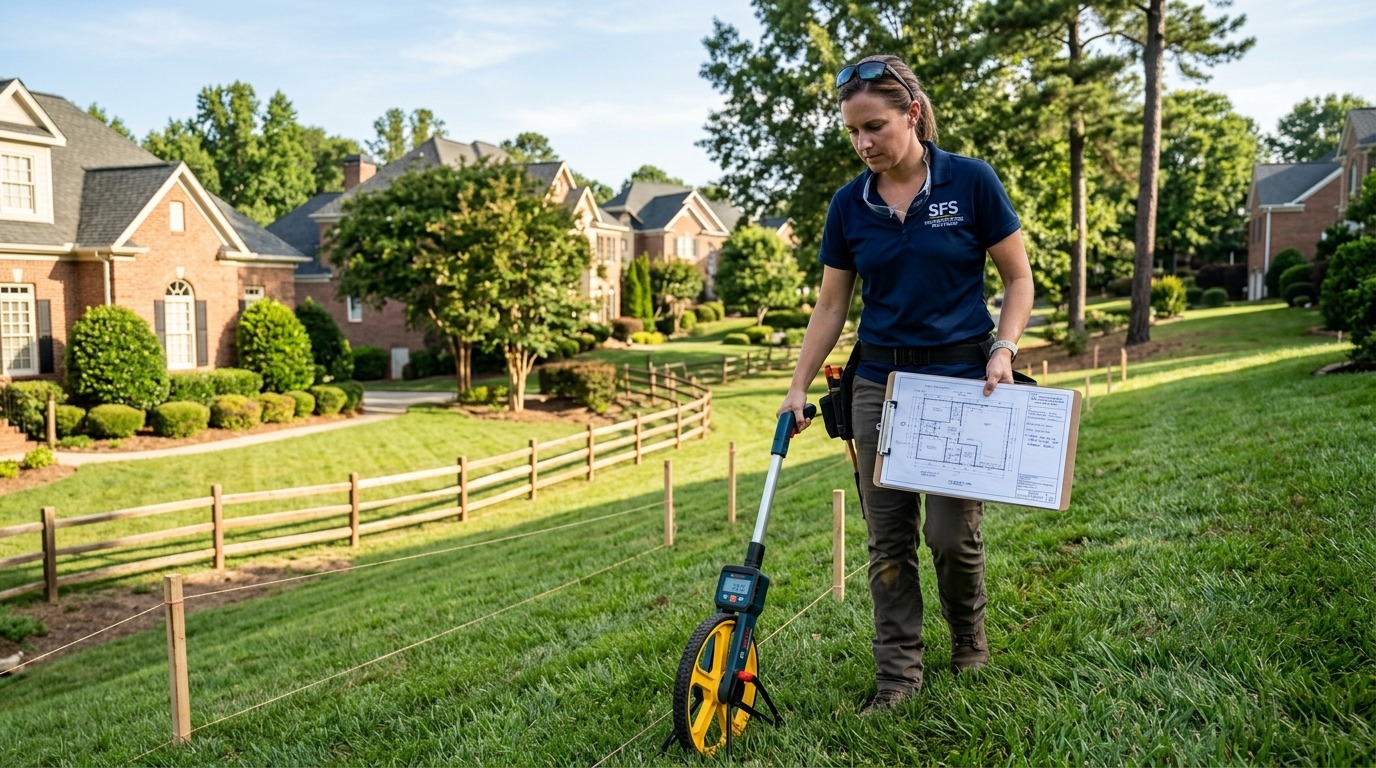
Why “Rate Per Linear Foot” Pricing Is Incomplete
Homeowners evaluating how much does a wood fence cost in Charlotte often see ads promoting flat pricing like “$20 per linear foot.”
A raw wood fence price per linear foot in Charlotte only covers straight picket runs on flat terrain. That figure routinely omits essential project components:
- Gate Engineering: Custom walk and driveway gates requiring reinforced frames and structural hinge posts.
- Subsoil Excavation: Augering through tree roots, rocks, and compacted red clay.
- Hardware Grade: Using 304 stainless steel or hot-dipped galvanized fasteners versus cheap nails that streak black rust.
- Site Preparation: Clearing fence lines, utility coordination through NC811, and adjusting for yard grade changes.
A professional charlotte fence installation estimate evaluates the complete site scope. Below are the seven technical drivers governing every proposal.
The 7 Core Drivers of Fence Cost in the Charlotte Metro
1. Lumber Species: Western Red Cedar vs. Pressure-Treated Pine
Lumber selection is the primary determinant of both your initial proposal and ongoing maintenance. In North Carolina, projects center on two timber varieties:
- Pressure-Treated Pine: Regional Southern Yellow Pine is pressure-infused with copper preservatives to resist rot and insects. It provides the most accessible privacy fence cost in Charlotte, NC. However, pine absorbs and sheds moisture rapidly, making it prone to twisting and cupping under Charlotte’s 95°F summer heat without routine sealing.
- Western Red Cedar: Harvested in the Pacific Northwest, Western Red Cedar contains natural thujaplicins that repel termites and rot without chemicals. Cedar boasts minimal thermal expansion, ensuring pickets stay straight through Carolina humidity.
A turnkey cedar fence cost in Charlotte, NC runs 35% to 50% higher upfront than pressure-treated pine, but cedar’s durability offsets that difference over time.
2. Architectural Design & Lumber Volume
Picket orientation and board spacing dictate raw timber requirements. As detailed in our guide to types of wood fence designs, different styles require differing lumber volumes:
- Solid Board: Pickets butt edge-to-edge on 2x4 rails, utilizing standard lumber counts.
- Board-on-Board: Pickets overlap by 1 to 1.5 inches to prevent gaps from shrinkage, requiring 20% to 25% more pickets per linear foot.
- Shadowbox: Alternating boards between opposite sides of framing creates a “good neighbor” look with 30% airflow, requiring additional carpentry layout.
- Modern Horizontal: Horizontal layouts require posts spaced on tighter 6-foot centers instead of 8 feet to prevent sag, adding 25% more post assemblies and premium-grade timber.
3. Site Topography & Charlotte Red Clay Soil
The geology of the Carolina Piedmont is defined by Cecil soil—a dense red clay packed with kaolinite and iron oxides. This native ground changes across seasons:
- Summer Hardpan: In hot months, Charlotte clay bakes into hardpan. Excavating requires hydraulic earth augers with carbide teeth rather than hand tools.
- Wet Saturated Ground: During rainy seasons, clay swells and holds moisture. Posts require washed gravel footings beneath the timber to prevent water from pooling at the base.
Sloped yards in Matthews, Waxhaw, and South Charlotte require either racked construction (following natural contours) or stepped panels (stair-stepping downhill with longer 9-foot downhill posts).
4. Post Depth & Footing Engineering
Post footings provide the structural foundation of your perimeter. To withstand lateral storm winds across a solid privacy fence, Charlotte installations demand engineered standards:
- 30-to-36-Inch Excavation: Holes must reach 30 to 36 inches into undisturbed subsoil, well below frost depth. Shallow 20-inch holes leave tall fences vulnerable to leaning during severe storms.
- Gravel Drainage Base: Adding 3 to 4 inches of washed gravel at the bottom allows trapped moisture to drain away from post end-grain.
- Monolithic Wet-Mixed Concrete: Dry-pouring powdered concrete into holes produces brittle cures. Proper anchoring utilizes pre-mixed structural concrete poured with a slight grade collar to shed surface runoff.
5. Gate Fabrication & Heavy-Duty Hardware
Gates endure the highest physical stress on any perimeter. Builder-grade gates built with light 2x4 framing routinely sag within eighteen months as wood swells and hinges pull loose.
Durable gate installation requires dedicated structural components:
- Steel-Reinforced Framing: Internal steel truss framing or heavy diagonal wood bracing prevents gravitational racking.
- Structural 6x6 Hinge Posts: While fence runs utilize 4x4 posts, gate leaves should hang on heavy-duty 6x6 pressure-treated posts set in reinforced footings.
- Architectural Hardware: Stainless steel drop rods, commercial gravity latches, and heavy-duty adjustable hinges protect pet and pool access points.
A custom pedestrian gate typically adds $350 to $700, while wide double-drive gates range between $800 and $1,800+ depending on width and reinforcement.
6. Existing Fence Demolition & Haul-Away
Replacing an aged barrier requires site preparation. Pulling out old posts anchored in heavy concrete without disrupting lawns requires hydraulic pullers and manual labor.
Key fence replacement tear down cost in Charlotte variables include:
- Dismantling Panels: Safely taking down pickets, rails, and wire netting.
- Footing Extraction: Extracting concrete root balls completely so new posts can occupy the same boundary line.
- Hauling & Landfill Tipping: Mecklenburg County solid waste facilities charge disposal fees by tonnage for treated lumber and concrete debris.
Turnkey demolition and haul-away typically adds $3 to $8 per linear foot, ensuring a clean site line for new construction.
7. Permitting, Surveys & Charlotte HOA Compliance
Administrative requirements must be resolved before installation begins:
- Mecklenburg County Code: Standard residential fences up to 6 feet in rear and side yards generally do not require a building permit. Fences exceeding 6 feet or installations on corner-lot sight triangles require municipal code review.
- Boundary Line Surveys: Installing a fence inches over a property boundary can trigger costly boundary disputes. If boundary pins cannot be located, budgeting $400 to $800 for a licensed North Carolina surveyor is smart insurance.
- HOA Architectural Review: Neighborhoods in Ballantyne, Weddington, and Huntersville maintain strict ARC guidelines regarding allowable heights, styles (often mandating shadowbox or cedar), and smooth-side-out orientations. Submitting plot plans to your ARC board before ordering materials prevents costly adjustments.
Upfront Cost vs. 15-Year True Cost of Ownership (TCO)
Evaluating estimates based solely on the starting bid overlooks long-term maintenance, staining cycles, and picket repairs.
Here is how an initial installation of 175 linear feet of 6-foot privacy fencing compares over a 15-year lifespan in Charlotte’s climate:
| Cost Component Over 15 Years | Economy Pressure-Treated Pine | Premium Western Red Cedar |
|---|---|---|
| Initial Turnkey Installation | $3,800 – $4,600 | $6,200 – $7,400 |
| Initial Seasoning & Staining (Year 1) | $900 – $1,200 (Required seal against warping) | $1,100 – $1,400 (Penetrating oil finish) |
| Routine Staining Cycles (Years 4, 8, 12) | $2,700 – $3,600 (Every 3–4 years) | $2,200 – $2,800 (Every 4–5 years) |
| Picket & Board Warping Repairs | $600 – $1,200 (Replacing twisted boards) | $150 – $300 (Dimensionally stable) |
| Gate Adjustments & Hardware Service | $400 – $600 | $150 – $250 |
| Post Integrity at Year 15 | Moderate rot risk at groundline (15–20%) | Sound (Natural tannin resistance) |
| Estimated 15-Year Total Investment | $8,400 – $11,200 | $9,800 – $12,150 |
| Aesthetic Value & Curb Appeal | Weathered, checking, knot shrinkage | Elegant patina, rich architectural look |
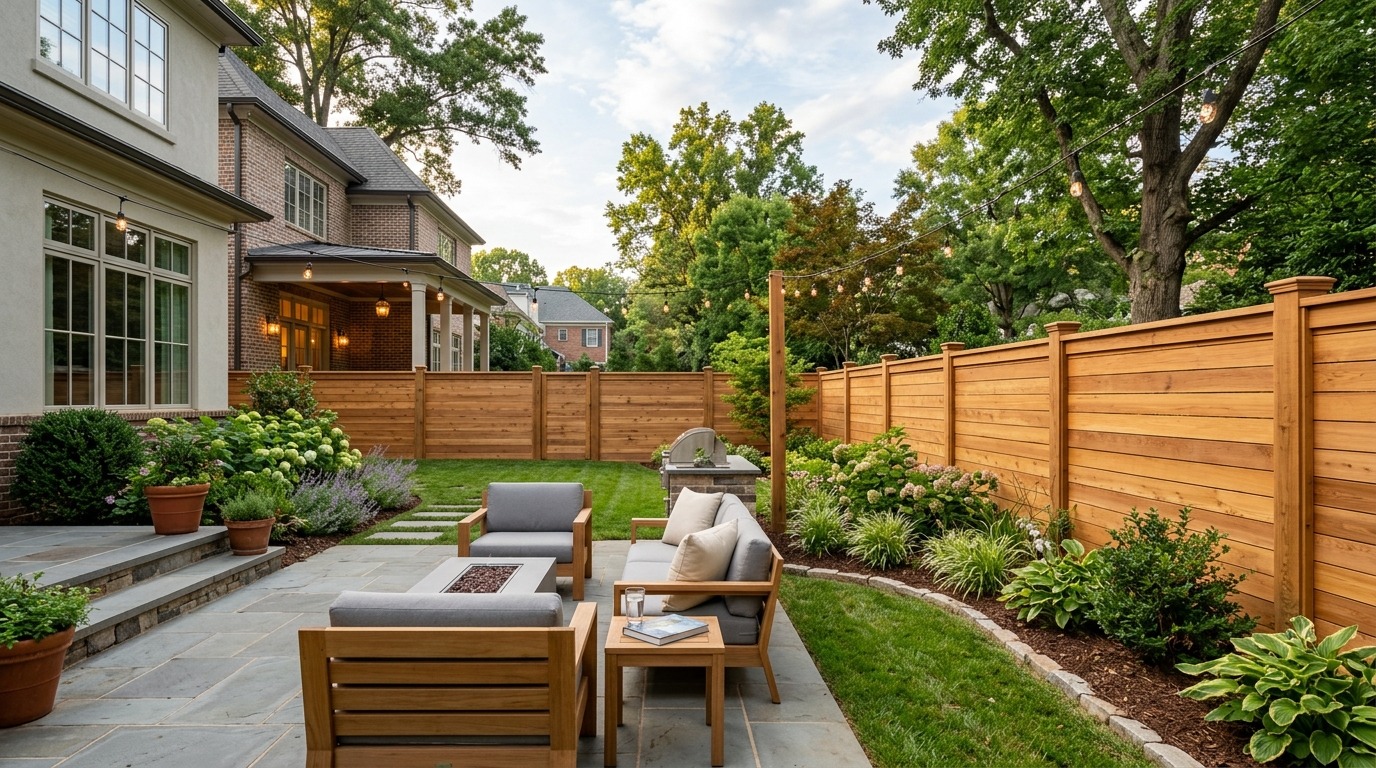
While pressure-treated pine offers lower upfront entry, its ongoing care demands diligence. Because pine expands and contracts in humid Piedmont weather, skipping stain treatments leads to board cupping.
Cedar’s natural stability substantially lowers repair visits. For maintenance timing, explore our guide on how to maintain a cedar fence.
Red Flags: Why “Cheap” Fence Estimates End Up Costing More
When reviewing contractor bids, estimates that come in significantly below market value often hide structural compromises:
- Shallow Post Holes (The 18-to-20-Inch Shortcut): Augering through Charlotte clay is demanding work. Cheap crews frequently stop digging at 18 inches. In saturated Carolina clay, shallow footings quickly tilt under wind loads, requiring total reconstruction within a few seasons.
- Dry-Pouring Concrete Powder: Dumping dry concrete bags directly into holes and spraying water on top is a common shortcut. Water rarely reaches the bottom of the hole, leaving unmixed cement dust that weakens the footing. Quality contractors always wet-mix concrete for monolithic strength.
- Construction Whitewood & Low-Grade Spruce: Some contractors substitute cheap construction whitewood or spruce pickets under generic labels. As noted in our overview of woods to avoid for fences, untreated whitewood lacks natural decay defenses and rots quickly in our humid climate.
- Cheap Electro-Galvanized Fasteners: Interior drywall screws or electro-galvanized nails save contractor costs, but cedar tannins and treated wood chemicals quickly react with cheap steel. This causes ugly black streaks down pickets and leads to rusted, broken fasteners. Quality projects rely on 304 stainless steel or hot-dipped galvanized ring-shank nails.
Frequently Asked Questions About Charlotte Fence Costs
How much does a typical backyard wood fence cost in Charlotte, NC?
In the Charlotte metro area, an average residential backyard fence (150 to 200 linear feet) typically ranges between $3,500 and $7,500 turnkey. Pressure-treated pine privacy fencing represents the entry point, while custom Western Red Cedar, board-on-board, or modern horizontal designs represent premium architectural installations.
Why do fence contractors charge more for Charlotte red clay excavation?
Charlotte sits on dense Piedmont Cecil red clay. In dry summer months, this soil bakes into hardpan requiring hydraulic augers, while wet periods cause heavy expansion. Excavating 36-inch post footings through clay, roots, and bedrock requires substantial mechanical equipment and specialized drainage gravel.
Do I need a permit to install a fence in Charlotte or Mecklenburg County?
Standard residential fences up to 6 feet in height in side and rear yards do not require a Mecklenburg County building permit, provided they do not obstruct drainage easements or street sight triangles. Fences over 6 feet require permits, while local neighborhood HOAs enforce separate architectural review committee (ARC) standards.
Is Western Red Cedar worth the higher upfront cost compared to Pine?
Yes, for homeowners planning to stay in their homes. While Western Red Cedar commands a 35% to 50% initial premium over pressure-treated pine, its natural thujaplicins resist termites and fungal decay without chemical treatment. Cedar experiences minimal warping in Carolina humidity, delivering a lower 15-year total cost of ownership.
Does fence installation cost include the removal of the old fence?
Old fence removal is itemized separately. Complete tear-down, concrete footing extraction, and disposal in Mecklenburg County typically runs $3 to $8 per linear foot depending on post anchoring, brush overgrowth, and local landfill tipping fees.
Get a Transparent, On-Site Fence Estimate in Charlotte
Every property in Charlotte has unique characteristics. From established root systems in Dilworth to rolling terrain in Waxhaw, an accurate estimate requires evaluating your yard’s grading, soil, and layout firsthand.
At Amour Fence, we provide detailed, custom proposals tailored to your property. When you schedule an on-site consultation, our master craftsmen evaluate your site conditions, discuss timber choices, and deliver a transparent estimate with no hidden costs.
Ready to Plan Your Custom Wood Fence Project?
- Call Our Team Directly: (980) 300-1047
- Request a Complimentary On-Site Assessment: Get a Free Estimate
- Our Piedmont Service Communities: Charlotte, Matthews, Ballantyne, Pineville, Huntersville, Waxhaw, Weddington, Fort Mill, Indian Trail, Mint Hill, and surrounding Mecklenburg and Union County neighborhoods.
Frequently Asked Questions
How much does a typical backyard wood fence cost in Charlotte, NC?
In the Charlotte metro area, an average residential backyard fence (150 to 200 linear feet) typically ranges between $3,500 and $7,500 turnkey. Pressure-treated pine privacy fencing represents the entry point, while custom Western Red Cedar, board-on-board, or modern horizontal designs represent premium architectural installations.
Why do fence contractors charge more for Charlotte red clay excavation?
Charlotte sits on dense Piedmont Cecil red clay. In dry summer months, this soil bakes into hardpan requiring hydraulic augers, while wet periods cause heavy expansion. Excavating 36-inch post footings through clay, roots, and bedrock requires substantial mechanical equipment and specialized drainage gravel.
Do I need a permit to install a fence in Charlotte or Mecklenburg County?
Standard residential fences up to 6 feet in height in side and rear yards do not require a Mecklenburg County building permit, provided they avoid drainage easements and road sight triangles. Fences over 6 feet require permits, while local neighborhood HOAs enforce separate architectural review committee (ARC) standards.
Is Western Red Cedar worth the higher upfront cost compared to Pine?
Yes, for homeowners planning to stay in their homes. While Western Red Cedar commands a 35% to 50% initial premium over pressure-treated pine, its natural thujaplicins resist termites and fungal decay without chemical treatment. Cedar experiences minimal warping in Carolina humidity, delivering a lower 15-year total cost of ownership.
Does fence installation cost include the removal of the old fence?
Old fence removal is itemized separately. Complete tear-down, concrete footing extraction, and disposal in Mecklenburg County typically runs $3 to $8 per linear foot depending on post anchoring, brush overgrowth, and local landfill tipping fees.