
Quick Answer: Cedar vs. Pressure-Treated Pine at a Glance
Western Red Cedar is the premier choice for Charlotte homeowners seeking 20 to 25+ years of service life, natural termite resistance, minimal board warping, and timeless architectural elegance. Pressure-Treated Southern Yellow Pine provides an economical, durable barrier with exceptional underground rot resistance for structural posts, but pickets require sealing every 2 to 3 years to prevent twisting under Piedmont humidity. For the ultimate balance of longevity and value, many Mecklenburg County homeowners choose a hybrid fence: pressure-treated posts set in gravel-drained concrete below ground, with Western Red Cedar pickets and rails above.
Investing in a new wood fence is one of the most visible upgrades you can make to your Charlotte home. Whether enclosing a spacious backyard in Waxhaw, safeguarding pets in Matthews, or establishing property boundaries in a historic Dilworth neighborhood, selecting the right lumber determines how your fence looks and functions a decade from now.
The decision between Western Red Cedar and Pressure-Treated Pine comes down to three practical questions: how long will the fence last, how much maintenance will it demand, and how will it handle Charlotte’s grueling subtropical summers?
Comprehensive Comparison: Cedar vs. Pine
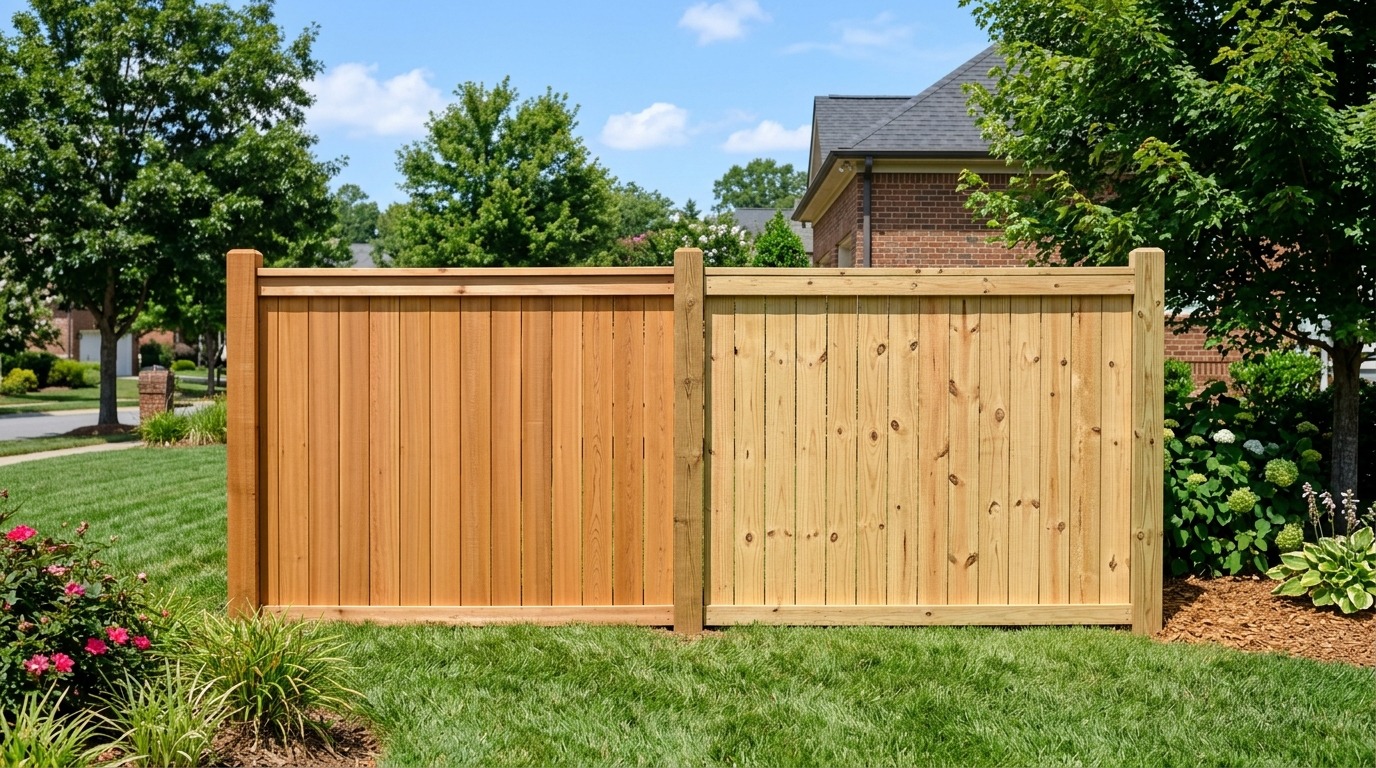
Before exploring local climate performance, review this side-by-side engineering evaluation comparing Western Red Cedar and Pressure-Treated Southern Yellow Pine:
| Performance Attribute | Western Red Cedar (Thuja plicata) | Pressure-Treated Pine (Pinus taeda) | Advantage |
|---|---|---|---|
| Wood Type & Origin | Natural Pacific Northwest Softwood | Domestic Southern Yellow Pine | Cedar (Closed-grain stability) |
| Above-Ground Lifespan | 20 to 25+ Years | 15 to 20 Years (with diligent care) | Western Red Cedar |
| In-Ground Post Durability | 12 to 15 Years (without steel sleeves) | 20 to 25+ Years (AWPA UC4A Rated) | Treated Pine |
| Resistance to Warping & Cupping | Superior (Shrinkage: 2.4% rad / 5.0% tan) | Moderate to Poor (High hydronic tension) | Western Red Cedar |
| Natural Insect & Termite Defense | High (Organic thujaplicin extractives) | High (Chemical copper biocide infusion) | Western Red Cedar (Non-chemical) |
| Moisture Absorption Rate | Low (Closed cellular structure) | High (Open vascular network) | Western Red Cedar |
| Chemical Additives | None (100% organic timber) | Chemical pressure impregnation (MCA) | Western Red Cedar |
| Staining Frequency | Every 3 to 5 Years | Every 2 to 3 Years | Western Red Cedar |
| Natural Weathering Tone | Mellow amber-rose to silver-gray patina | Golden-green fading to dull flat gray | Western Red Cedar |
| Weight & Gate Stress | Lightweight (~23 lbs/cu. ft. dry) | Heavy (~35–45 lbs/cu. ft. when wet) | Western Red Cedar (Less gate sag) |
| Pet & Garden Friendliness | 100% non-toxic organic heartwood | Chemical biocide retention | Western Red Cedar |
| Optimal Structural Usage | Privacy pickets, rails, decorative top caps | Ground-contact structural posts (4x4, 6x6) | Context Dependent |
The Charlotte Climate Test: Humidity, Red Clay, and Termites
Lumber ratings published in national home improvement guides rarely account for the specific environmental challenges of the Carolina Piedmont. In Mecklenburg County, fencing materials face a relentless trio of climate stressors:
1. High Piedmont Humidity and Severe Board Warping
From June through September, subtropical air masses push relative humidity levels in Charlotte above 80%. Wood constantly absorbs and releases water vapor to equalize with ambient air:
- Why Pine Warps: Southern Yellow Pine has an open, porous vascular system. Pine pickets absorb atmospheric moisture quickly on muggy mornings. When the midday sun beats down with temperatures in the mid-90s, the outer face of each picket dries and shrinks rapidly while the shaded backside remains saturated. This differential drying creates severe internal tension, resulting in cupped boards, twisted rails, and popped nails.
- Why Cedar Stays Flat: Western Red Cedar features less than half the volumetric shrinkage rate of Southern pine. Its fine, straight grain absorbs moisture evenly and slowly, allowing cedar privacy pickets to stay straight, flat, and securely fastened across years of sweltering Charlotte heatwaves.
2. Cecil Red Clay Soil and Ground-Contact Decay
The dominant subsoil across South Charlotte, Matthews, and Union County is Cecil series red clay. This dense, weathered clay has slow drainage rates, holding moisture around post bases long after summer storms pass.
- Untreated cedar posts buried directly in waterlogged clay are susceptible to soft-rot fungal decay at the groundline after 10 to 14 years.
- By contrast, #1 Grade Southern Yellow Pine treated to AWPA UC4A Ground Contact standards is saturated with copper biocides that prevent underground fungal decay, lasting 20 to 25+ years in damp Carolina clay.
At Amour Fence, our professional fence installation incorporates gravel-bedded post holes and crowned concrete footings that elevate the timber above standing ground moisture.
3. Heavy Subterranean Termite Hazard
The Carolinas sit within USDA Termite Hazard Zone 2 (Heavy). Eastern subterranean termites thrive in warm, moisture-retentive soils, actively foraging for wood cellulose:
- Cedar’s Natural Armor: Western Red Cedar heartwood produces natural organic compounds called thujaplicins. These natural biocides are unpalatable and toxic to termites, carpenter ants, and wood-boring pests without requiring artificial chemical baths.
- Pine’s Chemical Shield: Pressure-treated pine repels termites through its chemical copper treatment. However, if an installer makes field cuts on pickets or posts without applying an end-cut wood preservative, termites can enter through the untreated internal core.
Durability and Lifespan: What to Expect Over 20 Years
When comparing total ownership value, consider how each wood species weathers across its lifespan:
Western Red Cedar Lifespan Profile (20–25+ Years)
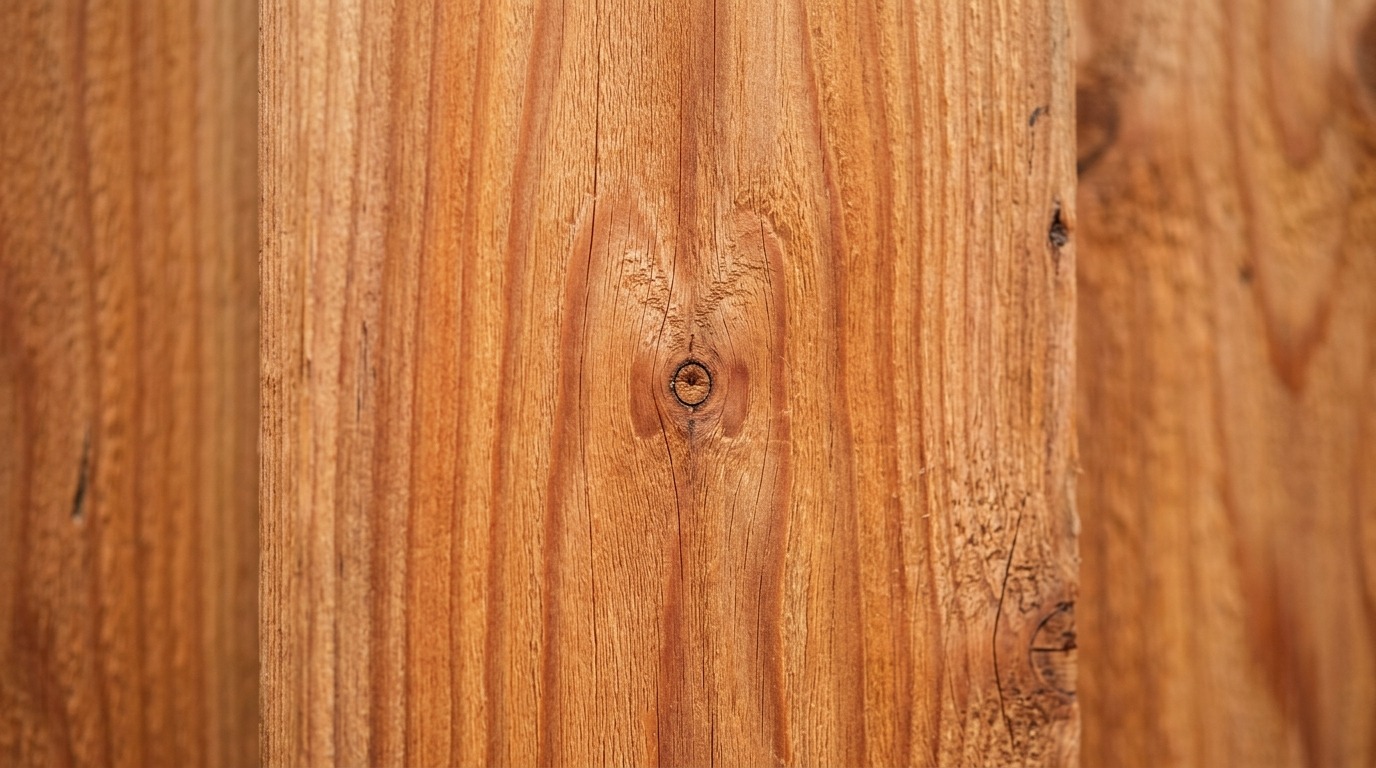
- Years 1–5: Exceptional stability. The warm amber and cinnamon hues slowly mellow under sunlight. Boards remain straight with no cupping.
- Years 5–10: If left unstained, cedar transitions into an attractive, architecturally prized silver patina. Natural heartwood oils continue preventing rot and insect damage.
- Years 10–20: Surface erosion remains minimal. Knots stay tight and fence lines remain plumb with only occasional picket adjustments.
- Years 20+: Pickets near dense ground shrubbery may show slight surface softening, but the structural integrity remains sound with routine sealing.
Pressure-Treated Pine Lifespan Profile (15–20 Years)
- Months 1–6: Lumber displays a greenish-bronze tone from the copper treatment. High internal moisture from factory processing requires a drying period before staining.
- Years 1–3: Rapid sun drying causes noticeable picket shrinkage, opening gaps between privacy boards. Minor checking and surface hairline cracks develop along the grain.
- Years 3–7: Chemical preservatives continue resisting fungal rot, but unsealed pickets cup and bow, putting shear stress on ring-shank nails.
- Years 7–15: Without re-staining every 2 to 3 years, surface wood fibers become brittle. Boards exposed to lawn irrigation or splashback soften and require spot replacements.
The “Hybrid” Wood Fence: The Ultimate Charlotte Solution
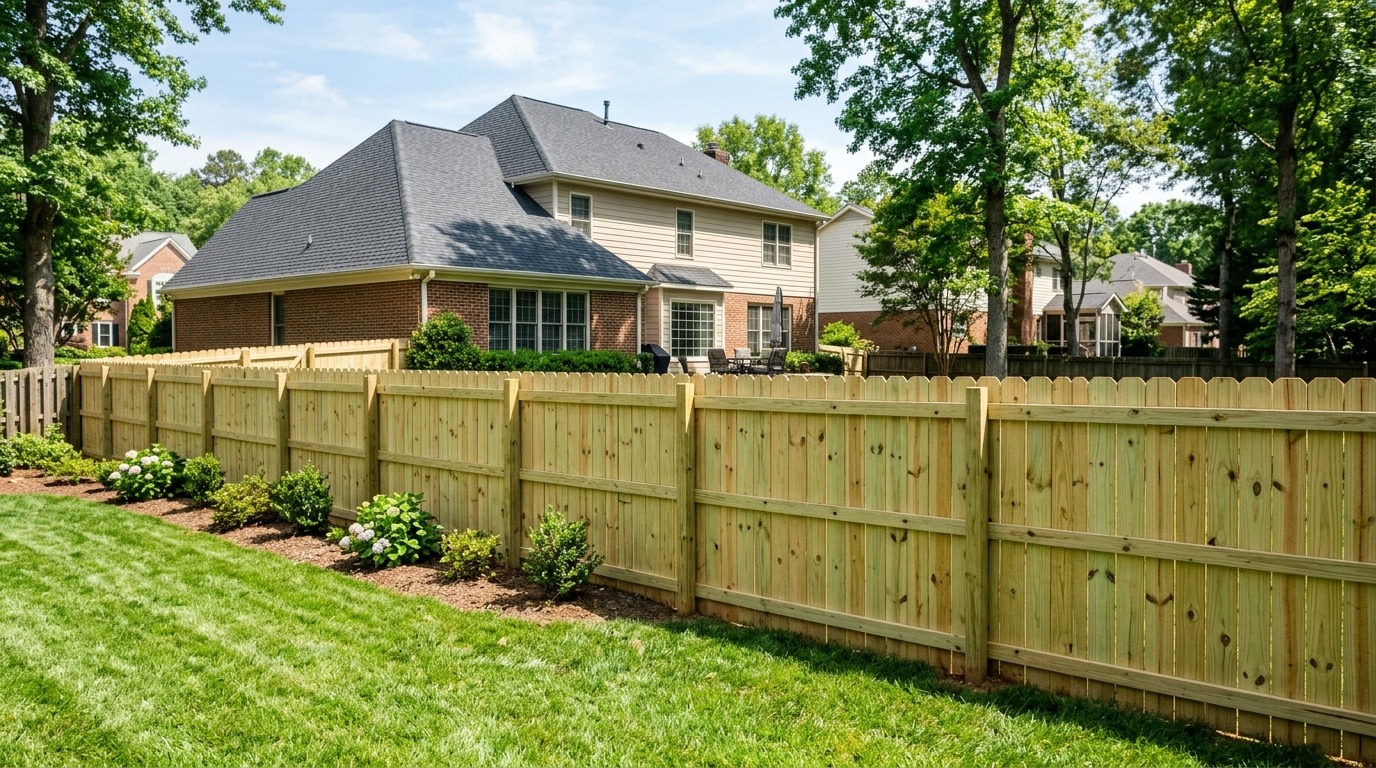
Homeowners often assume they must choose 100% cedar or 100% pine. However, experienced fencing contractors understand that the best-engineered fence for the Carolina Piedmont is a Hybrid Wood Fence System.
A hybrid fence pairs the unique mechanical strengths of each wood species exactly where they perform best:
- Below the Ground (Pressure-Treated Pine Posts): We utilize Southern Yellow Pine 4x4 or 6x6 posts treated to UC4A Ground Contact standards. Embedded in concrete and crushed gravel footings, these posts resist decay in damp Cecil red clay for over 25 years.
- Above the Ground (Western Red Cedar Rails and Pickets): For horizontal 2x4 rails, decorative top caps, and vertical pickets, we install premium Western Red Cedar. Above ground, cedar eliminates the warping, twisting, and splitting that plague pine infill boards.
       ┌──────────────────────────────────────────────┐
       │   Western Red Cedar Top Cap (Zero Warping)   │
       ├──────────────────────────────────────────────┤
       │                                              │
       │   Western Red Cedar Vertical Pickets         │
       │   - Natural Thujaplicin Termite Defense      │
       │   - Closed-Cell Humidity Stability           │
       │   - Elegant Amber-Rose Natural Grain         │
       │                                              │
       ├──────────────────────────────────────────────┤
       │   Western Red Cedar Horizontal 2x4 Rails     │
═══════╪══════════════════════════════════════════════╪══════ Ground Line
       │   Pressure-Treated Pine Post (UC4A Rated)    │
       │   - High Copper Preservative Retention       │
       │   - 25+ Year Subsoil Rot Resistance          │
       │   - Anchored in Crushed Gravel & Concrete    │
       └──────────────────────────────────────────────┘
A hybrid system delivers the warp-free curb appeal, natural insect resistance, and aesthetic elegance of cedar, backed by the unmatched in-ground rot protection of treated foundation posts.
Charlotte HOA Guidelines and Neighborhood Standards
Residential fencing across Greater Charlotte is heavily governed by Homeowners Associations (HOAs) and architectural review boards (ARBs). Master-planned subdivisions in Ballantyne, Waxhaw, Weddington, Fort Mill, and Huntersville enforce strict material regulations:
- “Good Neighbor” Requirements: Many covenants prohibit single-sided privacy fences that expose framing stringers to neighboring parcels. Neighborhoods frequently require shadowbox fences (pickets staggered on both sides) or board-on-board styles. Cedar is the ideal choice for double-sided designs because its lightweight structure minimizes rail sag and hinge wear.
- Warping Prohibitions: Numerous Charlotte communities issue maintenance citations when pine pickets warp or pull loose. Cedar’s dimensional stability ensures your property stays in continuous compliance with HOA standards.
- Approved Stains and Finishes: Most covenants require natural cedar or neutral semi-transparent wood tones, prohibiting patchy weathering. Cedar accepts penetrating oil stains smoothly and evenly across every board.
Whether installing a modern horizontal fence or a classic privacy fence, cedar provides lasting architectural harmony that protects property values.
Maintenance, Safety, and Next Steps
To make the most informed decision for your yard, explore our dedicated guides covering maintenance protocols and family safety:
- Staining & Care: Want to know the exact step-by-step cleaning process, how to run the “Splash Test”, and which oils to use? Read our complete guide: How to Properly Maintain and Stain a Cedar Fence in Charlotte.
- Family & Pet Safety: Curious about whether chemical treatments affect dogs, pets, or vegetable gardens? Read our analysis: Is Pressure-Treated Wood Safe for Pets and Raised Garden Beds?.
- Lumber Specifications: View full architectural grades and technical details on our Western Red Cedar and Pressure-Treated Pine product pages.
Summary: Which Wood Fence Should You Choose?
- Choose Western Red Cedar if you prioritize maximum curb appeal, want boards that remain straight and true without severe warping, prefer natural non-chemical termite defense, and seek a 20 to 25+ year lifespan with minimal maintenance.
- Choose Pressure-Treated Pine if you need a durable, budget-friendly enclosure for privacy or pet security, and are prepared to seal and stain the pickets every two to three years.
- Choose a Hybrid System if you want the ultimate engineering solution for the Charlotte climate: pressure-treated structural posts that conquer damp red clay subsoil, paired with warp-free cedar pickets and framework above ground.
At Amour Fence, our experienced crews build every fence to master-carpenter standards using laser-aligned posts, hot-dipped galvanized or stainless fasteners, and hand-selected lumber tailored to your property.
Request a free on-site consultation and estimate or call our Charlotte fencing specialists directly at (980) 300-1047.
Frequently Asked Questions
How long does a cedar fence last in Charlotte compared to pressure-treated pine?
In the Charlotte, NC climate, a Western Red Cedar fence typically lasts 20 to 25+ years with regular care because its natural thujaplicin oils resist rot and fungal decay. A pressure-treated pine fence generally lasts 15 to 20 years, provided the boards are sealed and stained every 2 to 3 years to prevent moisture-induced twisting and cupping under the intense Carolina sun.
Why do pine fence boards warp and twist faster than cedar in Charlotte?
Southern Yellow Pine has an open cellular structure that absorbs humidity rapidly during Charlotte's humid summers and dries unevenly under direct sunlight. This cycle creates severe internal tension, causing pickets to cup, twist, and pull loose. Cedar has a tighter, closed-cell grain with less than half the shrinkage rate of pine, keeping fence lines straight for decades.
What is the best wood fence combination for Charlotte red clay soil?
The highest-performing configuration in Mecklenburg County is a hybrid fence system: ground-contact rated (UC4A) pressure-treated pine posts anchored in gravel-drained concrete footings, paired with Western Red Cedar framework and pickets above ground. This combines pine's underground decay resistance in damp red clay with cedar's above-ground stability.
Can subterranean termites destroy cedar fences in North Carolina?
North Carolina is in a heavy subterranean termite zone, but Western Red Cedar contains natural heartwood extractives that make the timber naturally unpalatable to termites and carpenter bees. Pressure-treated pine relies on chemical copper infusions, which can leave field-cut ends vulnerable if not sealed on site.
How often should you stain a wood fence in Charlotte?
Western Red Cedar should be stained with a high-grade penetrating oil every 3 to 5 years, while pressure-treated pine requires sealing every 2 to 3 years. Regular maintenance protects the wood from heavy Carolina humidity, summer UV radiation, and airborne pollen.
Is a Western Red Cedar fence worth the investment over pine in Charlotte?
Yes. While pressure-treated pine offers an economical upfront option, Western Red Cedar delivers a substantially lower total cost of ownership. Cedar requires fewer board replacements, demands less frequent sealing, resists rot naturally without synthetic chemicals, and boosts architectural curb appeal.
Frequently Asked Questions
How long does a cedar fence last in Charlotte compared to pressure-treated pine?
In the Charlotte, NC climate, a Western Red Cedar fence typically lasts 20 to 25+ years with regular care because its natural thujaplicin oils resist rot and fungal decay. A pressure-treated pine fence generally lasts 15 to 20 years, provided the boards are sealed and stained every 2 to 3 years to prevent moisture-induced twisting and cupping under the intense Carolina sun.
Why do pine fence boards warp and twist faster than cedar in Charlotte?
Southern Yellow Pine has an open cellular structure that absorbs humidity rapidly during Charlotte's humid summers and dries unevenly under direct sunlight. This cycle creates severe internal tension, causing pickets to cup, twist, and pull loose. Cedar has a tighter, closed-cell grain with less than half the shrinkage rate of pine, keeping fence lines straight for decades.
What is the best wood fence combination for Charlotte red clay soil?
The highest-performing configuration in Mecklenburg County is a hybrid fence system: ground-contact rated (UC4A) pressure-treated pine posts anchored in gravel-drained concrete footings, paired with Western Red Cedar framework and pickets above ground. This combines pine's underground decay resistance in damp red clay with cedar's above-ground stability.
Can subterranean termites destroy cedar fences in North Carolina?
North Carolina is in a heavy subterranean termite zone, but Western Red Cedar contains natural heartwood extractives that make the timber naturally unpalatable to termites and carpenter bees. Pressure-treated pine relies on chemical copper infusions, which can leave field-cut ends vulnerable if not sealed on site.
How often should you stain a wood fence in Charlotte?
Western Red Cedar should be stained with a high-grade penetrating oil every 3 to 5 years, while pressure-treated pine requires sealing every 2 to 3 years. Regular maintenance protects the wood from heavy Carolina humidity, summer UV radiation, and airborne pollen.
Is a Western Red Cedar fence worth the investment over pine in Charlotte?
Yes. While pressure-treated pine offers an economical upfront option, Western Red Cedar delivers a substantially lower total cost of ownership. Cedar requires fewer board replacements, demands less frequent sealing, resists rot naturally without synthetic chemicals, and boosts architectural curb appeal.