
Quick Answer: What Is the Best Wood for a Fence?
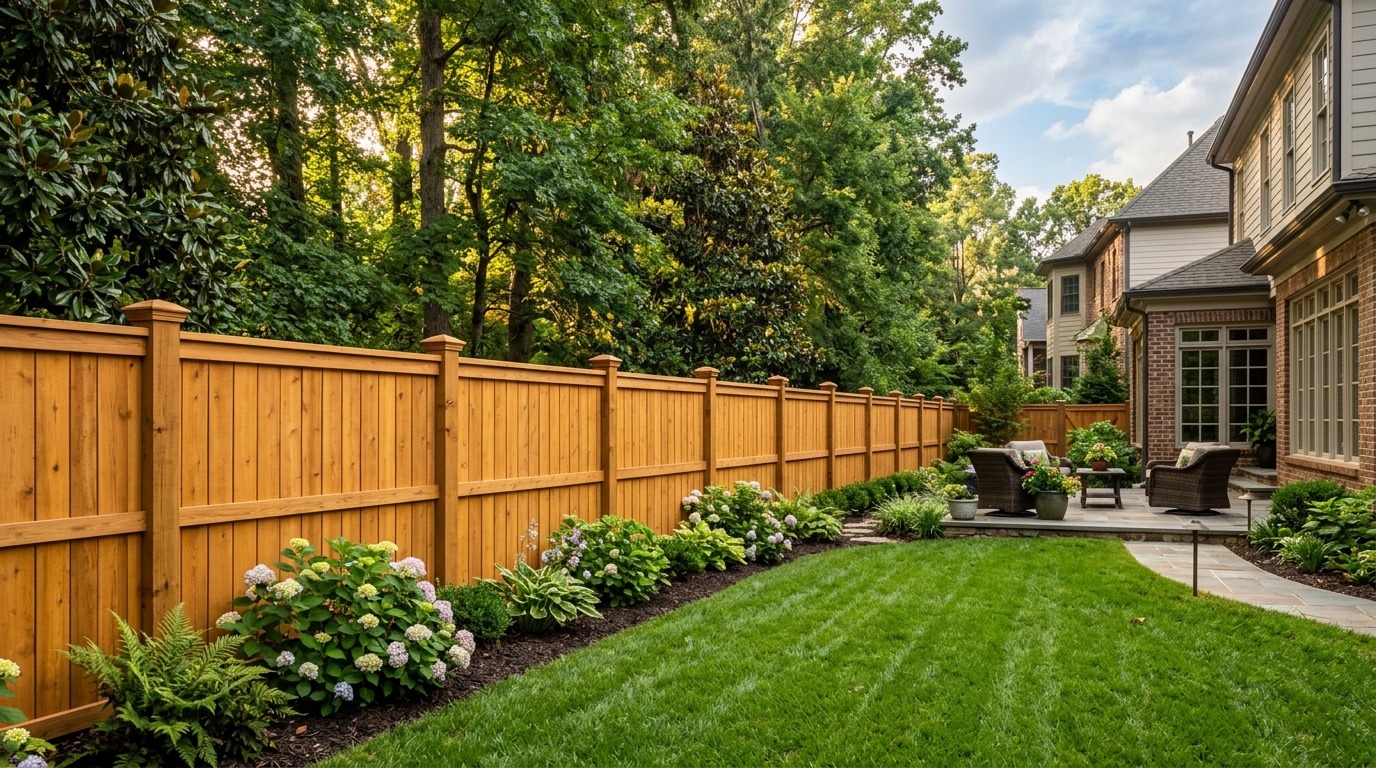
The best wood for residential fencing depends on balancing initial budget, long-term longevity, and regional climate resilience. Across the Southeastern United States and particularly in North Carolina, Western Red Cedar stands as the gold standard for fence pickets and rails due to natural rot resistance, tight straight grain, and immunity to severe warping under high humidity. For structural fence posts set into moisture-retentive red clay soil, Ground-Contact Pressure-Treated Pine (AWPA UC4A) delivers maximum subterranean longevity. The highest-performing configuration is a hybrid wood fence—combining pressure-treated structural posts with Western Red Cedar infill pickets.
Investing in a custom wood fence transforms your property boundaries, encloses outdoor living spaces, safeguards children and pets, and elevates residential curb appeal. Yet selecting the wrong wood species is one of the most common and expensive mistakes a homeowner can make.
In the Charlotte metropolitan area—stretching from historic Myers Park and Dilworth through rapidly growing communities in Matthews, Waxhaw, Fort Mill, and Weddington—fencing materials face a grueling environmental gauntlet:
- Sustained summer heat index ratings exceeding 100°F combined with relative humidity often hovering above 80%.
- Torrential Carolina thunderstorms, averaging more than 44 inches of heavy rainfall annually.
- Heavy, dense Piedmont Cecil red clay soil, which holds standing ground moisture around post footings instead of draining freely.
- Intense subterranean termite activity (USDA Zone 7b), requiring structural resilience against aggressive wood-boring insects.
This guide examines the leading lumber species utilized in residential fence construction—Western Red Cedar, Pressure-Treated Southern Yellow Pine, Redwood, and Cypress—alongside species you should strictly avoid.
Master Comparison: The 4 Primary Wood Fencing Species
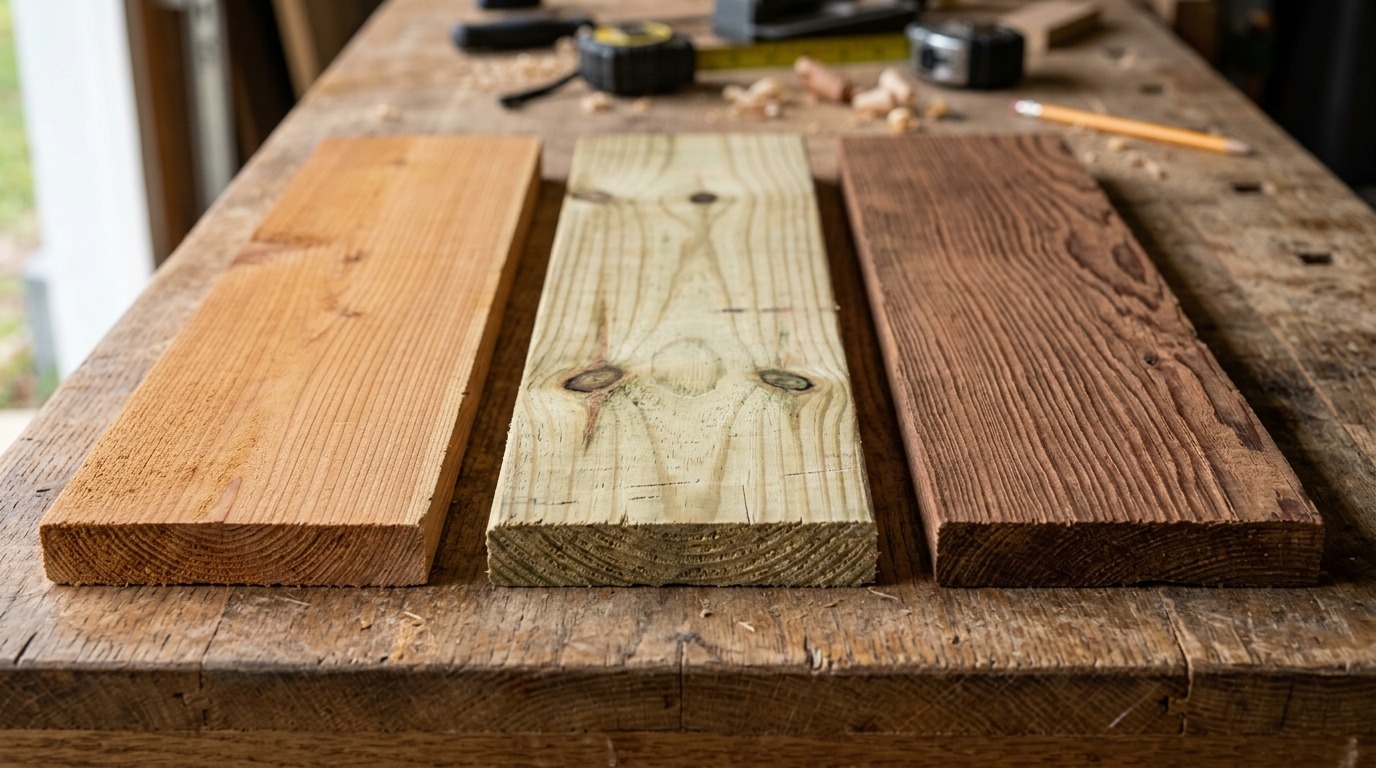
Before examining individual species, review this side-by-side engineering evaluation comparing Western Red Cedar, Pressure-Treated Southern Yellow Pine, Redwood, and Cypress:
| Performance Characteristic | Western Red Cedar (Thuja plicata) | Pressure-Treated Pine (Pinus taeda) | Redwood (Sequoia sempervirens) | Bald Cypress (Taxodium distichum) |
|---|---|---|---|---|
| Wood Classification | Softwood (Cupressaceae) | Softwood (Pinaceae) | Softwood (Cupressaceae) | Softwood (Cupressaceae) |
| Primary Rot Defense | Natural Extractives (Thujaplicins) | Chemical Infusion (MCA) | Natural Tannic Acid | Natural Heartwood Oil (Cypressene) |
| Above-Ground Lifespan | 20 to 25+ Years | 15 to 20 Years (with care) | 25 to 30 Years | 18 to 22 Years (heartwood) |
| In-Ground Post Lifespan | 12 to 15 Years (without steel) | 20 to 25+ Years (UC4A Ground Contact) | 18 to 22 Years | 12 to 15 Years |
| Dimensional Stability | Superior (Shrinkage: 2.4% rad / 5.0% tan) | Moderate to Poor (Shrinkage: 4.8% rad / 7.4% tan) | Superior (Shrinkage: 2.6% rad / 4.4% tan) | High (Shrinkage: 3.8% rad / 6.2% tan) |
| Susceptibility to Warping | Extremely Low (Remains flat and true) | High (Prone to twisting, checking, bowing) | Extremely Low (Fine uniform grain) | Moderate (Minimal if seasoned) |
| Natural Insect Resistance | High (Toxic to wood borers) | High (Biocidal chemical protection) | High (Tannins repel borers) | Moderate to High (Age dependent) |
| Weight per Cubic Foot (Dry) | Lightweight (~23 lbs/cu. ft.) | Dense & Heavy (~35–45 lbs wet) | Lightweight (~26 lbs/cu. ft.) | Moderate (~32 lbs/cu. ft.) |
| East Coast Availability (Charlotte) | Excellent (Established distribution) | Abundant (Local Southern mills) | Very Limited (Pacific freight premium) | Moderate (Regional coastal supplies) |
| Piedmont Red Clay Compatibility | Ideal for pickets & rails | Ideal for in-ground posts | Excellent above ground; costly posts | Good above ground; risky in wet clay |
| Best Structural Usage | Privacy pickets, shadowbox infill, caps | In-ground structural posts (4x4, 6x6), rails | Luxury horizontal privacy, estate pickets | Coastal regional fencing, rustic pickets |
1. Western Red Cedar: The Architectural Gold Standard
Western Red Cedar (Thuja plicata), harvested from sustainably managed forests across the Pacific Northwest and British Columbia, remains the undisputed benchmark for high-end residential fencing.
Natural Extractive Chemistry
Unlike domestic whitewoods that rely on synthetic chemical treatments to survive outdoors, Western Red Cedar manufactures its own internal organic preservatives. Cedar heartwood contains rich concentrations of thujaplicins (potent natural antifungal tropolones) and water-soluble polyphenolic compounds.
These extractives prevent fungal spores from establishing colonies within the cellular matrix of the timber, naturally repelling brown rot, white rot, and dry rot fungi. Furthermore, these organic compounds emit an aromatic cedar scent that humans find pleasant, but which acts as a powerful natural deterrent against subterranean termites, carpenter ants, and wood-boring beetles native to North Carolina.
Dimensional Stability and Structural Performance
Wood is an inherently hygroscopic material—it constantly absorbs and releases ambient moisture as relative humidity fluctuates. Western Red Cedar exhibits one of the lowest volumetric shrinkage coefficients of any commercial softwood in North America:
- Radial Shrinkage: ~2.4%
- Tangential Shrinkage: ~5.0%
- Volumetric Shrinkage: ~6.8%
Because cedar expands and contracts uniformly and at a significantly slower rate than pine, cedar fence boards remain straight, flat, and securely anchored over decades of sweltering Charlotte summers. Furthermore, a dry cedar picket weighs approximately 4 to 5 pounds compared to 9 to 14 pounds for a fresh treated pine board. This lighter weight significantly reduces gate hinge sag and horizontal runner deflection.
Explore our dedicated guide to Western Red Cedar Fencing Materials for detailed lumber grades and technical specifications.
2. Pressure-Treated Southern Yellow Pine: The Structural Workhorse
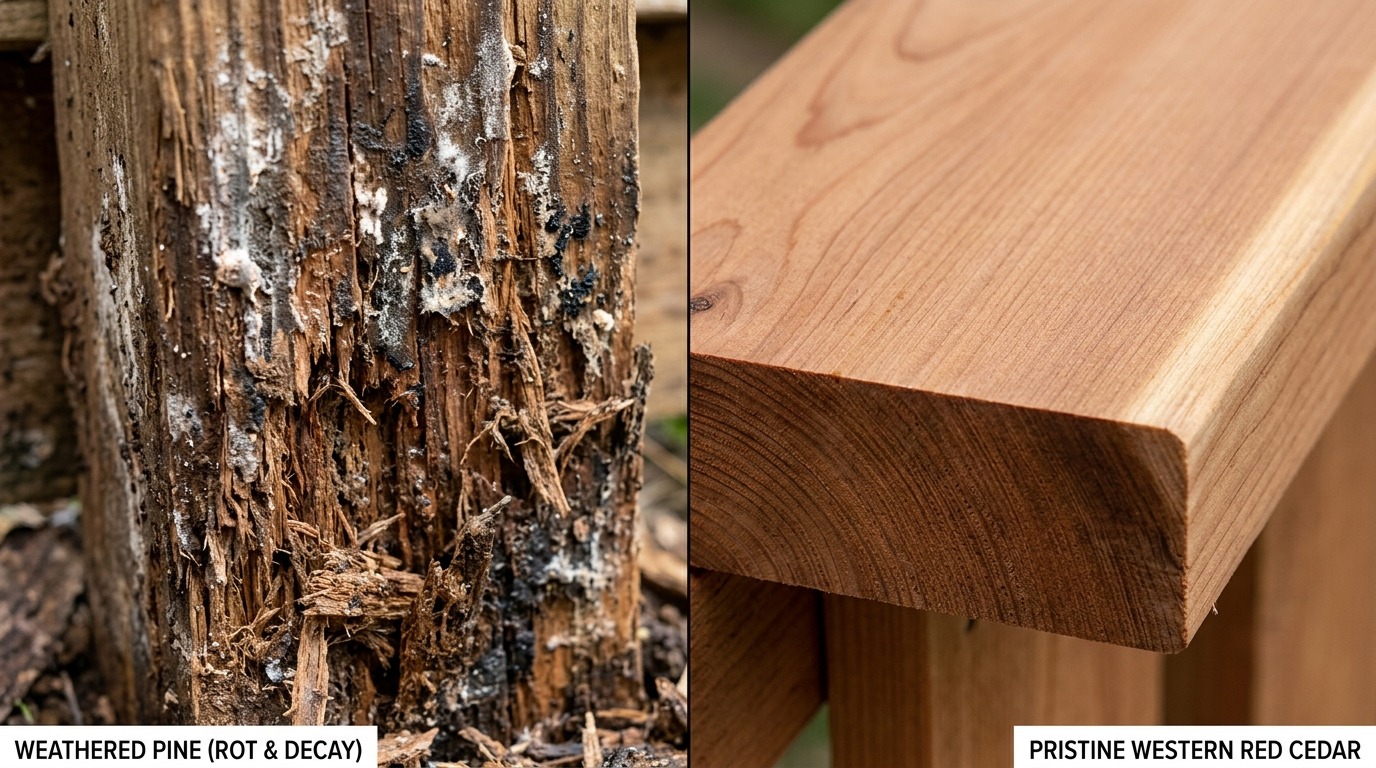
Southern Yellow Pine (Pinus taeda) is the indigenous timber backbone of the Southeastern construction economy. Naturally, untreated pine possesses virtually zero resistance to rot, fungal spores, or insect attacks, decomposing within 2 to 4 years if exposed to raw weather.
However, modern industrial preservation technologies transform Southern Yellow Pine into an exceptional structural building component.
The Modern Pressure-Treatment Process
Today’s high-grade fencing pine is pressure-impregnated using environmentally compliant preservative formulations, predominantly Micronized Copper Azole (MCA). Kiln-dried pine bundles are placed into sealed autoclaves where vacuum extraction removes air from vascular cells, after which the preservative solution is driven deep into the wood fibers under intense hydrostatic pressure. The copper molecules bond chemically to the wood fibers, creating a biocidal shield against fungal decay and termites.
AWPA Retention Ratings: UC3B vs. UC4A
When specifying treated pine for fence construction in the Carolinas, understanding American Wood Protection Association (AWPA) retention ratings is critical:
- AWPA UC3B (Above-Ground Exposed): Intended solely for exterior components that dry out quickly between rain events, such as horizontal rails and vertical fence pickets.
- AWPA UC4A (Ground Contact General Use): Formulated specifically for structural members embedded directly in soil, standing water, or moisture-retaining red clay. These timbers receive a much higher preservative retention concentration (minimum 0.15 lbs/cu. ft. for MCA).
Using UC3B “above-ground” lumber for fence posts is the primary reason builder-grade fences snap at the soil line within 7 to 10 years. At Amour Fence, every in-ground pine post is strictly specified to UC4A Ground-Contact standards, anchored below the local frost line with crushed stone drainage footings.
For a detailed head-to-head comparison between these two primary fence woods, read our flagship analysis: Cedar vs Pine Fence: Which Lasts Longer in Charlotte, NC?. You can also review our technical specifications on Pressure-Treated Pine Fencing.
3. Redwood and Cypress: Regional Availability and Trade-Offs
Beyond cedar and pine, homeowners frequently ask about Redwood and Cypress. While both have admirable botanical qualities, their real-world suitability in the Carolinas is shaped by regional geography and commercial availability.
Redwood: The Pacific Coast Luxury Timber
Redwood (Sequoia sempervirens) shares many botanical virtues with Western Red Cedar, including deep natural tannin resistance to rot and insects, a rich cinnamon-red hue, and outstanding dimensional stability (shrinkage: 2.6% radial, 4.4% tangential).
However, Redwood is rarely a practical choice for residential fencing in Charlotte, North Carolina:
- Cross-Country Freight Premiums: Coastal redwoods grow exclusively in Northern California and Oregon. Transporting this lumber across the continent incurs severe freight surcharges without delivering a measurable durability improvement over Western Red Cedar.
- Sapwood Vulnerability: High-grade all-heartwood redwood (Heart Clear) is exceptionally rare on East Coast distributor racks. Lower commercial grades sold locally often contain wide bands of pale sapwood, which has zero natural rot resistance and decays rapidly in humid conditions.
- The Practical Alternative: Homeowners desiring rich red tones achieve optimal results by applying a premium semi-transparent redwood-pigmented penetrating oil stain directly onto Western Red Cedar.
Bald Cypress: The Wetland Contender
Bald Cypress (Taxodium distichum) is native to Southeastern river deltas and floodplains. Its heartwood contains cypressene, an organic preservative oil that allows cypress trees to remain submerged in swamps for decades without decaying.
While cypress pickets offer rustic character and regional appeal, modern commercial cypress is almost exclusively harvested from fast-growing second-growth plantations. This lumber contains higher percentages of sapwood and lower cypressene concentrations than historic virgin timber. Furthermore, dimensional cypress pickets are infrequently stocked in consistent architectural grades by Charlotte lumber distributors, making long-term repairs or expansions challenging.
4. Application-Specific Lumber Selection
Different sections of a residential fence face distinct structural and environmental stresses. Selecting the right wood requires tailoring the species to the specific application.
Best Wood for Privacy Fences: Picket Stability
In a solid wood privacy fence or board-on-board fence, the exterior face of each picket is exposed to direct ultraviolet radiation and baking afternoon heat, while the interior face remains shaded, damp, and exposed to lawn humidity.
This differential moisture loss creates tension across wide boards:
- Pressure-Treated Pine Pickets: Because Southern Pine absorbs and releases water rapidly, 1x6 pine pickets can shrink between 1/4 inch and 3/8 inch in width as they dry on the fence line, creating wide sightline gaps within 60 to 90 days. Pine boards are also prone to cupping, which can pull fasteners clean through the wood.
- Western Red Cedar Pickets: Cedar’s low shrinkage coefficient and straight closed grain keep boards flat and tight, resisting cupping and preserving a completely private perimeter over decades of Carolina weather.
Woods to Strictly Avoid for Outdoor Fencing
Not every lumber product stocked at local home improvement centers is suitable for exterior fencing. Builders attempting to lower initial bids often use interior-grade softwoods or inappropriate hardwoods that fail rapidly in the Carolina climate:
- Whitewoods (Spruce, White Fir, Lodgepole Pine): Generic pre-assembled panels sold under the commercial label “whitewood” (SPF) lack natural tannins and have no chemical biocides. In Charlotte’s 80% humidity, untreated spruce pickets absorb water like a sponge, develop aggressive black surface mold within 6 to 12 months, and suffer total structural rot within 3 to 5 years.
- Untreated Douglas Fir: While celebrated for interior framing and roof trusses due to its bending strength, Douglas Fir heartwood has only moderate exterior decay resistance, and its sapwood has none. Exposed to Carolina sun and rain, it develops severe surface checking and internal fungal rot.
- Untreated Hardwoods (Red Oak, Poplar, Sweetgum): A common myth is that botanical “hardwoods” are naturally weather-resistant. In reality, Red Oak possesses open vascular pores (tyloses) that act like drinking straws, siphoning ground water deep into the board core. An untreated red oak post will rot underground faster than a softwood post.
5. The Charlotte Climate Challenge: Clay, Humidity & Termites
A fencing material that performs adequately in dry or cold regions faces severe stress factors in the Piedmont region of the Carolinas. Three localized factors dictate fence durability in the Charlotte metro area:
1. Persistent Subtropical Humidity (Köppen Cfa)
Charlotte summers are characterized by sustained high humidity, with afternoon dew points regularly exceeding 70°F. When wood is repeatedly saturated by sudden afternoon thunderstorms and then baked under 95°F ultraviolet sunlight, rapid hydronic expansion and contraction stress the wood cells. Cedar’s closed-cell tracheid structure significantly moderates water absorption and desorption, keeping pickets straight.
2. Mecklenburg County Cecil Red Clay Soil
The predominant soil series across the Charlotte metropolitan area is the Cecil Series—deep, well-drained to moderately permeable soil with a dense, sticky kaolinitic red clay subsoil.
                  POST INSTALLATION IN CHARLOTTE RED CLAY

           WRONG WAY                                     AMOUR FENCE WAY
    ┌──────────────────────┐                       ┌──────────────────────┐
    │  Flat Dirt Bottom    │                       │  Sloped Concrete Cap │
    │  Water Traps in Clay │                       │  (Sheds Rain Away)   │
    │  No Drainage Base    │                       │                      │
    │                      │                       │  Post set in UC4A    │
    │  ┌────────────────┐  │                       │  Pressure-Treated    │
    │  │  ROT AT BASE   │  │                       │  Pine (Ground Rate)  │
    │  │  Standing Puddle│ │                       │                      │
    │  └────────────────┘  │                       │  Crushed Stone Base  │
    │                      │                       │  (Rapid Clay Drain)  │
    └──────────────────────┘                       └──────────────────────┘
Red clay acts like a subterranean bowl. During heavy rains, water pools around post footings because surrounding clay drains sluggishly. If cedar or untreated softwoods are set directly into damp clay without drainage, ground-line rot (collar rot) will compromise the post within 10 to 12 years. Conversely, UC4A Ground-Contact Treated Pine posts contain heavy copper retention designed specifically to withstand saturated subterranean conditions.
3. Subterranean Termites (USDA Zone 7b)
North Carolina is situated in the “Very Heavy” termite infestation probability zone of the United States. Subterranean termites (Reticulitermes flavipes) build moisture tubes through the soil to feed on cellulose. Because Western Red Cedar heartwood contains naturally occurring thujaplicins that are toxic to termites, colonies bypass cedar boards in favor of non-resinous food sources.
6. The Hybrid Wood Fence: Combining the Best of Both Worlds
Given that Western Red Cedar offers premier performance above ground, while Ground-Contact Pressure-Treated Pine provides superior longevity below ground, the most reliable and cost-effective wood fencing solution for Charlotte properties is the Hybrid Wood Fence System.
┌────────────────────────────────────────────────────────────────────────┐
│                   THE AMOUR FENCE HYBRID FENCE SYSTEM                  │
├────────────────────────────────────────────────────────────────────────┤
│                                                                        │
│   [ CEDAR TOP CAP & TRIM ]      Western Red Cedar: Shields rail ends   │
│              ▼                                                         │
│   ═════════════════════════════                                        │
│   │ █ │ █ │ █ │ █ │ █ │ █ │ █ │ Western Red Cedar Pickets:             │
│   │ █ │ █ │ █ │ █ │ █ │ █ │ █ │ • 100% natural rot & termite defense   │
│   │ █ │ █ │ █ │ █ │ █ │ █ │ █ │ • Zero warping, cupping, or shrinkage │
│   │ █ │ █ │ █ │ █ │ █ │ █ │ █ │ • Lightweight, elegant grain lines    │
│   ═════════════════════════════                                        │
│              ▲                                                         │
│   [ CEDAR RUNNER RAILS ]        Western Red Cedar: Zero downward sag   │
│                                                                        │
│   ───────────────────────────── Ground Line (Cecil Red Clay)           │
│              │                                                         │
│              ▼                                                         │
│   [ UC4A PINE POSTS ]           Pressure-Treated Southern Yellow Pine: │
│                                 • 20–25+ yr structural post life       │
│                                 • High wind-load bending strength      │
│                                 • Embedded in deep gravel-drained base │
│                                                                        │
└────────────────────────────────────────────────────────────────────────┘
Why the Hybrid Approach Outperforms Single-Species Builds
- Targeted Material Engineering: You deploy each timber species where its botanical strengths excel and eliminate exposure where its weaknesses lie.
- Superior Post Anchorage: Dense Southern Yellow Pine posts possess higher modulus of rupture (bending strength) than cedar, allowing the fence to withstand severe Carolina thunderstorm wind gusts without shearing.
- No Ground Rot on Cedar: Cedar pickets are elevated 2 inches above the lawn and mulch line, preventing direct contact with damp soil, while pine posts handle the subterranean moisture load.
- Optimized Cost Efficiency: By utilizing economical, locally sourced treated pine for structural post foundations and reserving premium cedar for high-visibility pickets and gates, homeowners maximize curb appeal and longevity without overspending.
Learn more about our meticulous engineering standards in our Professional Fence Installation Guide.
7. Wood Lifespan, Staining & Maintenance Protocols
Even the highest-grade timber benefits from proactive surface protection against solar radiation and organic matter. Ultraviolet radiation degrades surface lignin—the organic polymer that binds wood cells together—causing untreated wood to weather to a silvery-gray patina over time.
Proper Drying Timeline Before Staining
- Western Red Cedar: Cedar contains low initial moisture and is typically air-seasoned or kiln-dried before delivery. Homeowners can apply a high-quality penetrating stain within 2 to 4 weeks following installation, once initial surface moisture equilibrates.
- Pressure-Treated Pine: Because pine pickets are saturated with water during the pressure-treatment process, they must dry out thoroughly before accepting oil-based finishes. In the Charlotte climate, allow treated pine to dry for 6 to 12 weeks. Perform the “water drop test”: sprinkle water droplets on the board face. If water beads up, the wood is still too wet; if it absorbs immediately, the wood is ready to stain.
┌────────────────────────────────────────────────────────────────────────┐
│                   RECOMMENDED FENCE MAINTENANCE SCHEDULE               │
├───────────────────┬────────────────────────────────────────────────────┤
│ Timeframe         │ Maintenance Action Required                        │
├───────────────────┼────────────────────────────────────────────────────┤
│ Annual (Spring)   │ Gentle soft-wash with oxygenated cleaner to remove │
│                   │ yellow pine pollen, mold spores, and lawn debris.  │
├───────────────────┼────────────────────────────────────────────────────┤
│ Every 2–3 Years   │ Apply high-grade penetrating oil stain to Pressure-│
│                   │ Treated Pine to replenish lost moisture inhibitors.│
├───────────────────┼────────────────────────────────────────────────────┤
│ Every 3–5 Years   │ Recoat Western Red Cedar with semi-transparent     │
│                   │ penetrating oil to refresh UV inhibitors and tone. │
├───────────────────┼────────────────────────────────────────────────────┤
│ Bi-Annual         │ Inspect gate latch alignment, lubricate hinges,    │
│                   │ and clear mulch or soil away from picket bottoms.  │
└───────────────────┴────────────────────────────────────────────────────┘
For complete step-by-step cleaning procedures, soft-washing ratios, and stain selection advice, read our comprehensive Cedar Fence Maintenance Guide.
8. Homeowner Decision Framework: Choosing Your Ideal Wood
To assist in your final material selection, evaluate your project goals against these three common residential scenarios:
Scenario A: “I want maximum curb appeal, timeless elegance, and minimal maintenance.”
- Best Choice: 100% Western Red Cedar or the Hybrid Cedar/Pine System.
- Why: Cedar provides unmatched architectural beauty, clean knot patterns, zero chemical odor, and outstanding dimensional stability. Your fence will remain straight, true, and structurally sound for 20 to 25+ years with modest maintenance every 3 to 5 years.
- Ideal Styles: Solid Privacy, Shadowbox, Modern Horizontal, or Board-on-Board.
Scenario B: “I have an expansive property perimeter and need a durable, budget-conscious enclosure.”
- Best Choice: Pressure-Treated Southern Yellow Pine (UC4A Posts & UC3B Framing/Pickets).
- Why: Pine provides the most economical linear-foot cost for large suburban yards across Matthews, Mint Hill, or Indian Trail. It delivers exceptional strength against high winds and robust protection against rot when ground-contact posts are utilized.
- Requirement: You must commit to sealing and staining the fence every 2 to 3 years to control checking, cupping, and twisting under direct sun.
Scenario C: “I love the rich dark-red tones of California Redwood, but live in North Carolina.”
- Best Choice: Western Red Cedar with a Premium Semi-Transparent Redwood Oil Stain.
- Why: Sourcing true all-heartwood Redwood in Charlotte incurs heavy freight markups and unpredictable supply delays. Staining Western Red Cedar delivers the identical rich red color profile, superior workability, and proven 25-year durability at a far more sensible price point.
Summary & Next Steps: Build Your Fence with Charlotte’s Timber Specialists
Choosing the best wood for your residential fence is a long-term investment in your property’s security, boundary privacy, and architectural market value. By selecting lumber species that harmonize with the unique climate realities of the Carolina Piedmont—and rejecting inferior whitewoods that rapidly decay—you ensure that your outdoor investment endures for decades to come.
At Amour Fence, we believe craftsmanship begins with the raw lumber. We don’t cut corners with big-box generic panels, unrated posts, or cheap electro-galvanized fasteners. Every post, rail, and picket is carefully selected, precisely aligned, and hand-built on-site to withstand humid Carolina summers and damp red clay.
Ready to Plan Your Wood Fencing Project?
Contact our team today to schedule an on-site property evaluation, examine physical lumber samples in person, and receive a transparent, comprehensive installation estimate:
- Call Our Craftsmen Directly: (980) 300-1047
- Request an On-Site Consultation: Get a Free Estimate
- Service Areas: Serving Charlotte, Matthews, Pineville, Waxhaw, Weddington, Fort Mill, and surrounding Mecklenburg and Union County communities.
Frequently Asked Questions
What is the best wood for a privacy fence in Charlotte, NC?
Western Red Cedar is widely considered the best wood for privacy fencing in the Charlotte metropolitan area. Cedar possesses low shrinkage rates, exceptional dimensional stability, and natural antimicrobial extractives (thujaplicins) that resist rot and subterranean termites. Unlike pressure-treated pine pickets, cedar boards resist cupping, twisting, and shrinking, keeping privacy fence lines tight and gap-free even during Charlotte's 90-degree humid summer days.
Is cedar or redwood better for residential fencing?
Both cedar and redwood are premier fencing softwoods with world-class natural rot and insect resistance. However, for homeowners in North Carolina and the Southeast, Western Red Cedar is the superior practical choice. Redwood is primarily harvested along the Pacific Northwest and Northern California coasts, making it substantially more expensive on the East Coast due to freight shipping costs and limited regional availability, while cedar offers identical durability and weathering performance with an established local supply chain.
Which wood fence lasts the longest in humid southern climates?
In humid subtropical climates like the Carolina Piedmont, Western Red Cedar pickets paired with ground-contact pressure-treated pine posts create the longest-lasting wood fence system. Pure cedar fencing above ground typically lasts 20 to 25+ years without rot, while pressure-treated pine posts embedded in gravel-drained concrete footings survive 20 to 30 years below ground. Untreated softwoods like spruce or white pine will often decay in less than 5 to 7 years under Charlotte humidity.
Can I use cypress for a fence in North Carolina?
Cypress is a viable outdoor wood option that grows naturally in the Southeastern wetlands and contains natural cypressene oils that deter insects and moisture decay. However, most commercially available cypress today is second-growth sapwood rather than dense old-growth heartwood, meaning its natural rot resistance is moderately lower than virgin timber. It is also less widely stocked by local lumber distributors than Western Red Cedar or Southern Yellow Pine.
Why should you avoid spruce or fir for outdoor fencing?
Spruce, Douglas Fir, and common 'whitewood' lumber sold in big-box stores lack natural tannins and have no chemical biocides to resist fungal decay or wood-boring insects. In the humid Piedmont climate of Mecklenburg County, where summer humidity frequently reaches 80% and soil traps moisture, untreated spruce pickets absorb rain rapidly, leading to aggressive black mold, rot, warping, and termite infestation within 3 to 5 years.
How often should you stain or seal a wood fence in Charlotte?
Pressure-treated pine fences should be sealed or stained with a high-grade penetrating oil every 2 to 3 years to prevent moisture absorption, checking, and sun-induced splitting. Western Red Cedar fences have lower maintenance requirements and can go 3 to 5 years between stain applications. Routine annual soft-washing removes airborne Carolina pollen, mildew spores, and dirt, ensuring the protective sealant reaches its maximum lifespan.