
Quick Answer: When Is the Best Time to Install a Fence?
While most homeowners rush to schedule projects in late spring, the best time to install a wood fence in Charlotte, NC is early fall (September to November), closely followed by late winter (February to March). Fall delivers ideal 60°F–75°F ambient temperatures for concrete hydration, drier and more stable Carolina red clay soil, dormant lawn turf and perennials that recover quickly from foot traffic, and 2-to-3-week contractor turnarounds compared to the 6-to-8-week backlogs typical of the April–June peak season.
Every year, Charlotte homeowners face the same dilemma: they step into their backyards on the first warm Saturday in April, realize their yard needs privacy, a pet barrier, or pool security, and immediately call fencing contractors — only to discover that every reputable builder is booked through July.
While spring is culturally perceived as the “fencing season,” veteran builders know that seasonal timing affects far more than just schedule wait times. The season in which your fence is installed determines how your lumber acclimates, how effectively your concrete footings cure, how severely your lawn and landscaping are impacted, and even how long your fence will last before requiring maintenance.
At Amour Fence, we build custom wood fences across Mecklenburg, Union, and York counties year-round. Here is our comprehensive, season-by-season guide to selecting the ideal window for your fence project in the Carolina Piedmont.
Charlotte NC Fence Installation Season-by-Season Comparison
Local climate conditions in the Charlotte metro area differ dramatically from national averages. Our humid subtropical climate (USDA Zone 8a) features mild winters, rapid spring transitions, scorching summers, and remarkably stable autumns.
| Season | Months | Soil Workability (Red Clay) | Concrete Curing Conditions | Contractor Availability | Landscape & Lawn Impact | Charlotte Recommendation |
|---|---|---|---|---|---|---|
| Fall | Sep – Nov | Dry, firm, predictable | Optimal (55°F – 75°F) | Excellent (faster scheduling) | Low (dormant turf & shrubs) | 🏆 Best Overall |
| Late Winter | Feb – Mar | Moist; occasional mud | Good (daytime > 45°F) | High (beat the spring rush) | Minimal (frozen or dormant turf) | 🥈 Smart Alternative |
| Spring | Apr – Jun | High moisture / rain storms | Fair (rapid temperature swings) | Low (peak backlogs: 6–8 wks) | High (tender new growth) | ⚠️ Most Competitive |
| Summer | Jul – Aug | Rock-hard dried clay | Challenging (heat > 90°F) | Moderate | Moderate (heat stress on grass) | ⚠️ Demanding Conditions |
1. Fall (September to November): The Gold Standard
If you ask an experienced fence builder when they would install a fence in their own Charlotte backyard, the answer is almost universally autumn.
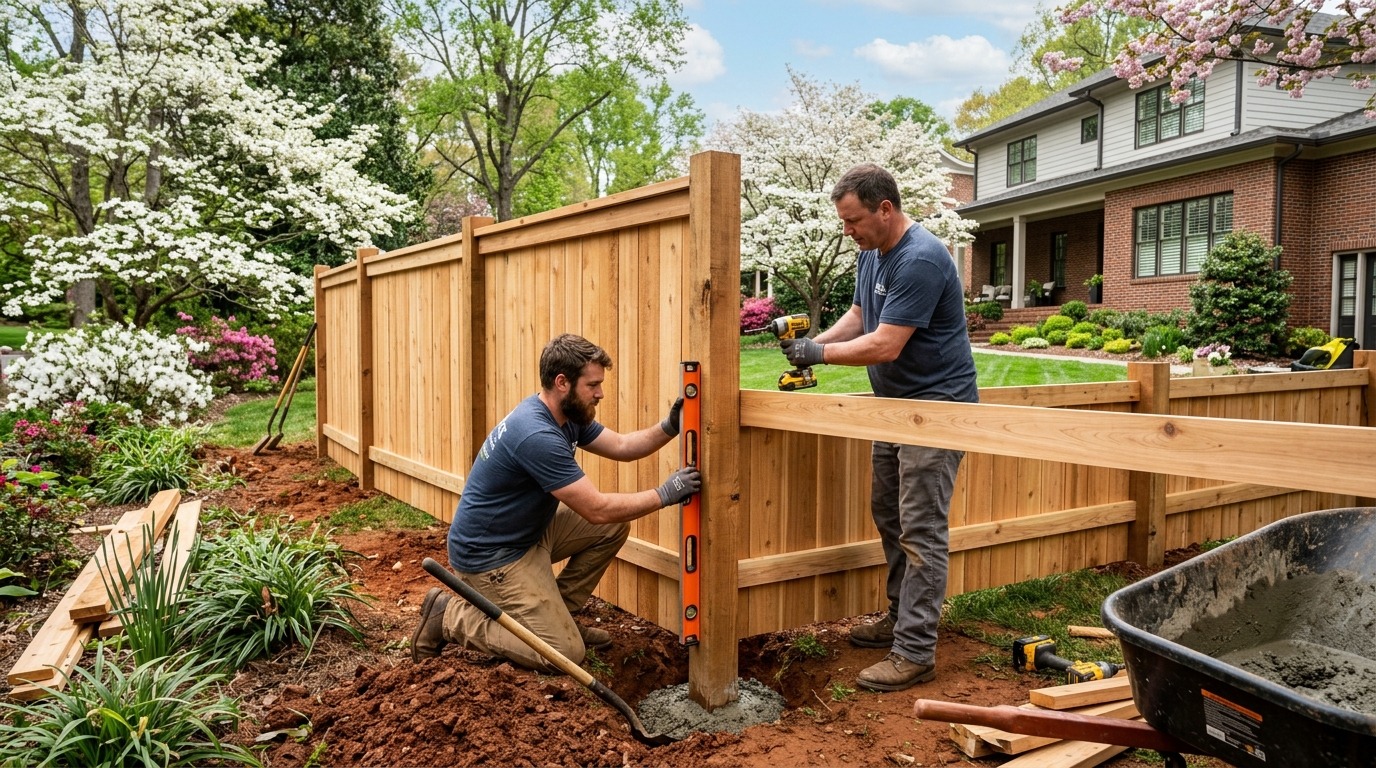
Why Fall Outperforms Every Other Season
- Perfect Concrete Hydration Chemistry: Concrete does not dry; it cures through chemical hydration between Portland cement and water molecules. In Charlotte’s fall months, temperatures hover between 55°F and 75°F with moderate relative humidity. This prevents moisture from evaporating out of the footing too quickly, allowing the concrete to reach its maximum compressive strength (typically 3,000 to 4,000 PSI) before freezing winter temperatures arrive.
- Predictable Carolina Red Clay: After the intense heat of summer, Charlotte’s Cecil red clay soil has shed its excess water table. Post-hole augers dig clean, vertical cylinders without the sidewall collapse and slurry puddling that often plague rainy spring excavations.
- Lumber Equilibrium Moisture Content (EMC): When premium Western Red Cedar or pressure-treated pine pickets are installed in autumn, they acclimate to ambient humidity gradually. They avoid the severe thermal shock of intense 95°F midsummer UV rays, resulting in significantly less surface checking, board cupping, or twist during the first 90 days of life.
- Minimal Landscape Damage: In autumn, warm-season grasses (Bermuda, Zoysia) and cool-season lawns (Fescue) handle crew foot traffic with ease. Perennials, shrubs, and ornamental trees are pulling their energy into their root systems, meaning trimmed branches or ground disturbance along fence lines won’t shock or kill valued plantings.
- Fast Turnaround and Dedicated Focus: Because the general public assumes construction slows in autumn, contractor schedules open up. Homeowners who sign agreements in September often see crews on site within 10 to 14 days, compared to multi-month waits in May.
2. Late Winter to Early Spring (February to March): The Proactive Window
The second-best window for building a fence in Greater Charlotte is the late winter corridor.
Many homeowners incorrectly assume that fences cannot be built during winter. While this holds true in upstate New York or Minnesota where the frost line extends 36 to 48 inches deep, Charlotte’s frost line rarely exceeds 4 to 6 inches, and the ground virtually never freezes solid.
+-----------------------------------------------------------------+
|               NORTH CAROLINA WINTER DIGGING REALITY             |
|                                                                 |
|   Surface Frost (0" to 4"):    Mild morning crust; thaws by noon|
|   -----------------------------------------------------------   |
|   Standard Post Depth (30" to 36"): Never frozen; moist clay    |
|   -----------------------------------------------------------   |
|   Concrete Pouring Rule:       Air temp >= 40°F and rising      |
+-----------------------------------------------------------------+
Advantages of Booking in Late Winter
- Beating the April Queue: By securing your installation in February or March, your project is completed before neighborhood HOAs become inundated with exterior alteration requests.
- Immediate Spring Enjoyment: When the first 75-degree weekend arrives in late April, your backyard is already private, secure, and ready for pets, children, and outdoor dining.
- Spring Lawn Overseeding Sync: Having heavy equipment and crews off your property before you aerate and overseed cool-season fescue ensures your new lawn grows undisturbed.
Note on Winter Weather: Winter installations in Charlotte require careful monitoring of precipitation cycles. Heavy rainfall in saturated red clay can create temporary mud along work paths. Experienced crews lay ground-protection mats along transit routes to preserve your turf.
3. Late Spring (April to June): The High-Demand Season
Spring is by far the most popular time for homeowners to request fence installations, but popularity introduces real logistical friction.
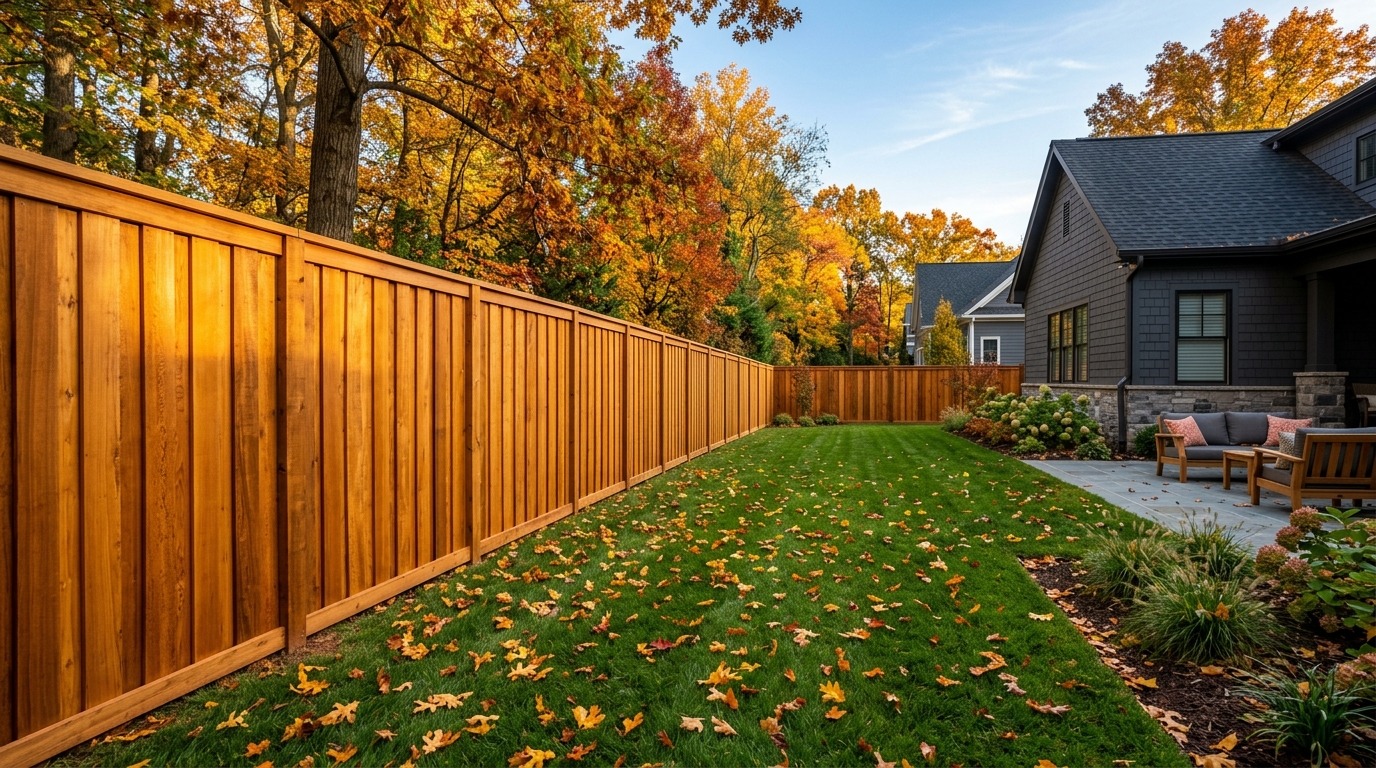
What to Expect During the Spring Rush
- Lead Time Pressures: In April and May, installation lead times swell across the Carolinas. Homeowners who request estimates in late April frequently cannot get their projects built until late June or July.
- HOA Architectural Review Delays: Subdivision architectural committees in Ballantyne, South Charlotte, Huntersville, and Fort Mill experience peak review volumes in spring, extending approvals from 10 days to 30+ days.
- Spring Thunderstorms: Spring in the Piedmont brings sudden, heavy rain events. If an augered post hole fills with standing rainwater in dense red clay, that water must be pumped and the hole allowed to stabilize before concrete can be poured safely.
If spring is your only available timeline, the secret is early submission: submit your HOA architectural paperwork in January or February so your contractor can break ground the moment weather permits in early April.
For guidance on fence styles that satisfy strict neighborhood guidelines, explore our breakdown of Wood Privacy Fence Styles.
4. Midsummer (July to August): Heat and Timber Management
Summer fence installations in Charlotte are entirely achievable, but they require strict technical discipline to protect both workers and materials.
During July and August, daily high temperatures routinely surpass 90°F with humidity above 80%, accompanied by intense UV radiation.
Technical Challenges in Midsummer
- Concrete “Flash-Drying” Risk: When concrete is poured into dry, sun-baked clay in 95°F heat, the surrounding soil acts like a desiccator, pulling water out of the mixture before the cement can properly hydrate. At Amour Fence, we pre-moisten post holes in extreme heat and use adjusted water-to-cement ratios to ensure the concrete cures to full structural integrity.
- Thermal Shock on Fresh Lumber: Wood cut from fresh logs or stored in climate-controlled lumber sheds undergoes rapid surface moisture loss when exposed to the direct Carolina midday sun. If pickets are fastened incorrectly or left unfastened in bundles on hot dirt, boards can cup or bow. We install premium, stable Western Red Cedar and secure fasteners immediately upon unbundling.
- Baked Red Clay Excavation: When unshaded Piedmont clay dries out in August, it reaches compressive densities comparable to weak sandstone. Hand-digging becomes impossible, requiring commercial hydraulic augers to achieve the required 30-to-36-inch embedment depth.
To understand how different wood species handle long-term UV and humidity exposure, review our comprehensive Fence Lifespan Guide.
Concrete Post Settings: Weather and Soil Mechanics
The foundation of any wood fence is its post footing. In Charlotte’s heavy Cecil clay soil, weather conditions during setting determine whether your fence stands plumb for 25 years or leans after five.
                    IDEAL POST HOOTING HYDRATION WINDOW

  < 40°F                 50°F to 75°F                    > 90°F
  [Too Cold]            [OPTIMAL ZONE]                  [Too Hot]
  Hydration stalls;      Complete chemical hydration;    Rapid evaporation;
  frost damage risk      Maximum 3,500+ PSI strength;    Surface cracking;
  (Rare in Charlotte)    (Early Fall & Mid-Spring)       (Midsummer Heat)
Critical Foundation Rules Regardless of Season
- Depth Below Frost Level: Posts must be set at a minimum of 30 inches deep — well below the Charlotte regional frost line (4 to 6 inches) and deep enough to anchor against high wind loads on solid 6-foot privacy panels.
- Gravel Drainage Base: Every post hole should feature 3 to 4 inches of coarse crushed gravel at the very bottom. This prevents the post end grain from sitting directly in moisture-trapping clay, allowing water to percolate away from the wood.
- Bell-Shaped Footing: The concrete collar should be slightly bell-shaped at the bottom and sloped away from the wooden post at the groundline to shed surface water.
Project Planning: Timeline Checklist for Charlotte Homeowners
To guarantee your fence is built in your preferred seasonal window, work backward from your target completion date using this timeline:
6 Weeks Out:   Initial Design & Contractor Consultations
               Measure fence perimeter, select style (Privacy, Shadowbox, Picket)
               Select lumber material (Western Red Cedar vs. Treated Pine)

4 Weeks Out:   HOA Architectural Review Submission
               Submit property survey plat showing proposed fence layout
               Include material specifications and contractor credentials

2 Weeks Out:   HOA Approval Received & Crew Scheduled
               Contractor orders lumber packages and custom gate hardware

3 Days Out:    NC811 Underground Utility Locating
               Technicians mark gas, power, cable, and water lines (mandatory by NC law)

Day 1 - 3:     Construction & Post-Setting
               Augering post holes, setting posts in concrete, installing rails & pickets
When Is the Best Time to Stain a New Fence?
Installing your fence is only phase one. If you select Western Red Cedar or Pressure-Treated Pine, staining protects your investment from graying, UV breakdown, and moisture absorption.
- Western Red Cedar: Cedar arrives kiln-dried or air-seasoned and can typically be stained 2 to 4 weeks after installation, once ambient moisture equalizes. Fall installations are ideal because the mild autumn sun allows penetrating oil stains to soak deep into wood pores without surface drying.
- Pressure-Treated Pine: Freshly treated pine contains high internal chemical moisture from the pressure-injection process. It requires 8 to 12 weeks of dry weather before it can accept stain. If installed in late winter or early spring, it will be dry and ready for staining right as summer begins.
For a detailed walkthrough of moisture testing and stain application, read our guide on How to Maintain a Cedar Fence.
Frequently Asked Questions
What is the best time of year to install a fence in Charlotte NC?
The optimal time to install a wood fence in Charlotte, NC is early fall (September through November) or late winter to early spring (February through April). Fall offers moderate temperatures (60°F to 75°F) that allow concrete to cure without flash-drying, dry and workable Carolina red clay soil, dormant backyard landscaping, and significantly shorter contractor lead times than the peak spring surge.
Can you install a fence in the winter in North Carolina?
Yes. In the Charlotte Piedmont region (USDA Hardiness Zone 8a), winter ground frost rarely penetrates deeper than 4 to 6 inches, meaning the soil does not freeze solid like northern climates. Fence posts can be set and concrete can be poured safely on any day where daytime temperatures stay above 40°F. The primary winter factor in Charlotte is winter precipitation, which makes red clay sticky and muddy.
Why is spring the most expensive and busiest fence installation season?
Spring is when most homeowners first inspect their yards after winter, leading to an immediate surge in fence installation inquiries between April and June. During this peak demand window, fencing contractor schedules fill up 6 to 8 weeks in advance, and premium lumber suppliers experience tighter inventories. Homeowners who plan ahead and book in fall or late winter enjoy faster turnaround times and dedicated crew availability.
Does weather affect concrete when setting fence posts?
Weather directly impacts concrete hydration. Concrete cures best between 50°F and 80°F. Above 90°F in peak Charlotte summers, high ambient heat causes water to evaporate too quickly from the mix, which can lead to shrinkage cracks and weakened compressive strength. Below 40°F, hydration slows to a halt. In fall and mid-spring, ambient temperatures remain in the ideal curing zone for 3,000+ PSI structural post footings.
How far in advance should I plan a fence project with an HOA?
In the Charlotte metro area, you should begin planning 4 to 6 weeks before your intended installation date. Most Mecklenburg and Union County Homeowners Associations (HOAs) require an Architectural Review Committee (ARC) submission with a property survey, fence design specifications, and material samples, which typically takes 2 to 4 weeks for formal approval. Additionally, North Carolina 811 utility marking requires at least three full business days before digging can begin.
Plan Your Fence on the Optimal Schedule
Whether you choose the crisp perfection of early autumn or plan ahead in late winter to enjoy your yard by spring, strategic scheduling saves weeks of waiting and guarantees the highest standard of craftsmanship.
At Amour Fence, we work with your neighborhood HOA guidelines, property boundaries, and seasonal conditions to build fences that endure for decades.
Ready to Schedule Your Charlotte Fence Installation?
- Speak with Our Building Team: (980) 300-1047
- Request a Complimentary On-Site Consultation: Get a Free Estimate
- Our Piedmont Service Areas: Charlotte, Matthews, Pineville, Waxhaw, Weddington, Fort Mill, Indian Trail, Mint Hill, and surrounding Mecklenburg and Union County communities.
Frequently Asked Questions
What is the best time of year to install a fence in Charlotte NC?
The optimal time to install a wood fence in Charlotte, NC is early fall (September through November) or late winter to early spring (February through April). Fall offers moderate temperatures (60°F to 75°F) that allow concrete to cure without flash-drying, dry and workable Carolina red clay soil, dormant backyard landscaping, and significantly shorter contractor lead times than the peak spring surge.
Can you install a fence in the winter in North Carolina?
Yes. In the Charlotte Piedmont region (USDA Hardiness Zone 8a), winter ground frost rarely penetrates deeper than 4 to 6 inches, meaning the soil does not freeze solid like northern climates. Fence posts can be set and concrete can be poured safely on any day where daytime temperatures stay above 40°F. The primary winter factor in Charlotte is winter precipitation, which makes red clay sticky and muddy.
Why is spring the most expensive and busiest fence installation season?
Spring is when most homeowners first inspect their yards after winter, leading to an immediate surge in fence installation inquiries between April and June. During this peak demand window, fencing contractor schedules fill up 6 to 8 weeks in advance, and premium lumber suppliers experience tighter inventories. Homeowners who plan ahead and book in fall or late winter enjoy faster turnaround times and dedicated crew availability.
Does weather affect concrete when setting fence posts?
Weather directly impacts concrete hydration. Concrete cures best between 50°F and 80°F. Above 90°F in peak Charlotte summers, high ambient heat causes water to evaporate too quickly from the mix, which can lead to shrinkage cracks and weakened compressive strength. Below 40°F, hydration slows to a halt. In fall and mid-spring, ambient temperatures remain in the ideal curing zone for 3,000+ PSI structural post footings.
How far in advance should I plan a fence project with an HOA?
In the Charlotte metro area, you should begin planning 4 to 6 weeks before your intended installation date. Most Mecklenburg and Union County Homeowners Associations (HOAs) require an Architectural Review Committee (ARC) submission with a property survey, fence design specifications, and material samples, which typically takes 2 to 4 weeks for formal approval. Additionally, North Carolina 811 utility marking requires at least three full business days before digging can begin.